• Fri frakt över 249 kr
  • •
  • Snabba leveranser
  • •
  • Billiga böcker
Kundservice

Du är på sajten för privatpersoner.

Företag, bibliotek eller offentlig verksamhet?

Du handlar på classic.bokus.com, där alla dina funktioner finns intakta.
Till classic.bokus.com
Bokus logotyp. Gå till startsidan.
  • Erbjudanden
  • Nyheter
  • Student
  • Topplistor
  • Barn & ungdom
  • Bokus Play
  • E-böcker
  • Pocketböcker
  • Spel & pussel

10% rabatt på allt med kod: NYSTART10 →

Sidfot

Mina sidor

    Hjälp

    • Kundservice
    • Vanliga frågor och svar
    • Frakt och leverans
    • Retur vid ångerrätt
    • Reklamera vara
    • Betalning
    • Köpvillkor
    • Allmänna villkor
    • Information om webbplatsens tillgänglighet

    Om Bokus

    • Om oss
    • Pressrum
    • För studenter
    • För företag
    • För bibliotek och offentlig verksamhet
    • För leverantörer
    • Hållbarhet

    Populärt

    • Aktuella erbjudanden
    • Presentkort
    • Studentlitteratur
    • Nya böcker
    • Topplistor
    • Signerade böcker
    • Engelska böcker

    Inspiration

    • Boktips
    • BookTok
    • Populära bokserier
    • Barnbokskaraktärer
    • Populära författare
    Logotyp för Bokus
    Följ oss på Facebook (extern länk)Följ oss på Instagram (extern länk)Följ oss på YouTube (extern länk)Följ oss på TikTok (extern länk)
    bokus @ CookiesAnpassa cookiesIntegritetspolicyKöpvillkor
    Till Citymail hemsida (extern länk)Till Budbee hemsida (extern länk)Till Postnord hemsida (extern länk)Till Schenker hemsida (extern länk)Till Early Bird hemsida (extern länk)Till Walleys hemsida (extern länk)
    1. Samhälle och politik
    2. Social välfärd och brottslighet
    3. Brottslighet och kriminologi

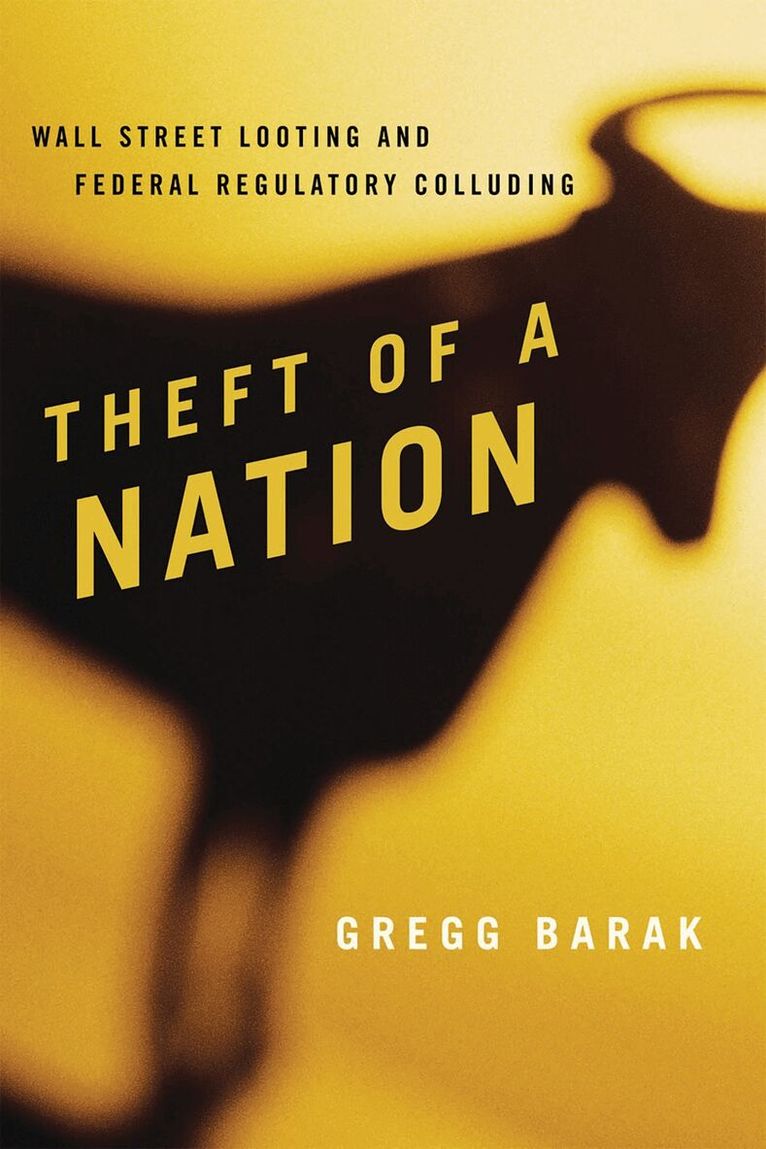
    Theft of a Nation

    Wall Street Looting and Federal Regulatory Colluding

    AvGregg Barak

    Häftad, Engelska, 2012

    Del i serien Issues in Crime and Justice

    590 kr

    Beställningsvara. Skickas inom 10-15 vardagar. Fri frakt över 249 kr.

    Fler format och utgåvor

    Inbunden

    1 533 kr

    Beskrivning

    Theft of a Nation presents a powerful criminological examination of Wall Street’s recent financial meltdown and its profound impact on the rest of the country. This provocative book asks why, if the actions of key players on Wall Street and in the government resulted in an economic downturn that harmed millions of Americans and destroyed capital worldwide, no one was held criminally liable for these actions.Author Gregg Barak provides a basic history of financial regulation and deregulation, as well as a primer on both securities fraud and mass victimization. Using key concepts in victimology and white collar crime, he explores the diverse ways civil and criminal law enforcement responded to the damaging behavior on Wall Street. The book also assesses Wall Street Financial Reform and the Consumer Protection Act of 2010, showing the ways that Americans may still be at risk.Theft of a Nation is the first comprehensive criminological investigation of the role of Wall Street and the government in the recent financial crisis, asking critical questions about who has been victimized and why.

    Produktinformation

    • Utgivningsdatum:2012-08-02
    • Mått:152 x 229 x 14 mm
    • Vikt:354 g
    • Format:Häftad
    • Språk:Engelska
    • Serie:Issues in Crime and Justice
    • Antal sidor:226
    • Förlag:Bloomsbury Publishing Plc
    • ISBN:9781442207790
    • Utmärkelser:Winner of Outstanding Book Award 2012

    Utforska kategorier

    • Brottslighet och kriminologi inom Samhälle och politik

    Mer om författaren

    Gregg Barak is professor of criminal justice and criminology at Eastern Michigan University. He is author or coauthor of several books, including Class, Race, Gender, and Crime: The Social Realities of Justice in America, now in its third edition.

    Recensioner i media

    While many factors contributed to the recent financial crisis and subsequent great recession (e.g., repeal of the Glass-Steagall Act, increasingly complex derivatives), Barak (criminal justice, Eastern Michigan Univ.) lays the blame squarely on Wall Street leaders. He asserts their unethical and illegal behavior was aided by the incompetence of regulators and the lack of criminal prosecution of any fraud committed by the largest banks and their managers. Not one senior executive from a major financial institution has yet to be criminally prosecuted, and civil cases were settled without participants admitting guilt. According to Barak, these "finance capitalists who have great wealth, prestige, and access to politicos at the highest level of government were afforded ample opportunities to make, break, and neutralize, if not capture, the laws of regulation." For example, the Troubled Asset Relief Program funneled millions for bonuses to individuals responsible for the crisis and the loss of trillions of dollars by homeowners, municipalities, and pension plans. Barak suggests that recent regulations (e.g., the Dodd-Frank Act) will not improve the financial environment without enforcement. A glossary, extensive footnotes, and an index add to the book's usefulness. Summing Up: Recommended.

    Innehållsförteckning

    • Introduction Chapter 1. Law, Power, and Wealth: On the Rhetoric and Reality of Fighting Financial AbuseChapter 2. Bernie Madoff’s Ponzi Scheme and Wall Street’s Financial Meltdown: A Primer on Investment Fraud and VictimizationChapter 3. Unenlightened Self Interest, Unregulated Financial Markets, and Unfettered Victimization: From the Savings and Loan Bailouts to Too Big to FailChapter 4. Theories of White Collar Illegalities and the Crimes of the Powerful: A Reciprocal Approach to the Political Economy of Wall Street Looting and Federal Regulatory ColludingChapter 5. Financial Looting, Victimization, and Legal Intervention: On Criminal Prosecution and Civil Law EnforcementChapter 6. Consuming Victims and Victimless Identities: On the Social Construction of Victimization and the Re-emergence of Public VictimsChapter 7. The Wall Street Financial Reform and Consumer Protection Act of 2010: A Synopsis of Dodd-Frank and the Re-regulation of Financial AbuseConclusion