• Fri frakt över 249 kr
  • •
  • Snabba leveranser
  • •
  • Billiga böcker
Kundservice

Du är på sajten för privatpersoner.

Företag, bibliotek eller offentlig verksamhet?

Du handlar på classic.bokus.com, där alla dina funktioner finns intakta.
Till classic.bokus.com
Bokus logotyp. Gå till startsidan.
  • Erbjudanden
  • Student
  • Topplistor
  • Barn & ungdom
  • Bokus Play
  • E-böcker
  • Ljudböcker
  • Pocketböcker
  • Spel & pussel

Upp till 25% på utvalda nyheter →

Sidfot

Mina sidor

    Hjälp

    • Kundservice
    • Vanliga frågor och svar
    • Frakt och leverans
    • Retur vid ångerrätt
    • Reklamera vara
    • Betalning
    • Köpvillkor
    • Allmänna villkor
    • Information om webbplatsens tillgänglighet

    Om Bokus

    • Om oss
    • Pressrum
    • För studenter
    • För företag
    • För bibliotek och offentlig verksamhet
    • För leverantörer
    • Hållbarhet

    Populärt

    • Aktuella erbjudanden
    • Presentkort
    • Studentlitteratur
    • Nya böcker
    • Topplistor
    • Signerade böcker
    • Engelska böcker

    Inspiration

    • Boktips
    • BookTok
    • Populära bokserier
    • Barnbokskaraktärer
    • Populära författare
    Logotyp för Bokus
    Följ oss på Facebook (extern länk)Följ oss på Instagram (extern länk)Följ oss på YouTube (extern länk)Följ oss på TikTok (extern länk)
    bokus @ CookiesAnpassa cookiesIntegritetspolicyKöpvillkor
    Till Citymail hemsida (extern länk)Till Budbee hemsida (extern länk)Till Postnord hemsida (extern länk)Till Schenker hemsida (extern länk)Till Early Bird hemsida (extern länk)Till Walleys hemsida (extern länk)
    1. Historia och arkeologi
    2. Historia
    3. Europas historia

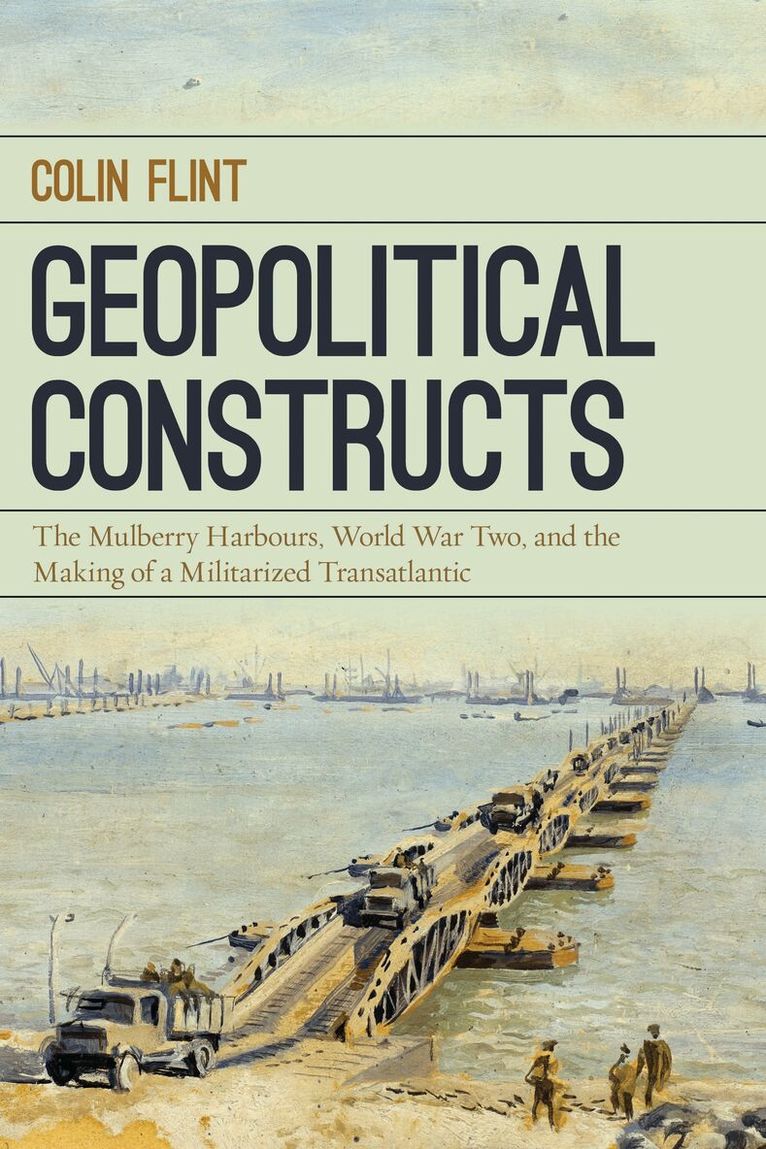
    Geopolitical Constructs

    The Mulberry Harbours, World War Two, and the Making of a Militarized Transatlantic

    AvColin Flint

    Inbunden, Engelska, 2016

    1 294 kr

    Beställningsvara. Skickas inom 10-15 vardagar. Fri frakt över 249 kr.

    Beskrivning

    This innovative book tells a unique story about D-Day, one that does not concentrate on the soldiers who hit the beaches or the admirals and generals who commanded them. Instead, Colin Flint brings engineers, businessmen, and bureaucrats to center stage. Through them, he offers a different way of thinking about war, one that sees war as an ongoing set of processes in which seemingly isolated acts are part of broader historical developments. Developing the concept ofgeopolitical constructs to understand wars, the author connects specific events to long-term and global geopolitical arrangements.Focusing on the construction of the Mulberry Harbours—massive artificial structures dragged across the English Channel in the immediate wake of the invading force—Flint illustrates how the process of making war links a vast array of people, institutions, and places, as well as past events and future outcomes. He argues that the people who designed and built the Harbours became geopolitical subjects by producing pieces of engineering that helped shape the course of World War Two and the Cold War that followed, which created a militarized trans-Atlantic that remains today. Using previously unpublished archival material to give voice to those who made the Mulberry Harbours and wartime strategy, this original study broadens the historical and geographical scope of how we understand war, showing how the everyday actions of individuals made, and were made by, geopolitical settings.

    Produktinformation

    • Utgivningsdatum:2016-09-19
    • Mått:157 x 239 x 22 mm
    • Vikt:517 g
    • Format:Inbunden
    • Språk:Engelska
    • Antal sidor:226
    • Förlag:Bloomsbury Publishing Plc
    • ISBN:9781442266674

    Utforska kategorier

    • Europas historia inom Historia och arkeologi
    • Andra världskriget inom Historia och arkeologi
    • Modern militärhistoria inom Historia och arkeologi

    Mer om författaren

    Colin Flint is a political geographer and professor in the Department of Political Science, Utah State University.

    Recensioner i media

    An impressive tour de force. Relying on meticulous research and unpublished archival material, Flint manages the daunting task of bringing a fresh and interesting insight to the events of D-Day. He does so by providing a multi-layered approach, which emphasizes the key social, political, economic, and geopolitical developments that were required in order to turn Churchill’s vision of temporary harbors into actual bridges for the invasion of the Continent. He also does so by questioning the way in which we conceptualize war as events with well-defined geographies and timeframes. . . . By its interdisciplinary nature, [this book will] be a great source for scholars focused on European history, geography and politics in the twentieth century.

    Innehållsförteckning

    • List of Figures Acknowledgments Chapter One: Introduction: The Mulberry Harbours and Ways to Think About War Chapter Two: Geopolitical Constructs: Understanding Global GeopoliticalChange Chapter Three: The Scope of the Mulberry Harbour Project: Demanded byStrategy, Made by Committee Chapter Four: Bureaucratic Construct: “Millions spent on a plan which had notbeen approved” Chapter Five: Good Geopolitical Subjects: “Did we, Sir, do well?” Chapter Six: The Business of Making the Mulberry Harbours: “War may bean intensification in the development of our lives” Chapter Seven: Making Places: “You are probably aware that a scheme has beenprepared” Chapter Eight: Making Regions: From “bridge” to “unsinkable aircraft carrier” Chapter Nine: Conclusion: The Legacies of Geopolitical Constructs Bibliography About the Author