• Fri frakt över 249 kr
  • •
  • Snabba leveranser
  • •
  • Billiga böcker
Kundservice

Du är på sajten för privatpersoner.

Företag, bibliotek eller offentlig verksamhet?

Du handlar på classic.bokus.com, där alla dina funktioner finns intakta.
Till classic.bokus.com
Bokus logotyp. Gå till startsidan.
  • Erbjudanden
  • Nyheter
  • Student
  • Topplistor
  • Barn & ungdom
  • Bokus Play
  • E-böcker
  • Pocketböcker
  • Spel & pussel

10% rabatt på allt med kod: NYSTART10 →

Sidfot

Mina sidor

    Hjälp

    • Kundservice
    • Vanliga frågor och svar
    • Frakt och leverans
    • Retur vid ångerrätt
    • Reklamera vara
    • Betalning
    • Köpvillkor
    • Allmänna villkor
    • Information om webbplatsens tillgänglighet

    Om Bokus

    • Om oss
    • Pressrum
    • För studenter
    • För företag
    • För bibliotek och offentlig verksamhet
    • För leverantörer
    • Hållbarhet

    Populärt

    • Aktuella erbjudanden
    • Presentkort
    • Studentlitteratur
    • Nya böcker
    • Topplistor
    • Signerade böcker
    • Engelska böcker

    Inspiration

    • Boktips
    • BookTok
    • Populära bokserier
    • Barnbokskaraktärer
    • Populära författare
    Logotyp för Bokus
    Följ oss på Facebook (extern länk)Följ oss på Instagram (extern länk)Följ oss på YouTube (extern länk)Följ oss på TikTok (extern länk)
    bokus @ CookiesAnpassa cookiesIntegritetspolicyKöpvillkor
    Till Citymail hemsida (extern länk)Till Budbee hemsida (extern länk)Till Postnord hemsida (extern länk)Till Schenker hemsida (extern länk)Till Early Bird hemsida (extern länk)Till Walleys hemsida (extern länk)
    1. Kultur
    2. Arkitektur

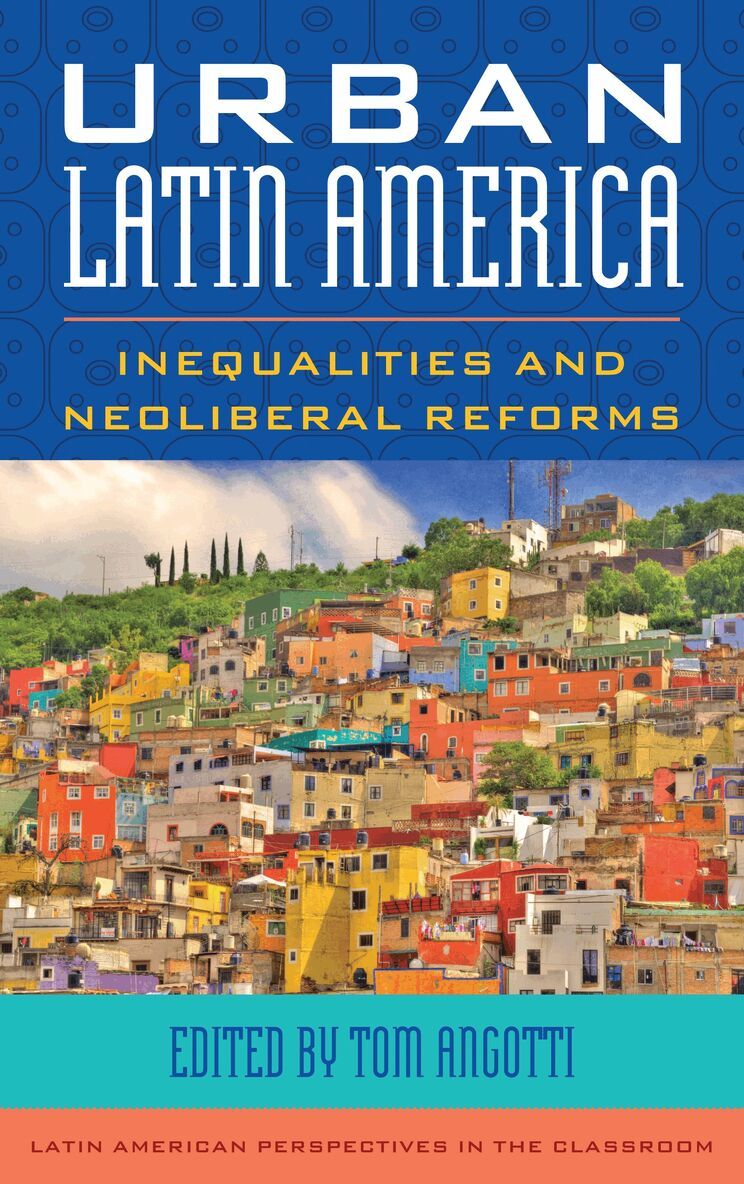
    Urban Latin America

    Inequalities and Neoliberal Reforms

    AvTom Angotti

    Inbunden, Engelska, 2017

    Del i serien Latin American Perspectives in the Classroom

    1 295 kr

    Beställningsvara. Skickas inom 10-15 vardagar. Fri frakt över 249 kr.

    Beskrivning

    Latin America is one of the most urbanized regions of the world. To understand Latin America today it is important to trace the origins and characteristics of the urban-rural divide, inequalities within urban areas, and the prospects for change. This is particularly important and timely given the challenges of widening environmental and social disparities, climate change, and climate justice. The authors critically analyze urban issues within the context of the national and regional political economy, neoliberal governance, and urban social movements. Latin America’s cities are sharply divided into wealthy enclaves and large peripheral areas, reflecting deep social and economic inequalities, leading to notable movements and reforms. This text explores Latin American cities, their history, similarities and differences, and current problems.

    Produktinformation

    • Utgivningsdatum:2017-08-25
    • Mått:156 x 239 x 23 mm
    • Vikt:540 g
    • Format:Inbunden
    • Språk:Engelska
    • Serie:Latin American Perspectives in the Classroom
    • Antal sidor:306
    • Förlag:Bloomsbury Publishing Plc
    • ISBN:9781442274471

    Utforska kategorier

    • Arkitektur inom Kultur
    • Regional planering inom Naturvetenskap och teknik
    • Politik och statsskick inom Samhälle och politik

    Mer om författaren

    Tom Angotti is professor emeritus of urban policy and planning at Hunter College and the graduate center, City University of New York.

    Recensioner i media

    By most measures, Mexico City and São Paulo are two of the 10 largest cities in the world; the regional population in each is over 20 million people. With the global population rapidly expanding and living in urban areas, and with almost all projected megacities located in Latin America, Asia, and Africa, it would be prudent to have a better understanding of how cities develop and what impact neoliberal policies and growing inequalities have on urban society. This collection of 16 essays uncovers the inner workings of Latin American cities, provides a look at political processes and forms of resistance, brings to life the people who inhabit these cities, and presents readers with alternative narratives to traditional urban development as it has come to be understood in North America. By exploring alternatives to markets; by outlining forms of community control, budgeting, and opposition to neoliberal policies; and by celebrating the occupants of cities through the rejection of stereotypes like “marginal” and “informal,” Angotti’s volume takes its place as an important addition to literature on urbanization globally. Summing Up: Highly recommended. Upper-division undergraduates and above.

    Innehållsförteckning

    • Part I: Poverty, Informality, and Peripheral CitiesChapter 1: Urban Latin America: Periphery, Informality, and InequalityTom AngottiChapter 2: Poverty, Inequality, and Informality in the Latin American CityAlan GilbertChapter 3: They Are Not Informal Settlements: They Are Habitats Made by PeopleLorena ZárateChapter 4: The Future of Global Peripheral CitiesErminia MaricatoPart II: The Metropolis in Latin America: São Paulo and Mexico CityChapter 5: São Paulo: City of Industry, Misery, and ResistanceWilliam W. Goldsmith and Rogerio AccaChapter 6: Globalization, Governance, and the Collision of Forces in Mexico City’s Historic CenterDiane E. DavisPart III: Urban Policies, Neoliberal Reforms, and Best PracticesChapter 7: Failed Markets: The Crisis in the Private Production of Social Housing in MexicoAlfonso Valenzuela AguileraChapter 8: Participatory Budgeting in Latin American Cities Benjamin GoldfrankChapter 9: Urban Governance and Economic Development in Medellín: An “Urban Miracle”? Tobias FranzChapter 10: Conflict and Convergence between Experts and Citizens: Bogotá’s TransMilenioStacey HuntChapter 11: Barra da Tijuca: The Political Economy of a Global Suburb in Rio de Janeiro, BrazilLawrence A. HerzogPart IV: Exceptions to the RulesChapter 12: Housing and Urban Development in the Cuban RevolutionJill HambergChapter 13: Uruguay’s Housing Cooperatives: Alternative to the Private MarketTom AngottiPart V: Urban Struggles, Citizenship, and Public SpaceChapter 14: Citizenship, Democracy, and Public Space in Latin AmericaClara IrazábalChapter 15: Struggles against Territorial Disqualification: Mobilization forDignified Housing and Defense of Heritage in SantiagoNicolás Angelcos and María Luisa MéndezChapter 16: “We Are Not Marginals”: The Cultural Politics of Lead Poisoning in Montevideo, UruguayDaniel RenfrewReferences