• Fri frakt över 249 kr
  • •
  • Snabba leveranser
  • •
  • Billiga böcker
Kundservice

Du är på sajten för privatpersoner.

Företag, bibliotek eller offentlig verksamhet?

Du handlar på classic.bokus.com, där alla dina funktioner finns intakta.
Till classic.bokus.com
Bokus logotyp. Gå till startsidan.
  • Erbjudanden
  • Nyheter
  • Student
  • Topplistor
  • Barn & ungdom
  • Bokus Play
  • E-böcker
  • Pocketböcker
  • Spel & pussel

10% rabatt på allt med kod: NYSTART10 →

Sidfot

Mina sidor

    Hjälp

    • Kundservice
    • Vanliga frågor och svar
    • Frakt och leverans
    • Retur vid ångerrätt
    • Reklamera vara
    • Betalning
    • Köpvillkor
    • Allmänna villkor
    • Information om webbplatsens tillgänglighet

    Om Bokus

    • Om oss
    • Pressrum
    • För studenter
    • För företag
    • För bibliotek och offentlig verksamhet
    • För leverantörer
    • Hållbarhet

    Populärt

    • Aktuella erbjudanden
    • Presentkort
    • Studentlitteratur
    • Nya böcker
    • Topplistor
    • Signerade böcker
    • Engelska böcker

    Inspiration

    • Boktips
    • BookTok
    • Populära bokserier
    • Barnbokskaraktärer
    • Populära författare
    Logotyp för Bokus
    Följ oss på Facebook (extern länk)Följ oss på Instagram (extern länk)Följ oss på YouTube (extern länk)Följ oss på TikTok (extern länk)
    bokus @ CookiesAnpassa cookiesIntegritetspolicyKöpvillkor
    Till Citymail hemsida (extern länk)Till Budbee hemsida (extern länk)Till Postnord hemsida (extern länk)Till Schenker hemsida (extern länk)Till Early Bird hemsida (extern länk)Till Walleys hemsida (extern länk)
    1. Skönlitteratur
    2. Litteraturvetenskap
    3. Litteraturteori

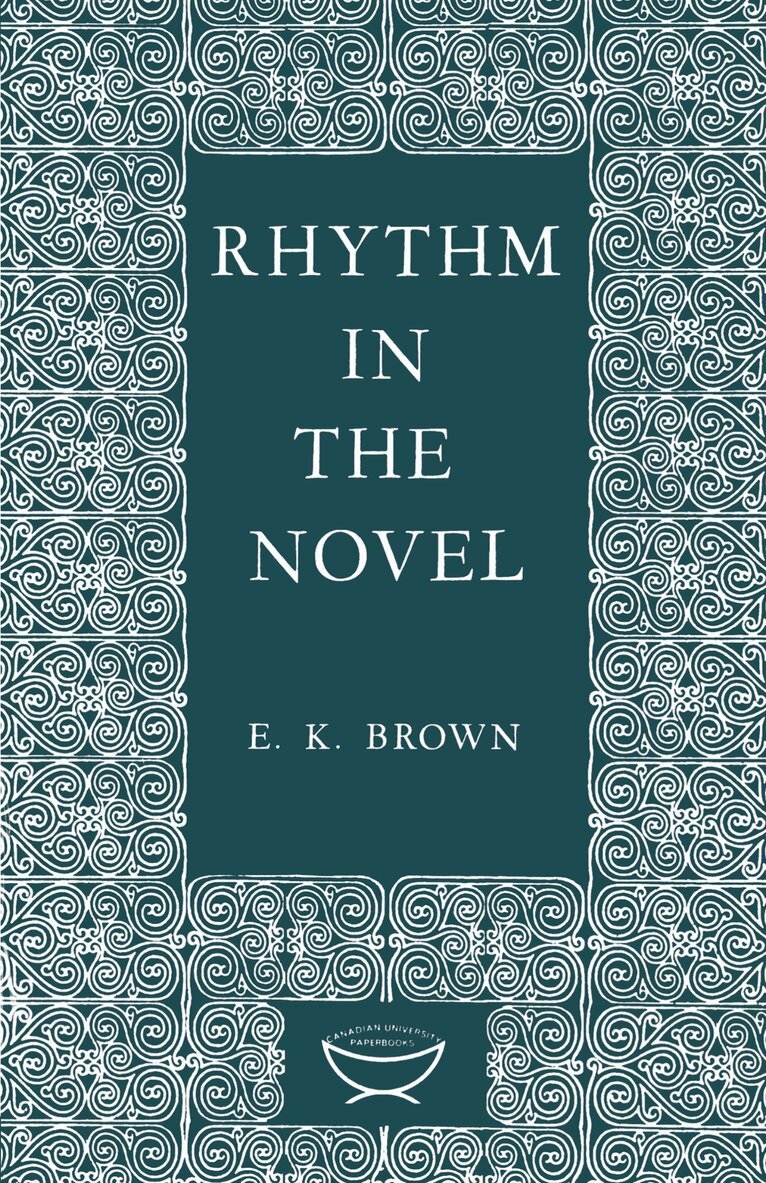
    Rhythm in the Novel

    AvE.K. Brown

    E-bok
    PDF, Engelska, 1950

    Del i serien Alexander Lectures

    254 kr

    Läs direkt i Bokus Reader – eller ladda ned till din enhet (PDF kräver ofta zoom och scroll på små skärmar).

    Fler format och utgåvor

    E-bok

    327 kr

    Häftad

    228 kr

    Beskrivning

    The Alexander Lectures for 1949-50. In his Preface, Professor Brown says, "Isolating a single element or group of elements in the novel, and considering it in unreal separation from all the other elements which it actually fuses, is artificial, but so is all criticism. The artificiality is justified if when one turns back from the criticism to the novels these appear more intelligible and more delightful. That is the test." Applying the test to Dr. Brown's present work, the method is more than justified by the results. they are titled: "Phrase, Character, Incident," "Expanding Symbols," "Interweaving Themes," and "Rhythm in E.M. Forster's A Passage to India."

    Produktinformation

    • Utgivningsdatum:1950-12-15
    • Språk:Engelska
    • Antal sidor:136
    • Filformat:PDF
    • Kopieringsskydd:LCP
    • ISBN:9781442632578
    • Förlag:University of Toronto Press
    • Serie:Alexander Lectures

    Utforska kategorier

    • Litteraturteori inom Skönlitteratur
    • Litteraturvetenskap inom Skönlitteratur

    Mer om författaren

    E.K. Brown (1905-1951) graduated from the University of Toronto in the year that Dr. Alexander retired. After graduate studies at Toronto and the Sorbonne, he was professor of English at the universities of Toronto, Manitoba, Cornell, and Chicago. He died in 1951.

    Recensioner i media

    “It is poignantly fitting that the last published work of E.K. Brown should be entitled Rhythm in the Novel and should deal with various aspects of those mysterious patterns of repetition which constantly occur in life and which the best novelists strive to depict in their work. . . . Rhythm in the Novel is therefore critical writing at its best. Brown reveals an ancient truth: to understand a man’s work, you must love it”  - Hugh MacLennan “The writing in these essays is notably graceful, and the ideas luminously clear. Though modest in scope they are a definite contribution to the esthetics of the novel. . . . Aside from their intrinsic worth they point up how great a loss to contemporary criticism his untimely death was” - Saturday Review of Literature “In his illustrations, time and again, Professor Brown points out themes or symbols-like the hay in Howard’s End-that we haven’t noticed, and that make us realize more subtle thought and craftsmanship on the part of the novelist than we had been aware of. Again, it’s in this deepening of our appreciation of a work that the value of Mr. Brown’s book lies” - Margaret Stobie ("Critically Speaking," CBC) “Mr. Brown writes pleasantly and reflectively. . . . The best parts of Mr. Brown’s book trace the ‘growth of a symbol as it accretes meaning from a succession of contexts’” - Times Literary Supplement