• Fri frakt över 249 kr
  • •
  • Snabba leveranser
  • •
  • Billiga böcker
Kundservice

Du är på sajten för privatpersoner.

Företag, bibliotek eller offentlig verksamhet?

Du handlar på classic.bokus.com, där alla dina funktioner finns intakta.
Till classic.bokus.com
Bokus logotyp. Gå till startsidan.
  • Erbjudanden
  • Nyheter
  • Student
  • Topplistor
  • Barn & ungdom
  • Bokus Play
  • E-böcker
  • Pocketböcker
  • Spel & pussel

10% rabatt på allt med kod NYSTART10 →

Sidfot

Mina sidor

    Hjälp

    • Kundservice
    • Vanliga frågor och svar
    • Frakt och leverans
    • Retur vid ångerrätt
    • Reklamera vara
    • Betalning
    • Köpvillkor
    • Allmänna villkor
    • Information om webbplatsens tillgänglighet

    Om Bokus

    • Om oss
    • Pressrum
    • För studenter
    • För företag
    • För bibliotek och offentlig verksamhet
    • För leverantörer
    • Hållbarhet

    Populärt

    • Aktuella erbjudanden
    • Presentkort
    • Studentlitteratur
    • Nya böcker
    • Topplistor
    • Signerade böcker
    • Engelska böcker

    Inspiration

    • Boktips
    • BookTok
    • Populära bokserier
    • Barnbokskaraktärer
    • Populära författare
    Logotyp för Bokus
    Följ oss på Facebook (extern länk)Följ oss på Instagram (extern länk)Följ oss på YouTube (extern länk)Följ oss på TikTok (extern länk)
    bokus @ CookiesAnpassa cookiesIntegritetspolicyKöpvillkor
    Till Citymail hemsida (extern länk)Till Budbee hemsida (extern länk)Till Postnord hemsida (extern länk)Till Schenker hemsida (extern länk)Till Early Bird hemsida (extern länk)Till Walleys hemsida (extern länk)
    1. Samhälle och politik
    2. Sociologi och antropologi
    3. Antropologi

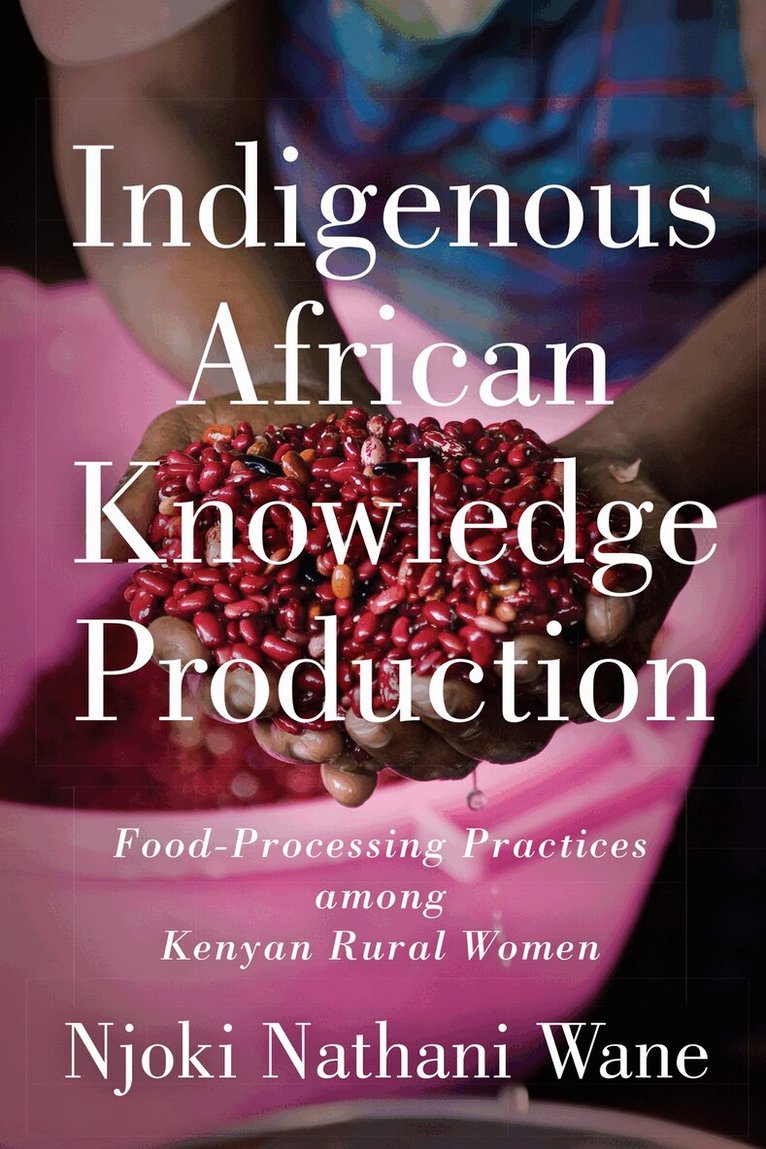
    Indigenous African Knowledge Production

    Food-Processing Practices Among Kenyan Rural Women

    AvNjoki Nathani-Wane

    Inbunden, Engelska, 2014

    500 kr

    Beställningsvara. Skickas inom 5-8 vardagar. Fri frakt över 249 kr.

    Fler format och utgåvor

    E-bok

    647 kr

    E-bok

    647 kr

    Beskrivning

    Among the rural Embu people of Eastern Kenya, teaching and learning are not purely institutional activities. Instead, knowledge is passed from generation to generation alongside the most mundane activities. In Indigenous African Knowledge Production, Njoki Nathani Wane uses food-processing practices – preparing, preserving, cooking, and serving – as an entry point into the indigenous knowledge of the Embu and the role that rural Embu women play in creating and transmitting it.Using personal narratives collected during several years of field research in Kenya, Wane demonstrates how Embu women use proverbs, fables, and folktales to preserve and communicate their world-view, knowledge, and cultural norms. She shows how this process preserves Indigenous knowledge devalued by the colonial and post-colonial educational systems, as well as the gendered dimension of the transmission process.Wane’s book will be useful not just to those studying development and education in Africa, but also to all those interested in questions of how to preserve and recover local cultural knowledge.

    Produktinformation

    • Utgivningsdatum:2014-05-28
    • Mått:160 x 236 x 18 mm
    • Vikt:360 g
    • Format:Inbunden
    • Språk:Engelska
    • Antal sidor:144
    • Förlag:University of Toronto Press
    • ISBN:9781442648142

    Utforska kategorier

    • Antropologi inom Samhälle och politik

    Mer om författaren

    Njoki Nathani Wane is a professor in the Department of Humanities, Social Science, and Social Justice Education at the Ontario Institute for Studies in Education, University of Toronto.

    Innehållsförteckning

    • AcknowledgementsForeward by George J. Sefa Dei (University of Toronto, Sociology and Equity Studies)Map of KenyaIntroductionChapter One – Food Processing: Embu and Indigenous KnowledgesChapter Two – Kenya: The Land, the People, and the Socio-Political EconomyChapter Three – The Everyday Experiences of Embu WomenChapter Four – Food Preservation and ChangeChapter Five – Gender Relations; Decision Making & Food PreferencesChapter Six – Indigenous Technology & the Influence of New InnovationsChapter Seven – Removing the Margins: Including Indigenous Women’s Voices in Knowledge RoductionChapter Eight – Contesting Knowledge: Some Concluding ThoughtsEndnotesReferences