• Fri frakt över 249 kr
  • •
  • Snabba leveranser
  • •
  • Billiga böcker
Kundservice

Du är på sajten för privatpersoner.

Företag, bibliotek eller offentlig verksamhet?

Du handlar på classic.bokus.com, där alla dina funktioner finns intakta.
Till classic.bokus.com
Bokus logotyp. Gå till startsidan.
  • Erbjudanden
  • Nyheter
  • Student
  • Topplistor
  • Barn & ungdom
  • Bokus Play
  • E-böcker
  • Pocketböcker
  • Spel & pussel

10% rabatt på allt med kod: NYSTART10 →

Sidfot

Mina sidor

    Hjälp

    • Kundservice
    • Vanliga frågor och svar
    • Frakt och leverans
    • Retur vid ångerrätt
    • Reklamera vara
    • Betalning
    • Köpvillkor
    • Allmänna villkor
    • Information om webbplatsens tillgänglighet

    Om Bokus

    • Om oss
    • Pressrum
    • För studenter
    • För företag
    • För bibliotek och offentlig verksamhet
    • För leverantörer
    • Hållbarhet

    Populärt

    • Aktuella erbjudanden
    • Presentkort
    • Studentlitteratur
    • Nya böcker
    • Topplistor
    • Signerade böcker
    • Engelska böcker

    Inspiration

    • Boktips
    • BookTok
    • Populära bokserier
    • Barnbokskaraktärer
    • Populära författare
    Logotyp för Bokus
    Följ oss på Facebook (extern länk)Följ oss på Instagram (extern länk)Följ oss på YouTube (extern länk)Följ oss på TikTok (extern länk)
    bokus @ CookiesAnpassa cookiesIntegritetspolicyKöpvillkor
    Till Citymail hemsida (extern länk)Till Budbee hemsida (extern länk)Till Postnord hemsida (extern länk)Till Schenker hemsida (extern länk)Till Early Bird hemsida (extern länk)Till Walleys hemsida (extern länk)
    1. Skönlitteratur
    2. Litteraturvetenskap
    3. Litteraturteori

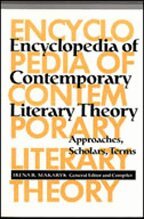
    Encyclopedia of Contemporary Literary Theory

    Approaches, Scholars, Terms

    AvIrena Makaryk

    E-bok
    PDF, Engelska, 2000

    Del i serien Theory / Culture

    908 kr

    Läs direkt i Bokus Reader – eller ladda ned till din enhet (PDF kräver ofta zoom och scroll på små skärmar).

    Beskrivning

    The last half of the twentieth century has seen the emergence of literary theory as a new discipline. As with any body of scholarship, various schools of thought exist, and sometimes conflict, within it. I.R. Makaryk has compiled a welcome guide to the field. Accessible and jargon-free, the Encyclopedia of Contemporary Literary Theory provides lucid, concise explanations of myriad approaches to literature that have arisen over the past forty years.Some 170 scholars from around the world have contributed their expertise to this volume. Their work is organized into three parts. In Part I, forty evaluative essays examine the historical and cultural context out of which new schools of and approaches to literature arose. The essays also discuss the uses and limitations of the various schools, and the key issues they address.Part II focuses on individual theorists. It provides a more detailed picture of the network of scholars not always easily pigeonholed into the categories of Part I. This second section analyses the individual achievements, as well as the influence, of specific scholars, and places them in a larger critical context.Part III deals with the vocabulary of literary theory. It identifies significant, complex terms, places them in context, and explains their origins and use.Accessibility is a key feature of the work. By avoiding jargon, providing mini-bibliographies, and cross-referencing throughout, Makaryk has provided an indispensable tool for literary theorists and historians and for all scholars and students of contemporary criticism and culture.

    Produktinformation

    • Utgivningsdatum:2000-04-28
    • Språk:Engelska
    • Antal sidor:656
    • Filformat:PDF
    • Kopieringsskydd:LCP
    • ISBN:9781442674417
    • Förlag:University of Toronto Press
    • Serie:Theory / Culture

    Utforska kategorier

    • Litteraturteori inom Skönlitteratur
    • Litteraturvetenskap inom Skönlitteratur

    Mer om författaren

    Irena R. Makaryk is an award-winning author and a distinguished university professor of English at the University of Ottawa.

    Recensioner i media

    'The 170 contributors...do a commendable job of providing the summary one wants from an encyclopedia while attending to the complexity and controversy that characterize the field.'- H. Kieft (Choice) 'The book offers a complete look at the criticism contemporaneous with and newer than New Criticism. It fills an almost empty niche. While there are many books that discuss and explain a particular literary theory, books that cover them all are few. ... More than a ready reference book, it will be used by both new students of literature and those whose studies were concentrated at a time when the New Criticism was indeed new.'- Terry Ann Mood (American Reference Book Annual) 'Excellent example [of an encyclopedia]. Lucidly written essays (with abundant cross references) provide a useful characterization of the topic, followed by appropriate bibliographic references. The volume is particularly useful for its international scope and for the adequate way in which it reflects the fact that contemporary literary theory is dependent on contributions from an array of disciplines that a couple of decades ago would never have crossed paths in an English department.'- David William Foster (Rocky Mountain Review) 'Irena Makaryck has put together what is quite simply the best reference on literary and cultural theory available... The book is first impressive in its breadth and clear relevance to all disciplines of the humanities, including entries on theory from literary studies, of course, but also from linguistics, psychoanalysis, anthropology, sociology, history, art and film studies, women's studies, and so on.'- Ross Leckie (The Prince George Citizen) "Another of the best of the recent guides, Encyclopedia of Contemporary Literary Theory,...complements Johns Hopkins Guide by emphasizing more recent Franco-American theory...[the entries] are clearly written, balanced, informative discussions that typically conclude with a list of suggested primary and secondary readings.'- James Harner (Literary Research Guide)