• Fri frakt över 249 kr
  • •
  • Snabba leveranser
  • •
  • Billiga böcker
Kundservice

Du är på sajten för privatpersoner.

Företag, bibliotek eller offentlig verksamhet?

Du handlar på classic.bokus.com, där alla dina funktioner finns intakta.
Till classic.bokus.com
Bokus logotyp. Gå till startsidan.
  • Erbjudanden
  • Student
  • Topplistor
  • Barn & ungdom
  • Bokus Play
  • E-böcker
  • Ljudböcker
  • Pocketböcker
  • Spel och pussel

Pocketfynda! Hundratals böcker för 49 kr/st →

Sidfot

Mina sidor

    Hjälp

    • Kundservice
    • Vanliga frågor och svar
    • Frakt och leverans
    • Retur vid ångerrätt
    • Reklamera vara
    • Betalning
    • Köpvillkor
    • Allmänna villkor
    • Information om webbplatsens tillgänglighet

    Om Bokus

    • Om oss
    • Pressrum
    • För studenter
    • För företag
    • För bibliotek och offentlig verksamhet
    • För leverantörer
    • Hållbarhet

    Populärt

    • Aktuella erbjudanden
    • Presentkort
    • Studentlitteratur
    • Nya böcker
    • Topplistor
    • Signerade böcker
    • Engelska böcker

    Inspiration

    • Boktips
    • BookTok
    • Barnbokskaraktärer
    • Populära författare
    Logotyp för Bokus
    Följ oss på Facebook (extern länk)Följ oss på Instagram (extern länk)Följ oss på YouTube (extern länk)Följ oss på TikTok (extern länk)
    bokus @ CookiesAnpassa cookiesIntegritetspolicyKöpvillkor
    Till Citymail hemsida (extern länk)Till Budbee hemsida (extern länk)Till Postnord hemsida (extern länk)Till Schenker hemsida (extern länk)Till Early Bird hemsida (extern länk)Till Walleys hemsida (extern länk)
    1. Ekonomi och Ledarskap
    2. Företagsekonomi
    3. Redovisning och finansiering
    4. Finansiering

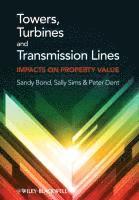
    Towers, Turbines and Transmission Lines

    Impacts On Property Value

    AvSandy Bond,Sally Sims

    Inbunden, Engelska, 2013

    1 054 kr

    Tillfälligt slut

    Beskrivning

    From the Foreword by Dr Valmond Ghyoot, Emeritus Professor of Real Estate, University of South Africa: ‘The valuation profession, the legal profession, property industry participants in general and students will welcome publication of this book. Investors, environmental groups and affected property owners will find essential information for use in their decision-making, development objections and claims. My hope is that [it] will provide answers where required and that it will help to improve the professional standard of valuations and appraisals internationally. I trust that it will also raise the standard of testimony in damages cases. If so, the editors and contributors will have succeeded in documenting the state of the art in this relatively unexplored terrain.’ As a reference source, this book will help quantify the negative impacts on property values of high voltage overhead transmission lines, cell phone towers, and wind turbines. It gives a modern perspective of the concerns property owners have about the siting of industrial structures used to transmit or generate various forms of energy and how these concerns impact on property values.Studies reveal concerns the public have about devices and structures that emit electromagnetic fields (EMFs) due to their potential health hazards. . Despite some research reports suggesting there are no potential adverse health hazards from high voltage overhead transmission lines (HVOTLs) and towers, there is still on-going concern about the siting of these structures due to fears of health risks from exposure to EMFs, changes in neighbourhood aesthetics and loss in property values. The siting of wind turbines is also receiving community opposition due to noise, light flicker, aesthetic concerns, and loss in property values. The extent to which such attitudes are reflected in lower property values is not well understood.Towers, Turbines and Transmission Lines: Impacts on Property Value outlines results of studies conducted in the US, the UK, Australia and New Zealand and offers guidance to valuers as well as to property/real estate appraisal students and property owners around the world. The book provides defensible tools that are becoming widely accepted to assess the effect that these environmental detriments have on property prices.

    Produktinformation

    • Utgivningsdatum:2013-04-16
    • Mått:178 x 229 x 21 mm
    • Vikt:846 g
    • Format:Inbunden
    • Språk:Engelska
    • Antal sidor:352
    • Förlag:John Wiley and Sons Ltd
    • ISBN:9781444330076

    Utforska kategorier

    • Finansiering inom Ekonomi och Ledarskap
    • Miljövetenskap och miljöpolitik inom Naturvetenskap och teknik
    • Energiteknik inom Naturvetenskap och teknik

    Mer om författaren

    Dr Sandy Bond is the Professor of Property Studies in the Commerce Faculty at Lincoln University in Christchurch, New Zealand. She is a Registered Property Valuer and Senior Member of the Property Institute of New Zealand (SPINZ), the President-elect (2013) of the International Real Estate Society and a Past President of the Pacific Rim Real Estate Society (PRRES). She has lived and worked in NZ, the USA, UK, and Australia and her career has encompassed property valuation, valuation consultation, academic research and university teaching.Dr Sally Sims is a senior lecturer in the Department of Real Estate and Construction at Oxford Brookes University.   She was a Member of the Stakeholders Advisory Group on EMF and is a member of the Editorial Advisory Board for the International Journal of Housing Markets and Analysis.Peter Dent is a Fellow of the Royal Institution of Chartered Surveyors.  He has held various posts at Oxford Brookes University, most recently as the Comerford Climate Change Fellow in the Department of Real Estate and Construction. He has had considerable experience of managing both academic development and research projects both in the UK and overseas.

    Recensioner i media

    “In bringing together research material in what remains a relatively under-researched area, this volume presents an excellent review of the current state of knowledge in valuing the potential implications of siting these three types of developments and deserves to be widely read.”  (International Planning Studies, 27 July 2015)“This is a valuable reference source for anyone involved in the valuation or management of property affected by towers, turbines and transmission lines and I would recommend it to those professionals who practice in the area and for researchers interested in aspects of stigma associated with infrastructure projects.”  (Property Management, 1 August 2014)

    Innehållsförteckning

    • About the Editors and Contributors ixForeword by Valmond Ghyoot xiiiChapter 1 Introduction 1Peter Dent and Sally Sims1.1 Valuation and Environmental Attributes 11.2 Risk and Stigma 21.3 Media Impact 41.4 Methodologies 51.5 Book Structure 7Chapter 2 Methods 11David Wyman, Peter Dent and Sally Sims2.1 Introduction 112.2 Sales Comparison Method 112.3 Regression Analysis 122.4 Hedonic Modelling 132.5 Spatial Hedonic Modelling 152.6 Qualitative Analysis 192.7 Triangulation 212.8 Conclusions 22Chapter 3 Risk Perception, Stigma and Behaviour 27Peter Dent and Sally Sims3.1 Introduction 273.2 Risk and its Perception 273.3 Risk Communication 293.4 Risk Behaviour 313.5 Perception and Risk Management 323.6 Property Advice 343.7 Property-related Stigma 353.8 Assessing Stigma 373.9 Property Behavioural Research 383.10 Conclusions 40Part I High-voltage Overhead Transmission Lines (HVOTLs) and House Prices 45Introduction 47Sally SimsI.1 Introduction 47I.2 Residential Property Values near HVOTLs 51Chapter 4 HVOTLs in the UK 55Sally Sims and Peter Dent4.1 Introduction 554.2 Existing Research 574.3 Barriers to Research in the UK 584.4 Value Impacts in the UK 584.5 Conclusions 684.6 Additional Research 69Chapter 5 HVOTLs in New Zealand 81Sandy Bond5.1 Introduction: Electricity Distribution and Planning Guidelines 815.2 Health Concerns Relating to Proximity of HVOTLs Which Affect Value 825.3 Background to the NZ Research 835.4 Literature Review 845.5 Case Study Description 855.6 Market Analysis using a Hedonic Housing Model 875.7 An Attitudinal Study of Residents’ Perceptions 915.8 Summary and Conclusions 94Chapter 6 A Review of HVOTL Studies in North America 101David Wyman and Elaine Worzala6.1 A Review of Existing Research 1016.2 Hedonic Studies in the USA 1046.3 Conclusion 109Summary 115Peter DentPart II Cell Phone Towers 117Introduction 119Sandy BondII.1 Introduction 119II.2 Cellular Phone Systems 119II.3 History 121II.4 Siting Issues and Public Concerns 123Chapter 7 Cell Phone Towers in New Zealand 131Sandy Bond7.1 Introduction 1317.2 Review of Existing research 1327.3 New Zealand Case Study 1357.4 Research Procedure: Opinion Survey 1377.5 Research Procedure: Market Study 1457.6 Summary and Conclusions 160Chapter 8 Cell Phone Towers in North America 169Sandy Bond8.1 Introduction 1698.2 Locating Cell Sites in the USA 1698.3 Case Study Area and Data 1728.4 Research 1758.5 Summary and Conclusions 179Chapter 9 Cell Phone Towers in the UK 185Sally Sims9.1 Introduction 1859.2 Types of Cell Towers 1859.3 Planning Considerations 1869.4 Developing a Framework to Establish the Impact on Value 1879.5 UK Research 1899.6 European Study 1939.7 Conclusions 194Summary 199Sandy BondPart III Wind Farms 203Introduction 205Sally SimsIII.1 Wind Energy 205III.2 Cost of Building Turbines and Generating Energy from the Wind 206III.3 Land Use 207III.4 The Growth of Wind Energy 207III.5 Planning and Development 208III.6 Barriers to Development 209III.7 The Need for Research 209Chapter 10 Wind Farms in the UK 213Sally Sims and Peter Dent10.1 Introduction 21310.2 The Growth of Wind Energy in the UK 21410.3 Existing Research 21810.4 Proposal Objections: Case Studies 22310.5 Valuation Research: Cornwall Case Studies 22910.6 Conclusions 238Chapter 11 Wind Farms in North America 253Ben Hoen11.1 Introduction 25311.2 Previous Research 25411.3 Present Research 25711.4 Robustness Tests 26611.5 Conclusions 267Chapter 12 Wind Farms in Australia and New Zealand 289Sandy Bond12.1 Introduction 28912.2 Existing Research 29412.3 Methodology 29612.4 Survey Results 30012.5 Summary and Conclusions 309Summary 321Peter DentChapter 13 Conclusion 325Peter Dent and Sally Sims13.1 Introductory Section (Chapters 1–3) 32613.2 Part I (Chapters 4–6) 32713.3 Part II (Chapters 7–9) 32813.4 Part III (Chapters 10–12) 32913.5 Concluding Remarks 330Index 333