
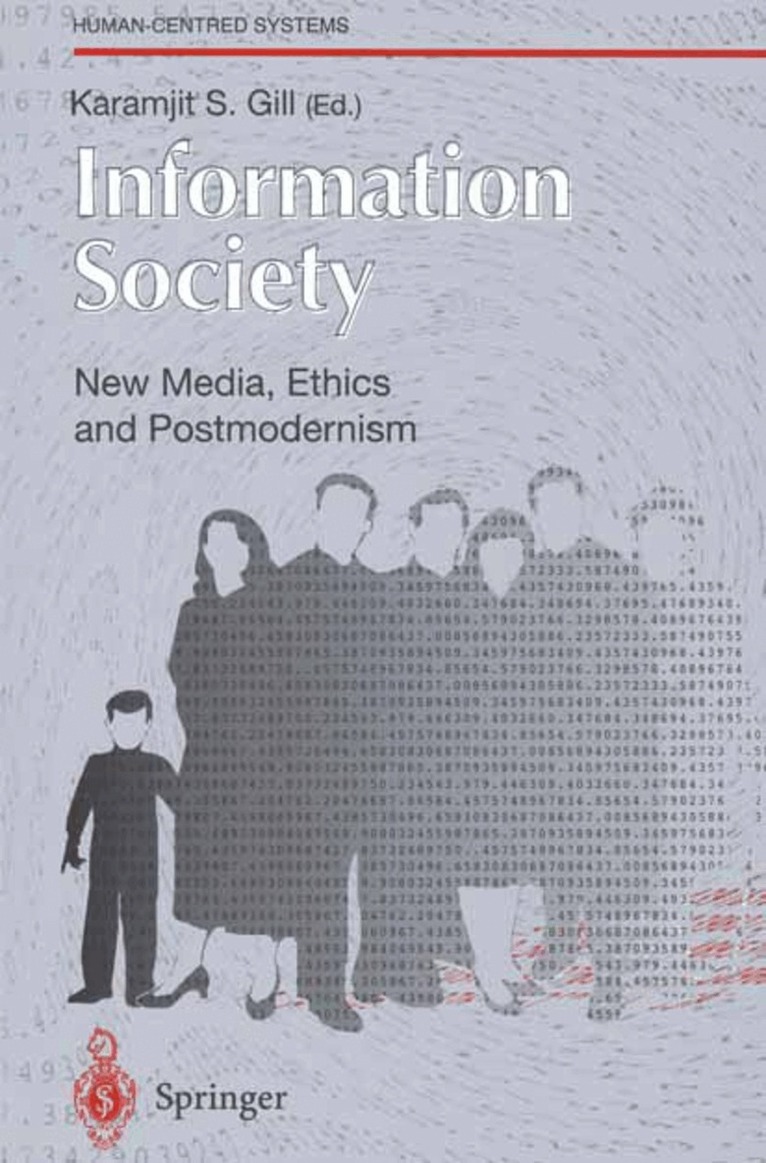
Information Society
New Media, Ethics and Postmodernism
E-bok
PDF, Engelska, 20121 470 kr
Läs direkt i Bokus Reader – eller ladda ned till din enhet (PDF kräver ofta zoom och scroll på små skärmar).
Beskrivning
Human-centredness: A Challenge to Post-industrial Europe? The key power in industrial society has been linked to the possession of capital and factory. In the "information society" it could be rather different. If one accepts that that the key power in the information society will be linked not so much to the ownership of information but to human creativity nourished by that information, the productive force of today and tomorrow, could be more and more the human brain. Making use of one''s intelligence is always accompanied by positive emotion, which in turn further activates the intelligence. But, unfortunately, under present conditions workers of all levels live in fear, anxiety and stress rather than desire and motivation. The question of "basic human ecology" (quality of life) is, therefore, a major strategic factor. It is precisely the opposite to the mechanisms of exclusion that currently dominate our society: exclusion of young people through joblessness - but also exclusion through technology, as with the helplessness of older people or the poorly educated confronted with ticket dispensing machines or other automats. This is not idle theorizing, it corresponds to concrete facts. It is, for example, how some observers interpret the crisis at IBM. Because its programs were less ''human-friendly'', it was shaken to its foundations by Apple and Microsof- though it seems since to have learnt its lesson.
Produktinformation
Utforska kategorier
Hoppa över listan




Du kanske också är intresserad av
- Nyhet
Del 11
- Signerad!
Del 3
- -19%
- -19%
- Nyhet
- Nyhet
Del 11
- Nyhet