• Fri frakt över 249 kr
  • •
  • Snabba leveranser
  • •
  • Billiga böcker
Kundservice

Du är på sajten för privatpersoner.

Företag, bibliotek eller offentlig verksamhet?

Du handlar på classic.bokus.com, där alla dina funktioner finns intakta.
Till classic.bokus.com
Bokus logotyp. Gå till startsidan.
  • Erbjudanden
  • Student
  • Topplistor
  • Barn & ungdom
  • Bokus Play
  • E-böcker
  • Ljudböcker
  • Pocketböcker
  • Spel och pussel

Skapa nya rutiner – hälsoböcker upp till 50% →

Sidfot

Mina sidor

    Hjälp

    • Kundservice
    • Vanliga frågor och svar
    • Frakt och leverans
    • Retur vid ångerrätt
    • Reklamera vara
    • Betalning
    • Köpvillkor
    • Allmänna villkor
    • Information om webbplatsens tillgänglighet

    Om Bokus

    • Om oss
    • Pressrum
    • För studenter
    • För företag
    • För bibliotek och offentlig verksamhet
    • För leverantörer
    • Hållbarhet

    Populärt

    • Aktuella erbjudanden
    • Presentkort
    • Studentlitteratur
    • Nya böcker
    • Topplistor
    • Signerade böcker
    • Engelska böcker

    Inspiration

    • Boktips
    • BookTok
    • Barnbokskaraktärer
    • Populära författare
    Logotyp för Bokus
    Följ oss på Facebook (extern länk)Följ oss på Instagram (extern länk)Följ oss på YouTube (extern länk)Följ oss på TikTok (extern länk)
    bokus @ CookiesAnpassa cookiesIntegritetspolicyKöpvillkor
    Till Citymail hemsida (extern länk)Till Budbee hemsida (extern länk)Till Postnord hemsida (extern länk)Till Schenker hemsida (extern länk)Till Early Bird hemsida (extern länk)Till Walleys hemsida (extern länk)
    1. Psykologi och pedagogik
    2. Pedagogik
    3. Pedagogisk psykologi

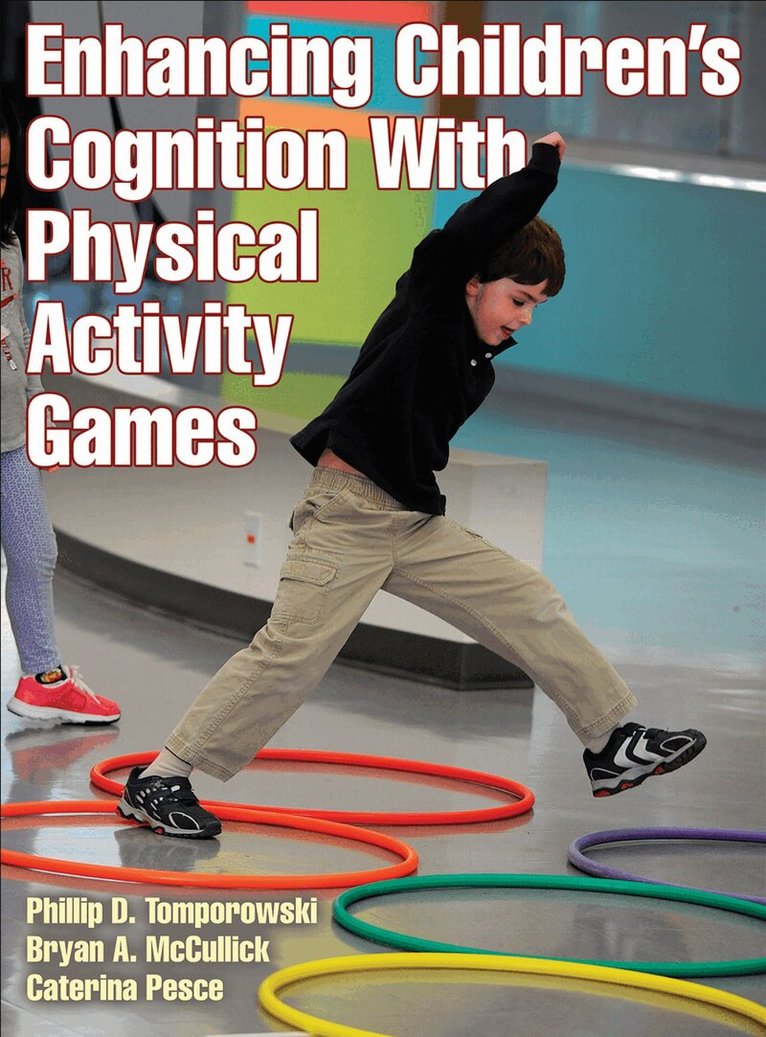
    Enhancing Children's Cognition with Physical Activity Games

    AvPhillip D. Tomporowski,Bryan A. McCullick

    Häftad, Engelska, 2015

    470 kr

    Beställningsvara. Skickas inom 5-8 vardagar. Fri frakt över 249 kr.

    Beskrivning

    There are plenty of books that help you use or create games that develop children's physical skills, and it's now widely accepted that physical activity can have a positive effect on academic achievement. But this is the first book that shows you how to tailor physical activity games specifically to enhance children's cognitive abilities. Enhancing Children's Cognition with Physical Activity Games, written by three authorities in teacher education, exercise physiology, and sport science, shows you how to apply current concepts in child development, cognitive science, physical education, and teacher training to create movement-based learning experiences that benefit children both physically and mentally. You will be guided in creating environments that lend themselves to cognitive development and enhanced academic achievement. And you will understand not only how to create games to foster cognitive development but why such games are so useful in developing the whole child. Enhancing Children's Cognition with Physical Activity Games offers the following features: •Two chapters of sample games, one for preschoolers and kindergarteners, the other for elementary school children •Expert guidance in creating your own games for children ages 3 to 12, with an emphasis on developmental ranges of 3 to 7 and 7 to 12 •A practice-oriented model of teacher education that shows you how you can best develop and implement physical activity games that support both motor and cognitive development The book contains a running glossary to help teachers and students understand the terms used. It also discusses several models of 21st-century learning, highlighting the role that physical activity games play in a comprehensive education. Enhancing Children's Cognition With Physical Activity Games is equally useful for teachers working with children in school, before school, or after school and for program directors working with children in community programs. The authors link their application to research, creating a practical reference for professionals in the field, whatever their setting. The book is presented in three parts. Part I grounds you in the research that shows how physical activity affects children's mental development. You will learn how physical activity benefits children's cognition and academics, how movement games help children think and learn, and how to create a motivational environment where children want to learn. Part II helps you translate research into practice. You will explore how movements create mental maps and affect mental health, how to engage children in playful learning, and how to incorporate physical activity into your teaching and enhance your teaching models. You will also consider how to assess children at play—how to collect data and know when your program is being effective—and how to apply physical activity games in both the home and the community. In part III, you are supplied with games for preschoolers, kindergartners, and elementary school children. You'll find games that emphasize three principles: contextual interference, mental control, and discovery. Each chapter concludes with practical implications for teeachers, helping you to put into context the information you have come across in that chapter. Enhancing Children's Cognition with Physical Activity Games helps educators create, design, implement, and evaluate problem-solving games that foster children's mental engagement and thoughtful decision making. Kids are highly motivated by problem-solving games, and the cognitive skills they develop in solving those problems can be translated to their academic success.

    Produktinformation

    • Utgivningsdatum:2015-01-30
    • Mått:216 x 279 x 22 mm
    • Vikt:726 g
    • Format:Häftad
    • Språk:Engelska
    • Antal sidor:256
    • Förlag:Human Kinetics Publishers
    • ISBN:9781450441421

    Utforska kategorier

    • Pedagogisk psykologi inom Psykologi och pedagogik
    • Barnpsykologi och utvecklingspsykologi inom Psykologi och pedagogik
    • Undervisning i specifika ämnen inom Psykologi och pedagogik

    Mer om författaren

    Phillip D. Tomporowski, PhD, is a professor of kinesiology at the University of Georgia. An experimental psychologist, Tomporowski has been involved in the study of learning and the effects of exercise on mental functions for four decades. He has authored, coauthored, or edited five books and contributed chapters to a dozen of other books. He is widely published in journals on cognitive function and exercise issues in children and has received numerous grants to conduct studies in these and related areas. Tomporowski is a sought-after speaker at symposia and conventions. He is a fellow of the American College of Sports Medicine and a member of the American Psychological Society. He enjoys participating and instructing in the martial arts and taking part in triathlons and obstacle races. Caterina Pesce, PhD, is a professor in the department of movement, human and health science at the Italian University Sport and Movement in Rome. She is a former physical education teacher with higher education in both sport science and experimental psychology. Since 2003 she has taught in higher education on physical activity for children. Her research focus has been on the effects of physical exercise on cognitive functioning. She coauthored a book on exercise and cognitive function and has authored or coauthored more than three dozen research publications in sport and exercise psychology and physical education. Pesce is a member of the Italian Society of Movement and Sport Sciences, associate editor for Journal of Aging and Physical Activity, a board member of the Journal of Sport and Exercise Psychology, and a board member of the Italian national program of motor literacy for elementary schools. She enjoys jogging and singing and, above all, being a mother. Bryan A. McCullick, PhD, is a professor of kinesiology at the University of Georgia. He is a former physical education teacher and has been a physical education teacher educator since 1997. He has given numerous keynote addresses at conferences related to physical education, physical activity, and teacher training. McCullick has coauthored two books, contributed numerous chapters in books, and written more than 40 journal articles. He has also received numerous grants to conduct research and received awards and recognitions, including winning the Mabel Lee Award from AAHPERD. McCullick is a fellow in the SHAPE America Research Consortium, has been associate editor for Research Quarterly for Exercise and Sport (RQES) and is on the RQES editorial board, was vice president of the Association Internationale des Ecoles Superieures d'Education Physique (AIESEP), and has served on many other editorial boards. Among his joys are being a father and a husband, playing golf (poorly), and following the Alabama Crimson Tide and the Miami Dolphins.

    Innehållsförteckning

    • Part I Physical Activity and Mental DevelopmentChapter 1 Understanding Children's Mental Development Mental Development Skill and the Trajectory of Cognitive Development Understanding Children's Development From Multiple Points of View Implications for Educators Chapter 2 How Movement Influences Children's Mental Development Children's Physical Activity Physical Activity in Natural, Educational, and Recreational Settings How Physical Activity and Exercise Enhance Children's Cognition How Physical Activity Benefits Children's Cognition and Academics Implication for Educators Chapter 3 How Movement Games Help Children Think and Learn Learning What Influences the Shape of the Learning Curve? Mental Energy and Children's Learning Developmental Tasks and Readiness to Learn Implication for Educators Chapter 4 Motivating Children to Learn by Playing Motivation to Play Games Challenge and Children's Development Creating a Motivational Climate for Learning and Enjoyment Implication for Educators Part II Translating Research to PracticeChapter 5 Capitalizing on Physical Activity to Benefit Children's Physical and Mental Health How Physical Movements Create Mental Maps Childhood Inactivity and Sedentary Behavior Worldwide Trends in Childhood Obesity and Health Children's and Adolescents' Mental Health Implication for Educators Chapter 6 Engaging Children in Playful Learning Children's Mental Engagement Three Principles of Instruction Teaching for Engagement Implication for Educators Chapter 7 Teaching Physical Activity Games for Cognitive Engagement Who Are Physical Activity Teachers? Skills Needed by Physical Activity Teachers Selecting an Approach to Teaching Enhancing the Effectiveness of Teaching Models Considerations for Implementing Physical Activity Games Programs Implication for Educators Chapter 8 How to Assess Children at Play What Is Assessment and Why Do It? Selecting the Right Indicators of Program Success Indicators of Program Effectiveness Approaches to and Sources of Data Collection Individual Differences, Measurement, and Game Development Implication for Educators Chapter 9 Integrating Physical Activity Games Into the Home and Community Ecological Models Applying Physical Activity Games to Ecological Models 21st-Century Schools Implication for Educators Part III Creating Effective Physical Activity GamesChapter 10 Physical Activity Games for Preschool- and Kindergarten-Age Children Moving From Play to Games Games That Challenge Executive Functions Connecting Games for Preschool- and Kindergarten-Age Children to SHAPE America Standards Games Highlighting Contextual Interference Games Emphasizing Mental Control Games Highlighting Discovery Implication for Educators Chapter 11 Physical Activity Games for Elementary School–Age Children Games That Challenge Executive Functions Connecting Games for Elementary School–Age Children to SHAPE America Standards Games Highlighting Contextual Interference Games Emphasizing Mental Control Games Promoting Discovery Implication for Educators