• Fri frakt över 249 kr
  • •
  • Snabba leveranser
  • •
  • Billiga böcker
Kundservice

Du är på sajten för privatpersoner.

Företag, bibliotek eller offentlig verksamhet?

Du handlar på classic.bokus.com, där alla dina funktioner finns intakta.
Till classic.bokus.com
Bokus logotyp. Gå till startsidan.
  • Erbjudanden
  • Nyheter
  • Student
  • Topplistor
  • Barn & ungdom
  • Bokus Play
  • E-böcker
  • Pocketböcker
  • Spel & pussel

Må bättre, för mindre! Upp till 50% rabatt på hälsoböcker

Sidfot

Mina sidor

    Hjälp

    • Kundservice
    • Vanliga frågor och svar
    • Frakt och leverans
    • Retur vid ångerrätt
    • Reklamera vara
    • Betalning
    • Köpvillkor
    • Allmänna villkor
    • Information om webbplatsens tillgänglighet

    Om Bokus

    • Om oss
    • Pressrum
    • För studenter
    • För företag
    • För bibliotek och offentlig verksamhet
    • För leverantörer
    • Hållbarhet

    Populärt

    • Aktuella erbjudanden
    • Presentkort
    • Studentlitteratur
    • Nya böcker
    • Topplistor
    • Signerade böcker
    • Engelska böcker

    Inspiration

    • Boktips
    • BookTok
    • Populära bokserier
    • Barnbokskaraktärer
    • Populära författare
    Logotyp för Bokus
    Följ oss på Facebook (extern länk)Följ oss på Instagram (extern länk)Följ oss på YouTube (extern länk)Följ oss på TikTok (extern länk)
    bokus @ CookiesAnpassa cookiesIntegritetspolicyKöpvillkor
    Till Citymail hemsida (extern länk)Till Budbee hemsida (extern länk)Till Postnord hemsida (extern länk)Till Schenker hemsida (extern länk)Till Early Bird hemsida (extern länk)Till Walleys hemsida (extern länk)
    1. Samhälle och politik
    2. Social välfärd och brottslighet
    3. Brottslighet och kriminologi

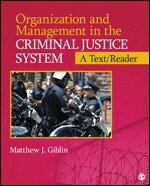
    Organization and Management in the Criminal Justice System

    A Text/Reader

    AvMatthew J. Giblin

    Häftad, Engelska, 2013

    Del i serien SAGE Text/Reader Series in Criminology and Criminal Justice

    1 892 kr

    Beställningsvara. Skickas inom 5-8 vardagar. Fri frakt över 249 kr.

    Beskrivning

    Integrating the theoretically-framed, empirically-supported content of a traditional textbook and an edited reader into a single volume, this text/reader exposes students to original primary works (26 readings) in the field of organization and management while providing them with a comprehensive review of the field. The book covers the field’s core foundational theories and works, as well as contemporary theories and cutting-edge research. Demonstrating that organizations matter and that the study of organizations has far-reaching utility, the book applies broader organization and management principles to a wide range of key entities including police, courts, and corrections, as well as drug traffickers, sex offender treatment providers, and homeland security agencies. Each of these organizations has a criminal justice nexus and is discussed alongside the major components of the criminal justice system. From organizational theory to managing a criminal justice organization, this book is a must-read for anyone pursuing a career in criminal justice administration.

    Produktinformation

    • Utgivningsdatum:2013-11-12
    • Mått:187 x 231 x 25 mm
    • Vikt:1 140 g
    • Format:Häftad
    • Språk:Engelska
    • Serie:SAGE Text/Reader Series in Criminology and Criminal Justice
    • Antal sidor:672
    • Upplaga:1
    • Förlag:SAGE Publications
    • ISBN:9781452219929

    Utforska kategorier

    • Brottslighet och kriminologi inom Samhälle och politik

    Mer om författaren

    Matthew J. Giblin is an associate professor and undergraduate program director in the Department of Criminology and Criminal Justice at Southern Illinois University Carbondale. He earned his doctorate in Criminal Justice from Indiana University in 2004. His primary research interest involves applying organizational theories to the study of criminal justice agencies. Specifically, he and his colleagues have tested contingency, resource dependence, and institutional theory explanations of police homeland security preparedness, community policing implementation, and crime analysis unit adoption.

    Recensioner i media

    This is a well rounded and authoritative textbook for criminal justice administration.

    Innehållsförteckning

    • Section I. Introduction: Why Should We Study Criminal Justice Organizations?Section II. Organizational Structure: How Do We Build Organizations?Reading 1. The Impact of Centralization and Formalization on Correctional Staff Job Satisfaction and Organizational Commitment by Eric G. Lambert, Eugene A. Paoline, and Nancy Lynne HoganReading 2. Factors to Consider for Optimal Span of Control in Community Supervision Evidence-Based Practice Environments by Gaylene S. ArmstrongReading 3. The Organizational Structure of International Drug Smuggling by Jana S. Benson and Scott H. DeckerSection III. Organizational Theory: How Do We Explain What Organizations Look Like?Reading 4. “McJustice”: On the McDonaldization of Criminal Justice by Robert BohmReading 5. Maintaining the Myth of Individualized Justice: Probation Presentence Reports by John RosecranceSection IV. Organizational Deviance and Termination: What Explains Failure in Criminal Justice Agencies?Reading 6. Bureaucracy, Managerial Disorganization, and Administrative Breakdown in Criminal Justice Agencies byClarissa Freitas Dias and Michael S. VaughnReading 7. Social Theory and the Street Cop: The Case of Deadly Force by Klinger, DavidSection V. Interagency Collaboration: Are Two or More Organizations [Combined] Better Than One?Reading 8. The Intelligence Fusion Process for State, Local, and Tribal Law Enforcement by David L. Carter and Jeremy G. CarterReading 9. A Specialized Domestic Violence Court in South Carolina: An Example of Procedural Justice for Victims and Defendants by Angela R. Gover, Eve M. Brank, and John M. MacDonaldSection VI. Unions and Collective Bargaining: United We Stand?Reading 10. Police Employee Organizations by Colleen KadleckReading 11. Prison Officer Unions and the Perpetuation of the Penal Status Quo by Joshua PageSection VII. Organizational Socialization: How Does a Person Learn to “Behave” in an Organization?Reading 12. Saying One Thing, Meaning Another: The Role of Parables in Police Training by Robert E. FordReading 13. An Officer and a Lady: Organizational Barriers to Women Working as Correctional Officers in Men’s Prisons by Nancy C. JurikSection VIII. Motivation and Job Design: How Do We Light a Fire Under Employees?Reading 14.Motivation as a Predictor of Therapeutic Engagement in Mandated Residential Substance Abuse Treatment by Matthew L. Hiller, Kevin Knight, Carl Leukefeld, and D. Dwayne SimpsonReading 15.Organizational Justice and Police Misconduct by Scott E. Wolfe and Alex R. PiqueroReading 16.Job Design, Community Policing, and Higher Education: A Tale of Two Cities by Charles W. SherwoodSection IX. Occupational Stress and Burnout: Is This Job Killing Me?Reading 17. A Qualitative Assessment of Stress Perceptions Among Members of a Homicide Unit by Dean A. Dabney, Heith Copes, Richard Tewksbury, and Shila R. Hawk-TourtelotReading 18. The Nature of Occupational Stress Among Public Defenders by David R. LynchReading 19. Factors Contributing to Levels of Burnout Among Sex Offender Treatment Providers by Rebecca A. Shelby, Rebecca M. Stoddart, and Kathryn L. TaylorSection X. Leadership: Are You a Leader or a Follower?Reading 20. The Ineffective Police Leader: Acts of Commission and Omission by Joseph A. SchaferReading 21. Leadership and Correctional Reform by James B. Jacobs and Elana OlitskySection XI. Power in Organizations: How are Subordinates, Suspects, Inmates, and Clients Controlled?Reading 22.The Society of Captives: A Study of a Maximum Security Prison by Gresham M. SykesReading 23.The Limits of Individual Control? Perceived Officer Power and Probationer Compliance by Hayden P. Smith, Brandon K. Applegate, Alicia H. Sitren, and Nicollette Fariello Springer.Reading 24. Gender, Power, and Reciprocity in the Correctional Setting by Denise L. Jenne and Robert C. KerstingSection XII. Organizational Change: What Causes Organizations to Transform?Reading 25.Lessons from the Battle over D.A.R.E.: The Complicated Relationship Between Research and Practice byGreg Berman and Aubrey FoxReading 26. Improving Criminal Justice Through Better Decision Making: Lessons From the Medical System by Daniel P. Mears and Sarah BaconGlossaryReferencesCredits and SourcesIndexAbout the Author