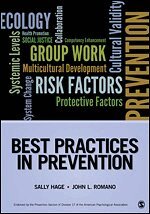
Häftad, Engelska, 2013
Best Practices in Prevention
Av Sally Hage, John L. Romano, Sally M. Hage, John L. Romano
670 kr
Beställningsvara. Skickas inom 3-6 vardagar. Fri frakt över 249 kr.
Beskrivning
This second book in the Prevention Practice Kit provides counselors, psychologists, and other mental health workers with practical steps that need to be considered by prevention practitioners as they engage with others in developing and delivering prevention projects. A context for engaging in prevention practice is provided, including discussion of how prevention fits with traditional models of psychology, descriptions of theoretical models for doing prevention practice, and examples of empirically-supported prevention interventions.
The reader will learn about a new set of Prevention Guidelines being proposed to the American Psychological Association, and why these recommendations are important to consider. The book highlights the essential aspects of collaboration, cultural relevance, social justice, and program dissemination, and addresses knotty ethical issues surrounding confidentiality in prevention and health promotion efforts. In addition, the book provides information on funding and readily available resources for prevention. Finally, examples and activities are provided throughout the book—accompanied by a set of learning exercises—to help readers apply what they learn.
This book is part of the Prevention Practice Kit: Action Guides for Mental Health, a collection of eight books each authored by scholars in the specific field of prevention and edited by Dr. Robert K. Conyne and Dr. Arthur M. Horne. The books in the collection conform to the editors' outline to promote a consistent reading experience. Designed to provide human services practitioners, counselors, psychologists, social workers, instructors, and students with concrete direction for spreading and improving the practice of prevention, the series provides thorough coverage of prevention application including a general overview of prevention, best practices, diversity and cultural relevance, psychoeducational groups, consultation, program development and evaluation, evidence base, and public policy.
This book is endorsed by the Prevention Section of the Society of Counseling Psychology of the American Psychological Association. Fifty percent of all royalties are donated to Division 17 of the APA.
The reader will learn about a new set of Prevention Guidelines being proposed to the American Psychological Association, and why these recommendations are important to consider. The book highlights the essential aspects of collaboration, cultural relevance, social justice, and program dissemination, and addresses knotty ethical issues surrounding confidentiality in prevention and health promotion efforts. In addition, the book provides information on funding and readily available resources for prevention. Finally, examples and activities are provided throughout the book—accompanied by a set of learning exercises—to help readers apply what they learn.
This book is part of the Prevention Practice Kit: Action Guides for Mental Health, a collection of eight books each authored by scholars in the specific field of prevention and edited by Dr. Robert K. Conyne and Dr. Arthur M. Horne. The books in the collection conform to the editors' outline to promote a consistent reading experience. Designed to provide human services practitioners, counselors, psychologists, social workers, instructors, and students with concrete direction for spreading and improving the practice of prevention, the series provides thorough coverage of prevention application including a general overview of prevention, best practices, diversity and cultural relevance, psychoeducational groups, consultation, program development and evaluation, evidence base, and public policy.
This book is endorsed by the Prevention Section of the Society of Counseling Psychology of the American Psychological Association. Fifty percent of all royalties are donated to Division 17 of the APA.
Produktinformation
- Utgivningsdatum: 2013-02-12
- Mått: 177 x 254 x 4 mm
- Vikt: 140 g
- Format: Häftad
- Språk: Engelska
- Serie: Prevention Practice Kit
- Antal sidor: 72
- Upplaga: 1
- Förlag: SAGE Publications
- ISBN: 9781452257976
Utforska kategorier
Betyg & recensioner
0 recensioner
Inga recensioner tillgängliga.