• Fri frakt över 249 kr
  • •
  • Snabba leveranser
  • •
  • Billiga böcker
Kundservice

Du är på sajten för privatpersoner.

Företag, bibliotek eller offentlig verksamhet?

Du handlar på classic.bokus.com, där alla dina funktioner finns intakta.
Till classic.bokus.com
Bokus logotyp. Gå till startsidan.
  • Erbjudanden
  • Nyheter
  • Student
  • Topplistor
  • Barn & ungdom
  • Bokus Play
  • E-böcker
  • Pocketböcker
  • Spel & pussel

10% rabatt på allt med kod: NYSTART10 →

Sidfot

Mina sidor

    Hjälp

    • Kundservice
    • Vanliga frågor och svar
    • Frakt och leverans
    • Retur vid ångerrätt
    • Reklamera vara
    • Betalning
    • Köpvillkor
    • Allmänna villkor
    • Information om webbplatsens tillgänglighet

    Om Bokus

    • Om oss
    • Pressrum
    • För studenter
    • För företag
    • För bibliotek och offentlig verksamhet
    • För leverantörer
    • Hållbarhet

    Populärt

    • Aktuella erbjudanden
    • Presentkort
    • Studentlitteratur
    • Nya böcker
    • Topplistor
    • Signerade böcker
    • Engelska böcker

    Inspiration

    • Boktips
    • BookTok
    • Populära bokserier
    • Barnbokskaraktärer
    • Populära författare
    Logotyp för Bokus
    Följ oss på Facebook (extern länk)Följ oss på Instagram (extern länk)Följ oss på YouTube (extern länk)Följ oss på TikTok (extern länk)
    bokus @ CookiesAnpassa cookiesIntegritetspolicyKöpvillkor
    Till Citymail hemsida (extern länk)Till Budbee hemsida (extern länk)Till Postnord hemsida (extern länk)Till Schenker hemsida (extern länk)Till Early Bird hemsida (extern länk)Till Walleys hemsida (extern länk)
    1. Samhälle och politik
    2. Sociologi och antropologi
    3. Sociologi

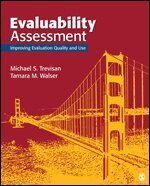
    Evaluability Assessment

    Improving Evaluation Quality and Use

    AvMichael S. Trevisan,Tamara M. Walser

    Häftad, Engelska, 2014

    1 292 kr

    Beställningsvara. Skickas inom 3-6 vardagar. Fri frakt över 249 kr.

    Beskrivning

    Evaluability assessment (EA) can lead to development of sound program theory, increased stakeholder involvement and empowerment, better understanding of program culture and context, enhanced collaboration and communication, process and findings use, and organizational learning and evaluation capacity building. This book provides an up-to-date treatment of EA, clarifies what it actually is and how it can be used, demonstrates EA as an approach to evaluative inquiry with multidisciplinary and global appeal, and identifies and describes the purposes and benefits to using EA. Using case examples contributed by EA practitioners, the text illustrates important features of EA use, and showcases how EA is used in a variety of disciplines and evaluation contexts. This text is appropriate as an instructional text for graduate level evaluation courses and training, and as a resource for evaluation practitioners, policymakers, funding agencies, and professional training.

    Produktinformation

    • Utgivningsdatum:2014-10-02
    • Mått:187 x 231 x 8 mm
    • Vikt:340 g
    • Format:Häftad
    • Språk:Engelska
    • Antal sidor:200
    • Upplaga:1
    • Förlag:SAGE Publications
    • ISBN:9781452282442

    Utforska kategorier

    • Sociologi inom Samhälle och politik

    Mer om författaren

    Dr. Mike Trevisan is the dean of the College of Education and professor of educational psychology at Washington State University, where he has worked for 26 years. Dr. Trevisan has been principal investigator or co-principal investigator on many grants and contracts that require evaluation and has obtained more than $8 million in external funding. Dr. Trevisan is widely published in the field of evaluation and is often tapped as a consultant in the planning, development, and implementation of evaluations at both the local and national levels. He has provided evaluation workshops to K-12 school districts, state agencies, universities, nonprofit groups, the United Nations Population Fund, and professional meetings. His recent work focuses on the development of evaluation capacity internationally. To this end, he has provided evaluation workshops to students, faculty, and practitioners in several countries including India, Italy, and Thailand. In 2018, he received a Fulbright specialist award to Korea to help develop evaluation capacity among K-12 school counselors. Dr. Trevisan co-authored the book, Evaluability Assessment: Improving Evaluation Quality and Use, published in 2015.Dr. Tamara Walser has worked in the evaluation field for more than 25 years. She is a professor in the department of Educational Leadership at the University of North Carolina Wilmington where she coordinates the Evaluation and Organizational Learning M.S. degree and Evaluation post-baccalaureate certificate program; she teaches courses in evaluation, inquiry methods, and academic writing. Dr. Walser previously worked as an evaluator in non-profit and for-profit organizations. She has served as Principal Investigator, Co-Principal Investigator, Project Manager, Lead Evaluator, and as an Advisory Group member on numerous grants and contracts focused on evaluation; and has presented research and training on evaluation nationally and internationally. She co-authored the book, Evaluability Assessment: Improving Evaluation Quality and Use, published in 2015. Dr. Walser obtained a Ph.D. in Research and Evaluation and a M.S. in Instructional Design and Development from Utah State University; she earned a B.A. in French from the University of North Carolina at Charlotte and began her professional career as a French teacher.

    Recensioner i media

    The most impressive aspect of this book is that it positions EA as an approach that perfectly fits within the current philosophical views on program evaluation…. The authors do a great job connecting these theories to practice, and provide good guidelines.

    Innehållsförteckning

    • PREFACE1. The Evaluability Assessment Story2. Evaluability Assessment and Program Evaluation3. Introducing Our Evaluability Assessment Model4. Focusing the Evaluability Assessment5. Developing an Initial Program Theory6. Gathering Feedback on Program Theory7. Using the Evaluability Assessment8. Additional Considerations