• Fri frakt över 249 kr
  • •
  • Snabba leveranser
  • •
  • Billiga böcker
Kundservice

Du är på sajten för privatpersoner.

Företag, bibliotek eller offentlig verksamhet?

Du handlar på classic.bokus.com, där alla dina funktioner finns intakta.
Till classic.bokus.com
Bokus logotyp. Gå till startsidan.
  • Erbjudanden
  • Nyheter
  • Student
  • Topplistor
  • Barn & ungdom
  • Bokus Play
  • E-böcker
  • Pocketböcker
  • Spel & pussel

10% rabatt på allt med kod NYSTART10 →

Sidfot

Mina sidor

    Hjälp

    • Kundservice
    • Vanliga frågor och svar
    • Frakt och leverans
    • Retur vid ångerrätt
    • Reklamera vara
    • Betalning
    • Köpvillkor
    • Allmänna villkor
    • Information om webbplatsens tillgänglighet

    Om Bokus

    • Om oss
    • Pressrum
    • För studenter
    • För företag
    • För bibliotek och offentlig verksamhet
    • För leverantörer
    • Hållbarhet

    Populärt

    • Aktuella erbjudanden
    • Presentkort
    • Studentlitteratur
    • Nya böcker
    • Topplistor
    • Signerade böcker
    • Engelska böcker

    Inspiration

    • Boktips
    • BookTok
    • Populära bokserier
    • Barnbokskaraktärer
    • Populära författare
    Logotyp för Bokus
    Följ oss på Facebook (extern länk)Följ oss på Instagram (extern länk)Följ oss på YouTube (extern länk)Följ oss på TikTok (extern länk)
    bokus @ CookiesAnpassa cookiesIntegritetspolicyKöpvillkor
    Till Citymail hemsida (extern länk)Till Budbee hemsida (extern länk)Till Postnord hemsida (extern länk)Till Schenker hemsida (extern länk)Till Early Bird hemsida (extern länk)Till Walleys hemsida (extern länk)
    1. Psykologi och pedagogik
    2. Pedagogik
    3. Skolväsen och utbildningssystem
    4. Läroplaner och kursplaner

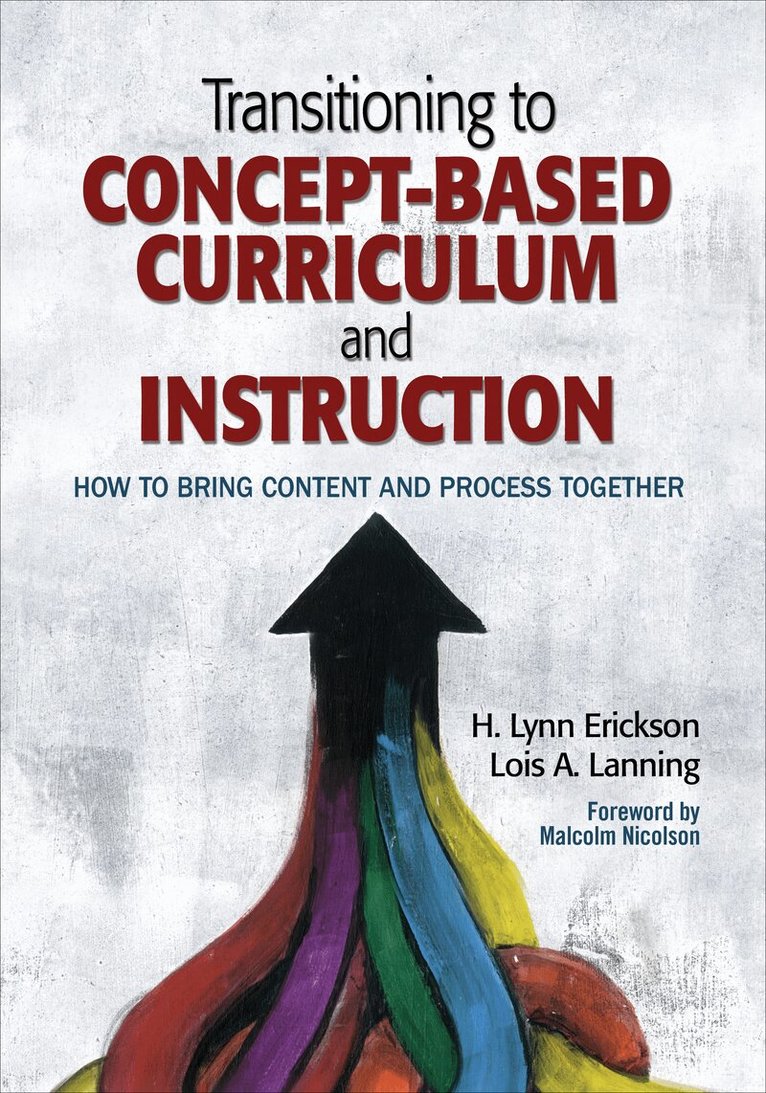
    Transitioning to Concept-Based Curriculum and Instruction

    How to Bring Content and Process Together

    AvH. Lynn Erickson,Lois A. Lanning

    Häftad, Engelska, 2014

    Del i serien Concept-Based Curriculum and Instruction Series

    416 kr

    Beställningsvara. Skickas inom 3-6 vardagar. Fri frakt över 249 kr.

    Beskrivning

    A cutting-edge model for 21st century curriculum and instructionHow can you spot a thinking child? Look at the eyes: they’ll light up, signaling that transformative moment when your student has finally grasped that big idea behind critical academic content. If experiences like this are all too rare in your school, then you need a curriculum and instruction model that’s more inquiry-driven and idea-centered. Now. H. Lynn Erickson and Lois Lanning demonstrate how, through concept-based curriculum, you can move beyond superficial coverage and lower-level skills practice to effect intellectually engaging pedagogy, where students engage in problem finding and problem solving. New insights include: How to design and implement concept-based curriculum and instruction across all subjects and grade levels. Why content and process are two different (but equally important) aspects of any effective concept-based curriculum. How to ensure students develop the all-important skill of synergistic thinking. We’re all looking for the best curriculum and instruction model to meet the changing demands of the 21st century. This is it."With the onset of the Common Core and new national content standards, concept-based learning is now more crucial than ever. Erickson and Lanning are ′ahead of the curve′ in providing teachers and curriculum leaders with rich instructional strategies to meet these challenging standards. This is an essential book for planning tomorrow’s curricula today."Douglas Llewellyn, Educational Consultant and Author of Inquire Within, Third Edition "Powerful teaching engages minds with powerful ideas. At its core, such transformative teaching is neither transmission of information nor practice with inert skills. Rather it is a careful choreography between a mind and an idea such that the mind comes to own the idea in a form that is true to the discipline and expansive for the learner. Erickson and Lanning teach teachers to be choreographers of learning—understanding both what makes content worth knowing and how to engage young minds with that content in ways that extend their capacities to understand it at a deeper level, use it, transfer it, and ultimately create with it."Carol Ann Tomlinson, Ed.D., Chair of Educational Leadership, Foundations, and PolicyCurry School of Education, University of Virginia

    Produktinformation

    • Utgivningsdatum:2014-02-18
    • Mått:177 x 254 x 13 mm
    • Vikt:420 g
    • Format:Häftad
    • Språk:Engelska
    • Serie:Concept-Based Curriculum and Instruction Series
    • Antal sidor:224
    • Förlag:SAGE Publications Inc
    • ISBN:9781452290195

    Utforska kategorier

    • Läroplaner och kursplaner inom Psykologi och pedagogik

    Mer om författaren

    H. Lynn Erickson, Ed.D., is an independent consultant assisting schools and districts with concept-based curriculum design and instruction. During the past 20 years Lynn has worked extensively with K-12 teachers and administrators on the design of classroom and district level curricula aligned to academic standards and national requirements. She was a consultant to the International Baccalaureate Organization for the development of the Middle Years Programme—the Next Chapter.Lynn is the author of three best-selling books, Stirring the Head, Heart and Soul: Redefining Curriculum and Instruction, 3rd edition ©2008; Concept-based Curriculum and Instruction: Teaching Beyond the Facts, ©2002; and Transitioning to Concept-based Curriculum and Instruction: How to Bring Content and Process Together, co-authored with Dr. Lois Lanning, © 2014, Corwin Press Publishers. This publication, co-authored with Lois Lanning and Rachel French is the 2nd edition of Lynn’s popular  book, Concept-based Curriculum and Instruction for the Thinking Classroom: Teaching Beyond the Facts. She also has a chapter in Robert Marzano’s book, On Excellence in Teaching, ©2010, Solution Tree Press. Lynn is an internationally recognized presenter/consultant in the areas of concept-based curriculum design, and teaching for deep understanding. She has worked as a teacher, principal, curriculum director, adjunct professor, and educational consultant over a long career. In addition to her work in the United States, Lynn has presented and trained educators across the world in different regions and countries including Asia, Australia, South America, Canada, the United Kingdom, Finland, Germany, the Netherlands, the United Kingdom, Switzerland, Austria, China, Saudi Arabia, United Arab Emirates and Cyprus.Lynn currently lives in Everett, Washington with her family. She and Ken have two children, and two grandsons, Trevor and Connor, who continually stir her heart and soul. Lois A. Lanning, PhD, is an independent education consultant.  She presents and works with districts at the international, national, and state levels in the areas of literacy and Concept- Based Curriculum design.This book is a natural extension of her three previous best-selling books in the Corwin Press Publisher’s Concept-Based collection, including Designing a Concept-Based Curriculum for English Language Arts (2013), by Lois A. Lanning; Concept-Based Curriculum and Instruction for the Thinking Classroom (2nd ed., 2017), by H. Lynn Erickson, Lois A. Lanning, and Rachel French; and Transitioning to Concept-Based Curriculum and Instruction (2014), by H. Lynn Erickson and Lois A. Lanning. In addition, Lois is the author of the bestselling book, Four Powerful Strategies for Struggling Readers, Grades 3-8: Small Group Instruction That Improves Comprehension, a joint publication between Corwin Press and the International Reading Association (2009), and a chapter in The Best of Corwin: Differentiated Instruction in Literacy, Math, and Science (2011), Leslie Laud, Editor. Lois was a classroom teacher, K-12 reading consultant, special education teacher, elementary school principal, district curriculum director, adjunct professor, and finally, an assistant superintendent of schools for the last 12 years of her career in public schools. Lois is the recipient of numerous educational awards and recognitions. Her hobbies include reading, biking, hiking, and traveling. Lois currently lives in Massachusetts with her husband. She has two children and two grandsons, whom she absolutely adores.

    Recensioner i media

    "With the onset of the Common Core and new national content standards, concept-based learning is now more crucial than ever. Erickson and Lanning are "ahead of the curve" in providing teachers and curriculum leaders with rich instructional strategies to meet these challenging standards. This is an essential book for planning tomorrow’s curricula today."

    Innehållsförteckning

    • List of Figures and TablesForeword by Malcolm NicolsonAcknowledgmentsAbout the AuthorsIntroductionPurpose of the BookAudiencesChapter OverviewChapter 1. Curriculum Design: From an Objectives-Based to a Concept-Based ModelA Short Retrospective, From the Authors, on Educational SwingsThe Value of Know, Understand, and Able to Do in Concept-Based ModelsProblems With Traditional Content ObjectivesDiscussion QuestionsSummaryChapter 2. Two-Dimensional Versus Three-Dimensional Curriculum ModelsContrasting the Two-Dimensional and Three-Dimensional ModelsIntroducing the Structures of Knowledge and ProcessThe Interplay of Process and KnowledgeContrasting Instructional DescriptionsDiscussion QuestionsSummaryChapter 3. The Structure of KnowledgeUnderstanding the Relationships in the Structure of KnowledgeHow the Structure of Knowledge Guides Curriculum DesignDesigning Disciplinary Curriculum Frameworks at the National, State, or Local LevelsMathematics as a Concept-Driven DisciplineExamples of Concepts and Subject-Specific GeneralizationsDiscussion QuestionsSummaryChapter 4. The Structure of ProcessThe Structure of ProcessHow the Structure of Process Guides Curriculum and InstructionDiscussion QuestionsSummaryChapter 5. The Developing Concept-Based TeacherBridging the Gaps Between Knowing, Doing, and UnderstandingCollaborative Concept-Based Lesson PlanningCommon Terminology Used to Describe Quality InstructionThe Developing Concept-Based TeacherDo The Developing Concept-Based Teacher Rubrics Have a Place in Teacher Evaluation Plans?Discussion QuestionsSummaryChapter 6. The Developing Concept-Based StudentWhat About Thinking?The Relationship Between Critical Thinking and Concept-Based Teaching and LearningDeveloping Critical ThinkingThe Developing Concept-Based StudentWhy These Categories?Discussion QuestionsSummaryChapter 7. What Do Teachers Need to Understand About Concept-Based Pedagogy?The What and Why of Concept-Based Curriculum and InstructionThe How of Concept-Based Curriculum and InstructionFour Critical Aspects of Concept-Based PedagogyQuality PedagogyConcept-Based ClassroomsDiscussion QuestionsSummaryChapter 8. What Do Principals and Instructional Coaches Need to Understand? Implementing and Sustaining Concept-Based Curricular and Instructional Models in SchoolsSetting the Stage for Curriculum ImplementationStaff DevelopmentStaff Support With Accountability: Building System-Wide SynergyThe Collection and Analysis of the "Right" DataDiscussion QuestionsSummaryChapter 9. What Do District Leaders Need to Understand About Concept-Based Curriculum Designs?District Leaders Discuss Concept-Based Curriculum and InstructionDiscussion QuestionsSummaryChapter 10. Summary and the Road AheadCurriculum and Instruction: The WarpConcept-Based Learning: The WeftThe Path ForwardDiscussion QuestionsResourcesResource A. Concept-Based Mathematics UnitResource B. Concept-Based Science UnitResource C. Concept-Based Art UnitResource D. Concept-Based World Language UnitResource E. Concept-Based Music UnitResource F. Adapted Learning Activities for Chapter 7ReferencesIndex