• Fri frakt över 249 kr
  • •
  • Snabba leveranser
  • •
  • Billiga böcker
Kundservice

Du är på sajten för privatpersoner.

Företag, bibliotek eller offentlig verksamhet?

Du handlar på classic.bokus.com, där alla dina funktioner finns intakta.
Till classic.bokus.com
Bokus logotyp. Gå till startsidan.
  • Erbjudanden
  • Nyheter
  • Student
  • Topplistor
  • Barn & ungdom
  • Bokus Play
  • E-böcker
  • Pocketböcker
  • Spel & pussel

10% rabatt på allt med kod: NYSTART10 →

Sidfot

Mina sidor

    Hjälp

    • Kundservice
    • Vanliga frågor och svar
    • Frakt och leverans
    • Retur vid ångerrätt
    • Reklamera vara
    • Betalning
    • Köpvillkor
    • Allmänna villkor
    • Information om webbplatsens tillgänglighet

    Om Bokus

    • Om oss
    • Pressrum
    • För studenter
    • För företag
    • För bibliotek och offentlig verksamhet
    • För leverantörer
    • Hållbarhet

    Populärt

    • Aktuella erbjudanden
    • Presentkort
    • Studentlitteratur
    • Nya böcker
    • Topplistor
    • Signerade böcker
    • Engelska böcker

    Inspiration

    • Boktips
    • BookTok
    • Populära bokserier
    • Barnbokskaraktärer
    • Populära författare
    Logotyp för Bokus
    Följ oss på Facebook (extern länk)Följ oss på Instagram (extern länk)Följ oss på YouTube (extern länk)Följ oss på TikTok (extern länk)
    bokus @ CookiesAnpassa cookiesIntegritetspolicyKöpvillkor
    Till Citymail hemsida (extern länk)Till Budbee hemsida (extern länk)Till Postnord hemsida (extern länk)Till Schenker hemsida (extern länk)Till Early Bird hemsida (extern länk)Till Walleys hemsida (extern länk)
    1. Ekonomi och Ledarskap
    2. Företagsekonomi
    3. Försäljning och marknadsföring

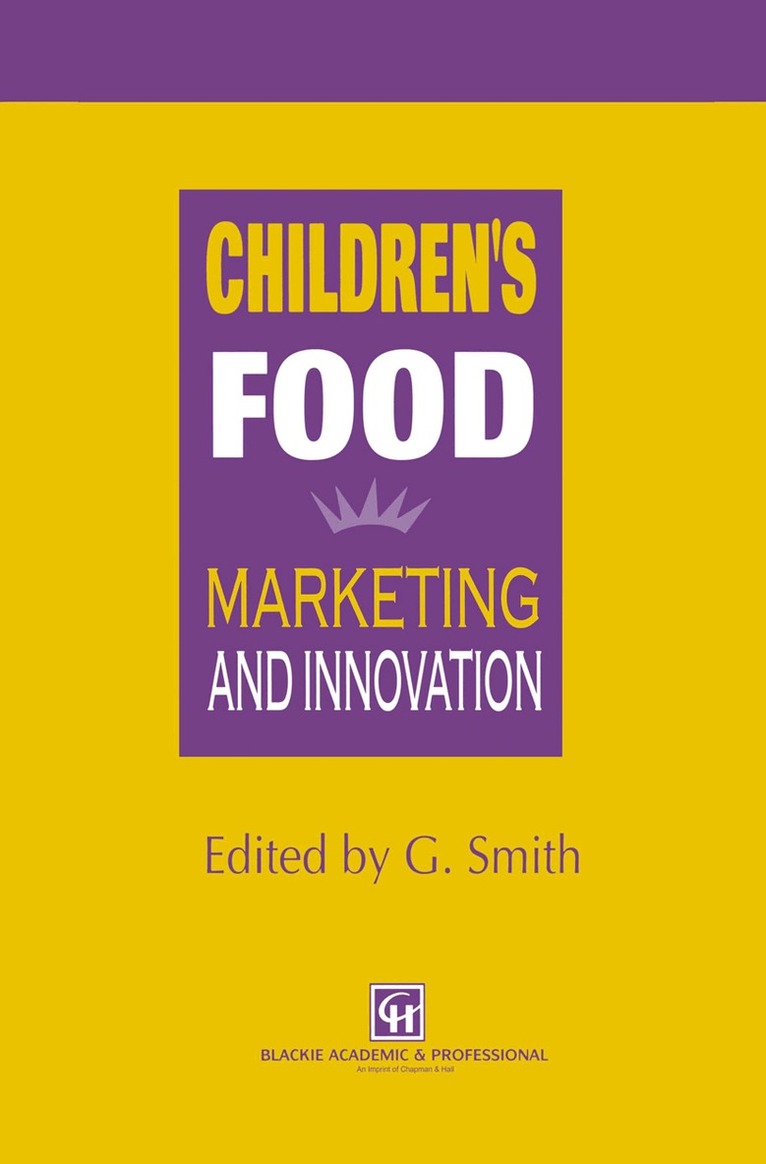
    Children’s Food

    Marketing and innovation

    AvG. Smith

    Häftad, Engelska, 2011

    1 625 kr

    Beställningsvara. Skickas inom 10-15 vardagar. Fri frakt över 249 kr.

    Fler format och utgåvor

    Inbunden

    1 625 kr

    E-bok

    2 044 kr

    Beskrivning

    The purpose of this book is to serve as essential reading for those innovating and marketing food products for children as well as those determined to better understand the children's marketplace in order to ensure that it is administered in a manner consistent with the long-term aspirations of society. The book begins by setting the scene and looking at the way children influence food choices within the family and the role advertising is thought to play in driving those choices. Professor Stratton of The Psychology Business (Department of Psychology, Leeds University) has world renowned expertise in the methodology of researching family dynamics and he shows which are the prime influences on the family diet. J.W. Thompson Advertising Board Director Jane Mathews then evaluates what constitutes effective advertising and reveals enduring themes within the children's marketplace. In Chapter 3, Dr Kathryn O'Sullivan of the Kellogg's company examines the nutritional importance of food under the title 'Starting the day right'. She demonstrates her expertise for introducing young taste buds to products which 'Break the fast'. Simon Lang, Senior Consultant at the Henley Centre follows by examining not only why food tastes change in children but also why family eating is itself changing and the implications for the future.

    Produktinformation

    • Utgivningsdatum:2011-09-28
    • Mått:155 x 235 x 16 mm
    • Vikt:423 g
    • Format:Häftad
    • Språk:Engelska
    • Antal sidor:258
    • Förlag:Springer-Verlag New York Inc.
    • ISBN:9781461284246

    Utforska kategorier

    • Försäljning och marknadsföring inom Ekonomi och Ledarskap
    • Tillverkningsteknik inom Naturvetenskap och teknik

    Innehållsförteckning

    • 1 Influences on food choice within the family.- 1.1 Introduction.- 1.2 Why food is so significant.- 1.3 Personal factors in children’s food choice.- 1.4 Social factors in children’s food choices.- 1.5 Concerns about children’s eating.- 1.6 The processes of food choice.- 1.7 Recent research into family food choice.- 1.8 Implications of the research.- 1.9 How advertising can fit into the food choice process.- 1.10 Conclusion.- References.- 2 How to make effective advertising aimed at children.- 2.1 Introduction.- 2.2 Understanding the audience better.- 2.3 Ages and stages.- 2.4 Advertising to children.- 2.5 Enduring themes.- 2.6 Executional elements.- 2.7 Deadly sins.- 2.8 Conclusions.- 3 Starting the day right!.- 3.1 Introduction.- 3.2 Who eats breakfast?.- 3.3 Break the fast!.- 3.4 Compromising diet quality.- 3.5 Breakfast and health status.- 3.6 Mental, academic and physical performance.- 3.7 Does it matter what we eat?.- 3.8 Can breakfast prevent nutritional problems?.- 3.9 Can the breakfast habit prevent future illness?.- 3.10 Start the day right!.- References.- 4 Why tastes change.- 4.1 Introduction.- 4.2 Key changes in society, family and food.- 4.3 The direct influence of children on food.- 4.4 Model for change in children.- 4.5 Conclusion.- Reference.- 5 Children’s nutrition: drivers for change.- 5.1 Introduction.- 5.2 What are children eating today?.- 5.3 Health issues for children’s diets.- 5.4 The role of fat in children’s diets.- 5.5 Carbohydrates: starches and sugars.- 5.6 Fibre.- 5.7 Eating patterns and the nutritional role of snack foods.- 5.8 Vegetable and fruit consumption.- 5.9 The outlook for the future and its product development implications.- References.- 6 The politics of advertising to children.- 6.1 Introduction.- 6.2 Research, publicpolicy and politics.- 6.3 Advertising: the front line.- 6.4 Gullibility.- 6.5 Advertising as education.- 6.6 ‘Pester power’ and parental responsibilities.- 6.7 The Big Hijack: the role of government.- 6.8 European political perspectives.- 6.9 Advertising standards control.- Appendix A: The ITC Code of Advertising Standards and Practice.- Appendix B: Advertising Standards Authority; the British Codes of Advertising and Sales Promotion (excerpt).- References.- 7 How packaging works with children.- 7.1 Introduction.- 7.2 The role of packaging.- 7.3 Designing packaging to appeal to 6–9-year-olds.- 7.4 Creating packaging to last.- 7.5 Older children.- 8 How much does food and drink advertising influence children’s diet?.- 8.1 Introduction.- 8.2 The anti-advertising case.- 8.3 The advertisers’ case.- 8.4 Influences on children’s food choices.- 8.5 Children and food advertising.- 8.6 Discussion.- References.- 9 Children’s views on food and nutrition: a pan-European study.- 9.1 Chairman’s introduction.- 9.2 Background and research objectives.- 9.3 Methodology.- 9.4 Executive summary.- 9.5 Comparisons between countries: current eating and drinking patterns.- 9.6 Comparisons between countries: children’s views on nutrition and health.- 9.7 Comparisons between countries: learning about food and nutrition.- 9.8 Comparisons between countries: food safety and hygiene.- 9.9 France: current eating and drinking patterns.- 9.10 France: children’s views on nutrition and health.- 9.11 France: learning about food and nutrition.- 9.12 France: food safety and hygiene.- 9.13 Germany: current eating and drinking patterns.- 9.14 Germany: children’s views on nutrition and health.- 9.15 Germany: learning about food and nutrition.- 9.16 Germany: food safety and hygiene.- 9.17Italy: current eating and drinking patterns.- 9.18 Italy: children’s views on nutrition and health.- 9.19 Italy: learning about food and nutrition.- 9.20 Italy: food safety and hygiene.- 9.21 UK: current eating and drinking patterns.- 9.22 Italy: children’s views on nutrition and health.- 9.23 Italy: learning about food and nutrition.- 9.24 UK: food safety and hygiene.- 9.25 Technical appendix.- 9.26 Standard questionnaire.- 10 International influences on children’s food and drink.- 10.1 Introduction.- 10.2 The influences on children’s food and drink habits.- 10.3 Peer pressure and its origins.- 10.4 Promoting cultural awareness: Britain and India.- 10.5 Conclusion.- References.