• Fri frakt över 249 kr
  • •
  • Snabba leveranser
  • •
  • Billiga böcker
Kundservice

Du är på sajten för privatpersoner.

Företag, bibliotek eller offentlig verksamhet?

Du handlar på classic.bokus.com, där alla dina funktioner finns intakta.
Till classic.bokus.com
Bokus logotyp. Gå till startsidan.
  • Erbjudanden
  • Nyheter
  • Student
  • Topplistor
  • Barn & ungdom
  • Bokus Play
  • E-böcker
  • Pocketböcker
  • Spel & pussel

10% rabatt på allt med kod: NYSTART10 →

Sidfot

Mina sidor

    Hjälp

    • Kundservice
    • Vanliga frågor och svar
    • Frakt och leverans
    • Retur vid ångerrätt
    • Reklamera vara
    • Betalning
    • Köpvillkor
    • Allmänna villkor
    • Information om webbplatsens tillgänglighet

    Om Bokus

    • Om oss
    • Pressrum
    • För studenter
    • För företag
    • För bibliotek och offentlig verksamhet
    • För leverantörer
    • Hållbarhet

    Populärt

    • Aktuella erbjudanden
    • Presentkort
    • Studentlitteratur
    • Nya böcker
    • Topplistor
    • Signerade böcker
    • Engelska böcker

    Inspiration

    • Boktips
    • BookTok
    • Populära bokserier
    • Barnbokskaraktärer
    • Populära författare
    Logotyp för Bokus
    Följ oss på Facebook (extern länk)Följ oss på Instagram (extern länk)Följ oss på YouTube (extern länk)Följ oss på TikTok (extern länk)
    bokus @ CookiesAnpassa cookiesIntegritetspolicyKöpvillkor
    Till Citymail hemsida (extern länk)Till Budbee hemsida (extern länk)Till Postnord hemsida (extern länk)Till Schenker hemsida (extern länk)Till Early Bird hemsida (extern länk)Till Walleys hemsida (extern länk)
    1. Djur och Natur
    2. Djurböcker
    3. Vilda djur
    4. Fågelböcker

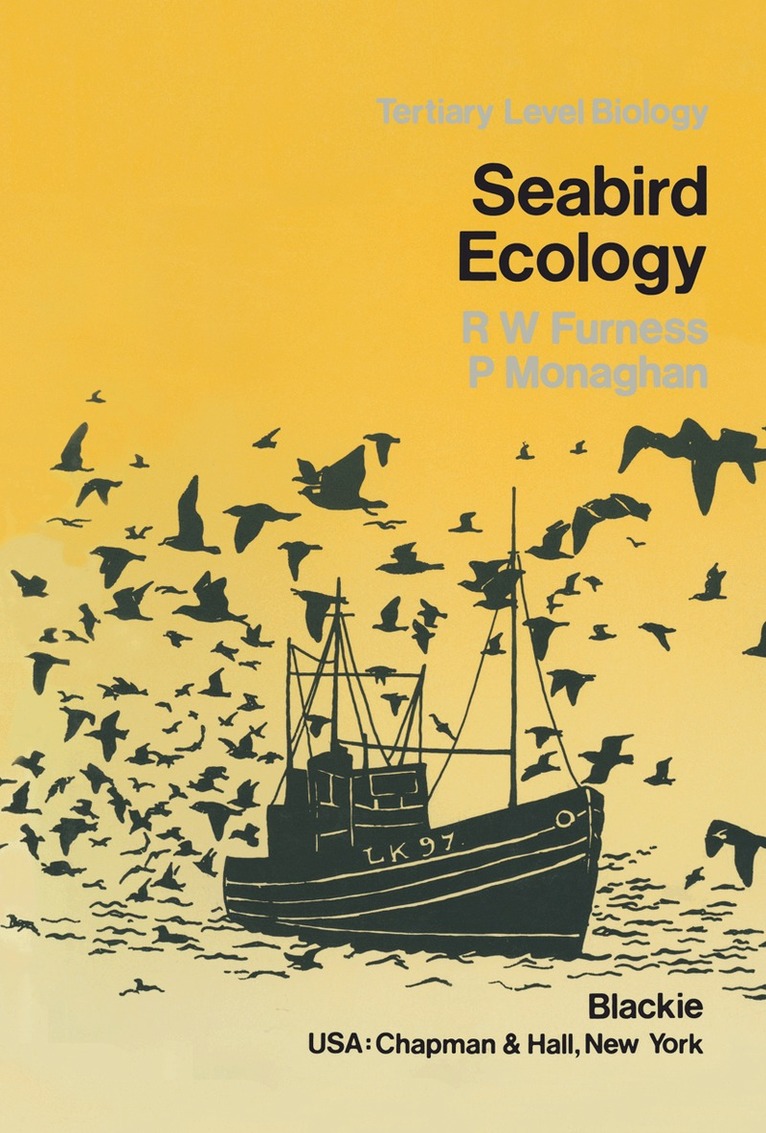
    Seabird Ecology

    AvR. W. Furness

    Häftad, Engelska, 2011

    Del i serien Tertiary Level Biology

    547 kr

    Beställningsvara. Skickas inom 10-15 vardagar. Fri frakt över 249 kr.

    Fler format och utgåvor

    E-bok

    700 kr

    Beskrivning

    In the last few years there has been an excltmg upsurge in seabird research. There are several reasons for this. Man's increased ex­ ploitation of natural resources has led to a greater awareness of the potential conflicts with seabirds, and of the use of seabirds to indicate the damage we might be doing to our environment. Many seabird populations have increased dramatically in numbers and so seem more likely to conflict with man, for example through competition for food or transmission of diseases. Oil exploration and production has resulted in major studies of seabird distributions and ecology in relation to oil pollution. The possibility that seabirds may provide information on fish stock biology is now being critically investigated. Some seabird species have suffered serious declines in numbers and require conservation action to be taken to reduce the chances that they will become extinct. This requires an understanding of the factors determining their population size and dynamics.

    Produktinformation

    • Utgivningsdatum:2011-10-06
    • Mått:152 x 229 x 11 mm
    • Vikt:270 g
    • Format:Häftad
    • Språk:Engelska
    • Serie:Tertiary Level Biology
    • Antal sidor:166
    • Upplaga:1987
    • Förlag:Springer-Verlag New York Inc.
    • ISBN:9781461292401

    Utforska kategorier

    • Fågelböcker inom Djur och Natur
    • Zoologi inom Naturvetenskap och teknik
    • Fåglar inom Naturvetenskap och teknik

    Innehållsförteckning

    • 1. Introduction.- 2. Seabird Life Styles.- 2.1 What is a seabird?.- 2.2 Habitat selection.- 2.3 Mating systems.- 2.4 Colonial breeding.- 2.5 Life-history theory.- 2.6 Comparative seabird life histories.- 2.7 Conclusions.- 2.8 Interactions with man.- 3. Seabird Feeding Ecology.- 3.1 What seabirds eat.- 3.2 How seabirds feed.- 3.3 Where seabirds feed.- 3.4 Variation in foraging success with age.- 3.5 Studying seabird communities.- 4. Regulation of Seabird Populations.- 4.1 Introduction.- 4.9 Regulation of populations: the theories.- 4.3 The evidence: are seabird populations regulated?.- 4.4 The evidence: density-dependent effects.- 4.5 Conclusions.- 5. Interactions with Fisheries.- 5.1 Introduction.- 5.2 Estimating food consumption by seabirds.- 5.3 Simulation modeling.- 5.4 Direct measurement of seabird metabolism.- 5.5 Changes in ecosystem structure.- 5.6 Conclusions.- 6. Monitoring Marine Environments.- 6.1 Introduction.- 6.2 Plastics.- 6.3 Oil.- 6.4 Organochlorines.- 6.5 Heavy metals.- 6.6 Radionuclides.- 6.7 Monitoring fish stocks.- 6.8 Monitoring seabird numbers.- 7. Seabirds as Pests.- 7.1 Conflict with fisheries and agriculture.- 7.2 Detrimental effects on other species.- 7.3 Gulls and the urban environment.- 7.3.1 Urban nesting.- 7.3.2 Gulls and refuse tips.- 7.3.3 Bird strikes.- 7.4 Disease transmission.- 7.5 Control of seabird pests.- 8. Seabird Conservation Requirements.- 8.1 Exploitation of seabirds by man.- 8.2 Habitat destruction.- 8.3 Predation by introduced alien animals.- 8.4 Other factors.- References.