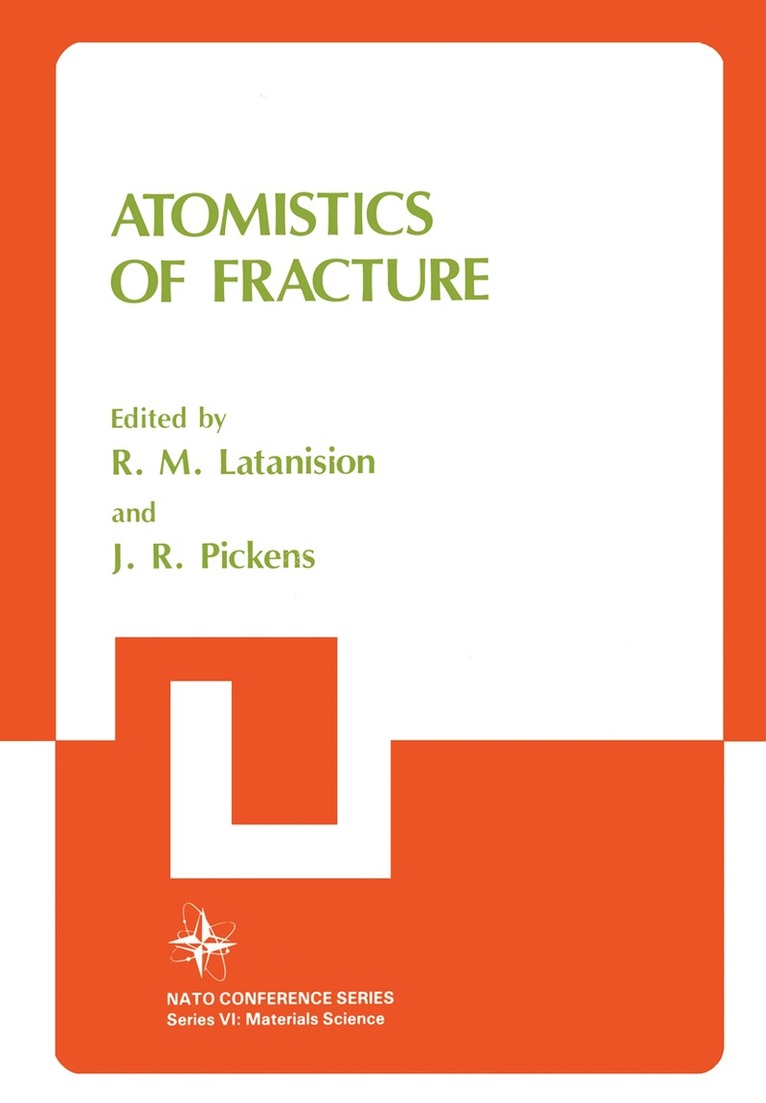
Häftad, Engelska, 2013
Atomistics of Fracture
Av R.M. Latanison, J.R. Pickens
557 kr
Skickas inom 10-15 vardagar
Beskrivning
It is now more than 100 years since certain detrimental effects on the ductility of iron were first associated with the presence of hydrogen. Not only is hydrogen embrittlement still a major industri al problem, but it is safe to say that in a mechanistic sense we still do not know what hydrogen (but not nitrogen or oxygen, for example) does on an atomic scale to induce this degradation. The same applies to other examples of environmentally-induced fracture: what is it about the ubiquitous chloride ion that induces premature catastrophic fracture (stress corrosion cracking) of ordinarily ductile austenitic stainless steels? Why, moreover, are halide ions troublesome but the nitrate or sulfate anions not deleterious to such stainless steels? Likewise, why are some solid metals embrit tled catastrophically by same liquid metals (liquid metal embrit tlement) - copper and aluminum, for example, are embrittled by liquid mercury. In short, despite all that we may know about the materials science and mechanics of fracture on a macroscopic scale, we know little about the atomistics of fracture in the absence of environmental interactions and even less when embrittlement phe nomena such as those described above are involved. On the other hand, it is interesting to note that physical chemists and surface chemists also have interests in the same kinds of interactions that occur on an atomic scale when metals such as nickel or platinum are used, for example, as catalysts for chemical reactions.
Produktinformation
- Utgivningsdatum: 2013-04-30
- Mått: 170 x 244 x 59 mm
- Vikt: 1 845 g
- Format: Häftad
- Språk: Engelska
- Antal sidor: 1 074
- Förlag: Springer-Verlag New York Inc.
- Serie: Nato Conference Series
- ISBN: 9781461335023
Utforska kategorier
Betyg & recensioner
0 recensioner
Inga recensioner tillgängliga.