• Fri frakt över 249 kr
  • •
  • Snabba leveranser
  • •
  • Billiga böcker
Kundservice

Du är på sajten för privatpersoner.

Företag, bibliotek eller offentlig verksamhet?

Du handlar på classic.bokus.com, där alla dina funktioner finns intakta.
Till classic.bokus.com
Bokus logotyp. Gå till startsidan.
  • Erbjudanden
  • Nyheter
  • Student
  • Topplistor
  • Barn & ungdom
  • Bokus Play
  • E-böcker
  • Pocketböcker
  • Spel & pussel

Må bättre, för mindre! Upp till 50% rabatt på hälsoböcker

Sidfot

Mina sidor

    Hjälp

    • Kundservice
    • Vanliga frågor och svar
    • Frakt och leverans
    • Retur vid ångerrätt
    • Reklamera vara
    • Betalning
    • Köpvillkor
    • Allmänna villkor
    • Information om webbplatsens tillgänglighet

    Om Bokus

    • Om oss
    • Pressrum
    • För studenter
    • För företag
    • För bibliotek och offentlig verksamhet
    • För leverantörer
    • Hållbarhet

    Populärt

    • Aktuella erbjudanden
    • Presentkort
    • Studentlitteratur
    • Nya böcker
    • Topplistor
    • Signerade böcker
    • Engelska böcker

    Inspiration

    • Boktips
    • BookTok
    • Populära bokserier
    • Barnbokskaraktärer
    • Populära författare
    Logotyp för Bokus
    Följ oss på Facebook (extern länk)Följ oss på Instagram (extern länk)Följ oss på YouTube (extern länk)Följ oss på TikTok (extern länk)
    bokus @ CookiesAnpassa cookiesIntegritetspolicyKöpvillkor
    Till Citymail hemsida (extern länk)Till Budbee hemsida (extern länk)Till Postnord hemsida (extern länk)Till Schenker hemsida (extern länk)Till Early Bird hemsida (extern länk)Till Walleys hemsida (extern länk)
    1. Naturvetenskap och teknik
    2. Matematik och naturvetenskap
    3. Matematik

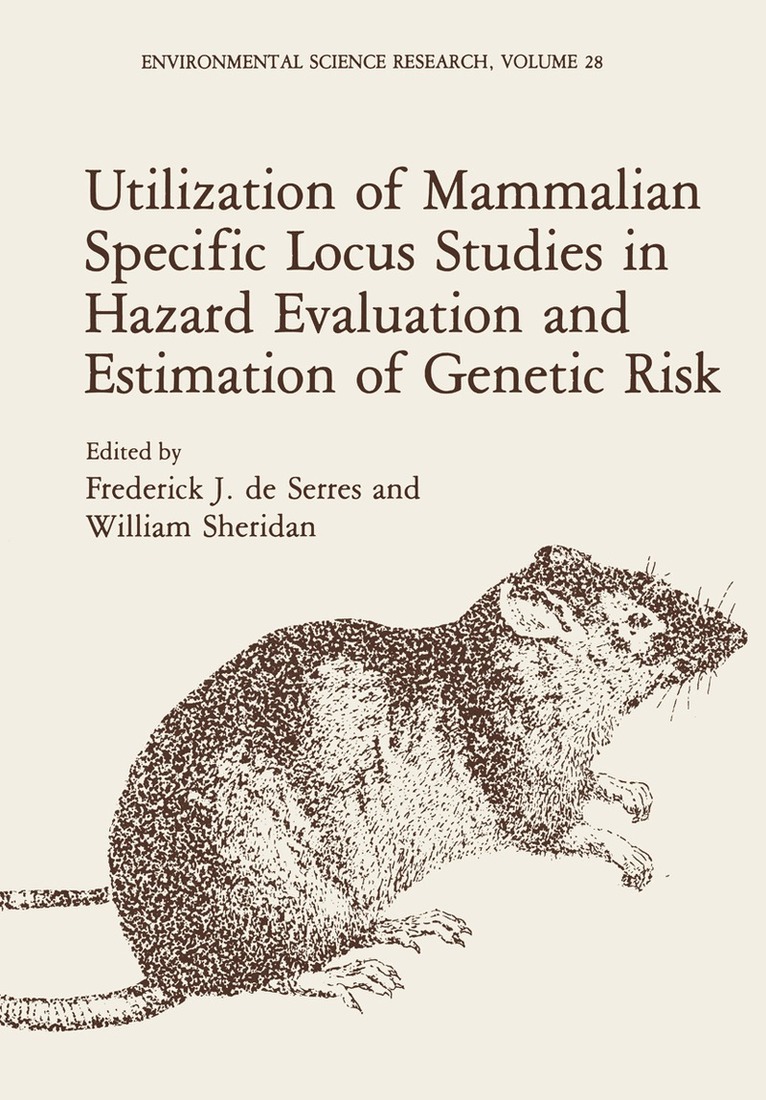
    Utilization of Mammalian Specific Locus Studies in Hazard Evaluation and Estimation of Genetic Risk

    AvF.J. De Serres

    Häftad, Engelska, 2011

    Del i serien Environmental Science Research

    547 kr

    Beställningsvara. Skickas inom 10-15 vardagar. Fri frakt över 249 kr.

    Fler format och utgåvor

    E-bok

    710 kr

    Beskrivning

    The magnitude of the threat to the human genetic material posed by environmental agents has not as yet been fully determined. Never­ theless, the potential hazards of many chemicals have been identi­ fied by studies on lower organisms. However, too little is known regarding the comparability or lack of it between the metabolic pathways available in such organisms and those in man. Although at present there is great public concern for what is considered by some as the excessive use of laboratory animals in toxicological testing, it seems clear that the usage of mammalian systems may be deemed necessary. It has been proposed that cell culture systems might suffice to meet this need, however, such approaches cannot match the complexity of physiological occurances that are present in the intact animal. For studies of genetic effects, some non-invasive human test systems are presently available. These do not, however, meet the re­ quirements for extensive laboratory studies. In order to assess the risks to humans of environmental factors such laboratory investiga­ tions are essential. Therefore, for the forseeable future reliance on experiments using laboratory animals will be necessary. This Volume, which contains the proceedings of a workshop which was held at the National Institute of Environmental Health Sciences, March 29-31, 1982, explores the existing methodologies and their utility for risk estimations. It covers the most well developed human systems, as well as the most widely used animal tests.

    Produktinformation

    • Utgivningsdatum:2011-10-13
    • Mått:170 x 244 x 20 mm
    • Vikt:608 g
    • Format:Häftad
    • Språk:Engelska
    • Serie:Environmental Science Research
    • Antal sidor:341
    • Förlag:Springer-Verlag New York Inc.
    • ISBN:9781461337416

    Utforska kategorier

    • Matematik inom Naturvetenskap och teknik

    Innehållsförteckning

    • Session I. Introduction.- How Much Progress this Time?.- Session II. Detection of Specific Locus Mutations in Somatic Cells.- Human Mutagenicity Monitoring: Studies with 6-Thioguanine Resistant Lymphocytes.- Detection of Somatic Mutants of Hemoglobin.- Counting of RBC Variants Using Rapid Flow Techniques.- Biochemical Approaches to Monitoring Human Populations for Germinal Mutation Rates: II. Enzyme Deficiency Variants as a Component of the Estimated Genetic Risk.- Session III. Human Monitoring — Detection of Specific Locus Mutations in Germ Cells.- Biochemical Approaches to Monitoring Human Populations for Germinal Mutation Rates: I. Electrophoresis.- Session IV. Utilization of Model Systems in Mice: Part I.- The Detection of ENU-Induced Mutants in Mice by Electrophoresis and The Problem of Evaluating the Mutation Rate Increase.- Relation of Mouse Specific Locus Tests to Other Mutagenicity Tests and to Risk Estimation.- The Detection of Induced Recessive Lethal Mutations in Mice.- Session V. Utilization of Model Systems in Mice: Part II.- Using Inversions to Detect and Study Recessive Lethals and Detrimentals in Mice.- Cataracts — Indicators for Dominant Mutations in Mice and Man.- Applications in Genetic Risk Estimation of Data on the Induction of Dominant Skeletal Mutations in Mice.- Detection of Enzyme Activity Variants in Mice.- Some Factors Affecting the Mutagenic Response of Mouse Germ Cells to Chemicals.- Session VI. Detailed Analysis of Specific Locus Mutations.- Qualitative Analysis of Mouse Specific-Locus Mutations: Information on Genetic Organization, Gene Expression, and the Chromosomal Nature of Induced Lesions.- Developmental Genetics of Specific Locus Mutations.- Dominant and Recessive Effects of Electrophoretically Detected Specific LocusMutations.- Session VII. Future Directions.- Some Ideas on Future Test Systems.- Problems in Extrapolation of Animal Data to Humans.- Specific Locus Mutations in the Monitoring of Human Populations for Genetic Damage.- Some Research Needs to Support Mutagenicity Risk Assessments from Whole Mammal Studies.- Contributors.