• Fri frakt över 249 kr
  • •
  • Snabba leveranser
  • •
  • Billiga böcker
Kundservice

Du är på sajten för privatpersoner.

Företag, bibliotek eller offentlig verksamhet?

Du handlar på classic.bokus.com, där alla dina funktioner finns intakta.
Till classic.bokus.com
Bokus logotyp. Gå till startsidan.
  • Erbjudanden
  • Student
  • Topplistor
  • Barn & ungdom
  • Bokus Play
  • E-böcker
  • Ljudböcker
  • Pocketböcker
  • Spel och pussel

Pocketfynda! Hundratals böcker för 49 kr/st →

Sidfot

Mina sidor

    Hjälp

    • Kundservice
    • Vanliga frågor och svar
    • Frakt och leverans
    • Retur vid ångerrätt
    • Reklamera vara
    • Betalning
    • Köpvillkor
    • Allmänna villkor
    • Information om webbplatsens tillgänglighet

    Om Bokus

    • Om oss
    • Pressrum
    • För studenter
    • För företag
    • För bibliotek och offentlig verksamhet
    • För leverantörer
    • Hållbarhet

    Populärt

    • Aktuella erbjudanden
    • Presentkort
    • Studentlitteratur
    • Nya böcker
    • Topplistor
    • Signerade böcker
    • Engelska böcker

    Inspiration

    • Boktips
    • BookTok
    • Barnbokskaraktärer
    • Populära författare
    Logotyp för Bokus
    Följ oss på Facebook (extern länk)Följ oss på Instagram (extern länk)Följ oss på YouTube (extern länk)Följ oss på TikTok (extern länk)
    bokus @ CookiesAnpassa cookiesIntegritetspolicyKöpvillkor
    Till Citymail hemsida (extern länk)Till Budbee hemsida (extern länk)Till Postnord hemsida (extern länk)Till Schenker hemsida (extern länk)Till Early Bird hemsida (extern länk)Till Walleys hemsida (extern länk)
    1. Data och IT
    2. Programmeringsböcker
    3. Programvaruutveckling

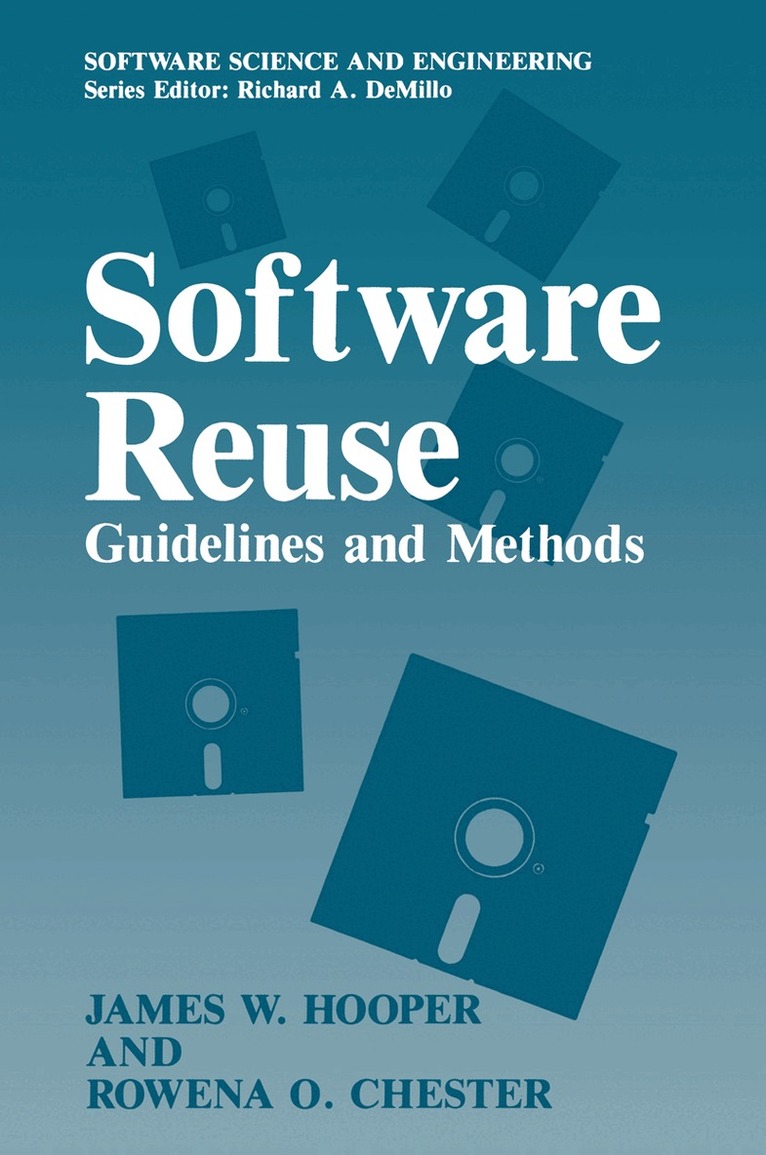
    Software Reuse

    Guidelines and Methods

    AvJames W. Hooper,Rowena O. Chester

    Häftad, Engelska, 2012

    Del i serien Software Science and Engineering

    1 110 kr

    Beställningsvara. Skickas inom 10-15 vardagar. Fri frakt över 249 kr.

    Fler format och utgåvor

    Inbunden

    889 kr

    Beskrivning

    Observers in the present usually have an advantage when it comes to interpreting events of the past. In the case of software reuse, how­ ever, it is unclear why an idea that has gained such universal accep­ tance was the source of swirling controversy when it began to be taken seriously by the software engineering community in the mid-1980's. From a purely conceptual point of view, the reuse of software de­ signs and components promises nearly risk-free benefits to the devel­ oper. Virtually every model of software cost and development effort predicts first-order dependencies on either products size or the num­ ber of steps carried out in development. Reduce the amount of new product to be developed and the cost of producing the product de­ creases. Remove development steps, and total effort is reduced. By reusing previously developed engineering products the amount of new product and the number of development steps can be reduced. In this way, reuse clearly has a major influence on reducing total development cost and effort. This, of course, raises the issue of from whence the reused products arise. There has to be a prior investment in creating "libraries of reuse products before reuse can be successfuL . . " How can organizations with a "bottom line" orientation be enticed into contributing to a reuse venture? Fortunately, the economics of reuse l resembles many other financial investment situations .

    Produktinformation

    • Utgivningsdatum:2012-10-21
    • Mått:152 x 229 x 12 mm
    • Vikt:298 g
    • Format:Häftad
    • Språk:Engelska
    • Serie:Software Science and Engineering
    • Antal sidor:180
    • Förlag:Springer-Verlag New York Inc.
    • ISBN:9781461366775

    Utforska kategorier

    • Programvaruutveckling inom Data och IT

    Innehållsförteckning

    • 1. Background and Introduction.- 1.1 The Problem.- 1.2 Concepts and Definitions.- 1.3 Research Activities.- 1.4 Status of Reuse Practice.- 1.5 Scope and Organization of this Book.- 1.6 References.- 2. Managerial Guidelines.- 2.1 Managerial Issues and Approaches.- 2.2 Software Development and Maintenance Incorporating Reuse.- 2.3 References.- 3. Technical Guidelines.- 3.1 Domain Analysis.- 3.2 Creating Reusable Components.- 3.3 Reusing Components.- 3.4 Tools and Environments.- 3.5 References.- 4. Getting Started.- 4.1 Discussion.- 4.2 A Phased Approach.- 4.3 References.- Appendix A: Collected Guidelines.- Appendix B: Guidelines for Reusable Ada Code.