• Fri frakt över 249 kr
  • •
  • Snabba leveranser
  • •
  • Billiga böcker
Kundservice

Du är på sajten för privatpersoner.

Företag, bibliotek eller offentlig verksamhet?

Du handlar på classic.bokus.com, där alla dina funktioner finns intakta.
Till classic.bokus.com
Bokus logotyp. Gå till startsidan.
  • Erbjudanden
  • Nyheter
  • Student
  • Topplistor
  • Barn & ungdom
  • Bokus Play
  • E-böcker
  • Pocketböcker
  • Spel & pussel

10% rabatt på allt med kod: NYSTART10 →

Sidfot

Mina sidor

    Hjälp

    • Kundservice
    • Vanliga frågor och svar
    • Frakt och leverans
    • Retur vid ångerrätt
    • Reklamera vara
    • Betalning
    • Köpvillkor
    • Allmänna villkor
    • Information om webbplatsens tillgänglighet

    Om Bokus

    • Om oss
    • Pressrum
    • För studenter
    • För företag
    • För bibliotek och offentlig verksamhet
    • För leverantörer
    • Hållbarhet

    Populärt

    • Aktuella erbjudanden
    • Presentkort
    • Studentlitteratur
    • Nya böcker
    • Topplistor
    • Signerade böcker
    • Engelska böcker

    Inspiration

    • Boktips
    • BookTok
    • Populära bokserier
    • Barnbokskaraktärer
    • Populära författare
    Logotyp för Bokus
    Följ oss på Facebook (extern länk)Följ oss på Instagram (extern länk)Följ oss på YouTube (extern länk)Följ oss på TikTok (extern länk)
    bokus @ CookiesAnpassa cookiesIntegritetspolicyKöpvillkor
    Till Citymail hemsida (extern länk)Till Budbee hemsida (extern länk)Till Postnord hemsida (extern länk)Till Schenker hemsida (extern länk)Till Early Bird hemsida (extern länk)Till Walleys hemsida (extern länk)
    1. Juridik
    2. Internationell rätt

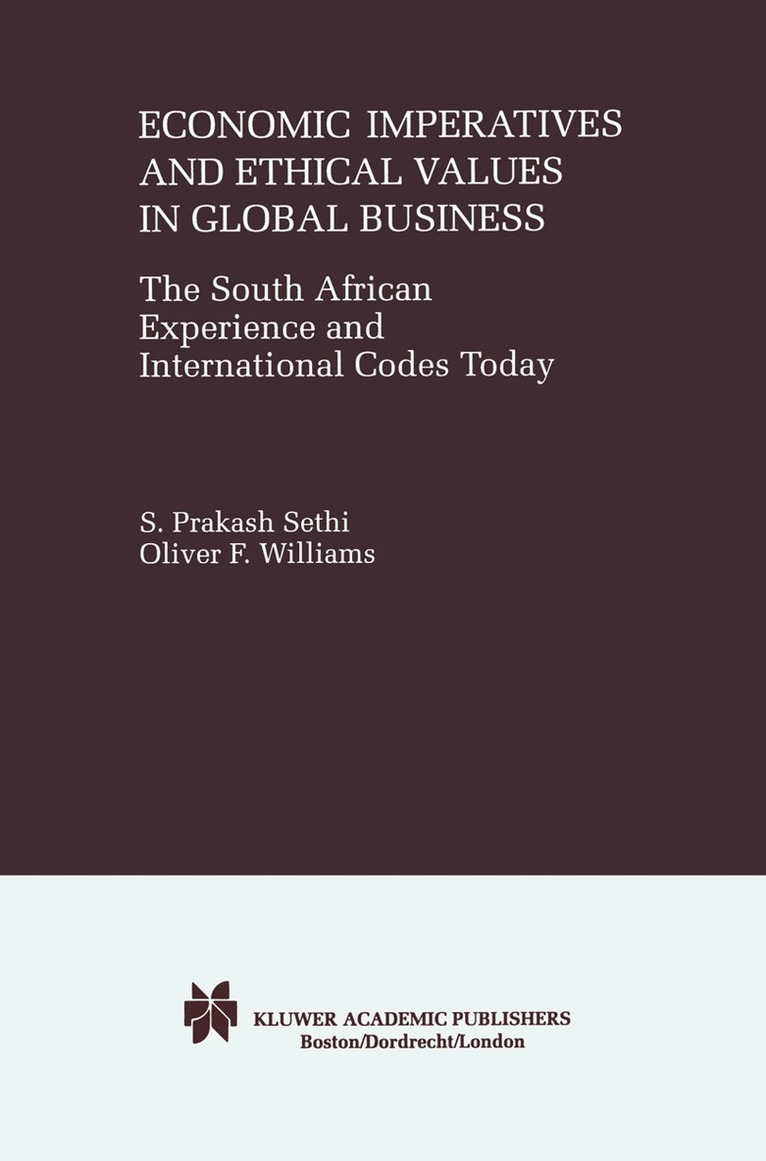
    Economic Imperatives and Ethical Values in Global Business

    The South African Experience and International Codes Today

    AvS. Prakash Sethi,Oliver F. Williams

    Häftad, Engelska, 2012

    1 086 kr

    Beställningsvara. Skickas inom 10-15 vardagar. Fri frakt över 249 kr.

    Fler format och utgåvor

    Häftad

    316 kr

    Inbunden

    1 119 kr

    Beskrivning

    religious values at the office door. Apartheid was an evil, and business had great power in South Africa. Where there is power, there is also responsibil­ ity. I prayed about this long and hard. I pushed the companies as much as I thought I could. There were advances and there were setbacks, but finally we prevailed and the Blacks of South Africa secured their freedom. My effort in behalf of the Sullivan Principles was only one of a number of significant efforts of the anti-apartheid movement. All of those other efforts must be recognized, as well. The Sullivan Principles and the manner in which they were implemented in South Africa were in the nature of a grand experiment in the sociopolitical change and economic uplifting of the Black people of South Africa. What is even more important is that the Principles were driven by an ethical and moral imperative, and were voluntarily implemented by a group of enlight­ ened United States multinational corporations. No grand design or vision is ever perfect. We fall prey to human follies, limited understanding of the future, and necessary compromises to seek not what is perfect but what is possible. Thus, any such effort is subject to criticism from those who seek ideological purity and those who seek to minimize the impact of change from the status quo . .

    Produktinformation

    • Utgivningsdatum:2012-12-22
    • Mått:155 x 235 x 25 mm
    • Vikt:674 g
    • Format:Häftad
    • Språk:Engelska
    • Antal sidor:423
    • Förlag:Springer-Verlag New York Inc.
    • ISBN:9781461370246

    Utforska kategorier

    • Internationell rätt inom Juridik
    • Affärsetik inom Ekonomi och Ledarskap
    • Folkrätt inom Juridik

    Recensioner i media

    'S. Prakash Sethi and Oliver F. William's book on the antiapartheid movement and the birth and gradual modification of the Sullivan Principles is a monumental achievement. Sethi and Williams have spent more than 20 years in and out of South Africa, interacting with business leaders, union officials, lawmakers and government functionaries, researching the issues, interviewing the primary actors, consulting with ethicists, and spending endless hours with critics and apologists alike. ... Though this is an expensive book, it is a funcamental resource and belongs on the shelves of seminary and university libraries, in ecumenical, denominational and world mission offices, and in the hands of those who would be informed about one of the most important global-justice issues of the 21st century.' James Armstrong in Christian Century, Januari 17, 2001

    Innehållsförteckning

    • 1 A Multinational Code of Conduct for South Africa.- 2 The Emergence of the Anti-Apartheid Movement.- 3 The First Step toward Implementation.- 4 Shaping the Organization.- 5 Measuring Progress.- 6 Eli Lilly & Company, Inc..- 7 Ford Motor Corporation of South Africa.- 8 Raising the Ante.- 9 European and Other Codes of Conduct for the Companies Operating in South Africa.- 10 Corporate Compliance with the Sullivan Principles.- 11 The Comprehensive Anti-Apartheid Act of 1986.- 12 The Anti-Apartheid Movement and Its Impact on United States Companies to Withdraw from South Africa.- 13 Stampeding toward the Exit.- 14 Repeal of the Comprehensive Anti-Apartheid Act of 1986.- 15 The Rocky Road to Post-Apartheid South Africa.- 16 Assessment of the Sullivan Principles As a Role Model for Developing International Codes of Conduct.- About the Authors.