
Human Agency and Material Welfare: Revisions in Microeconomics and their Implications for Public Policy
Häftad, Engelska, 2012
1 137 kr
Beställningsvara. Skickas inom 10-15 vardagar. Fri frakt över 249 kr.
Fler format och utgåvor
Beskrivning
Some of the fundamental tenets of conventional economic wisdom, which have had a profound impact on public policy, are challenged in this book. These precepts include the affirmation that low wages are more beneficial that high wages to the process of growth and development; convergence in terms of output per person is just a matter of time; minimum wage laws and trade unions negatively impact on the economy as a whole; pay inequality due to labor market discrimination cannot persist over time; larger firms are typically more efficient than smaller firms; and culture is of little consequence to the course of economic development. Such predictions, the author argues, are a product of unrealistic behavioral assumptions about the economic agent. In this book, the author offers a more inclusive theoretical framework and a more reasonable modeling of the economic agent. This new approach is built upon conventional neoclassical theory while incorporating the most recent research in behavioral economics. The case is made that individuals have some choice over the quantity and quality of effort which they can supply in the process of production. Even under the constraints of severe product market competition and the assumption of `utility maximizing' individuals, effort need not be maximized, especially in firms characterized by antagonistic management-labor relations. This is especially true when relatively inefficient firms can remain competitive by keeping wages relatively low - low wages serve to protect such firms from more efficient firms. Alternatively, relatively high wage firms can remain competitive only if they become more productive. Under these assumptions, higher wages and factors contributing to higher wages can advance the performance of an economy while lower wages can have the opposite effect and cultural and institutional variables, by themselves, can affect the long run productivity and even the long run competitiveness of firms and economies. In summary, this book calls for a revised approach to the study of economics from a behavioral and socio-economic perspective, with significant consequences for public policy.
Produktinformation
Utforska kategorier
Innehållsförteckning
Hoppa över listan

Mer från samma författare
Waking the Asian Pacific Co-operative Potential
Morris Altman, Anthony Jensen, Akira Kurimoto, Robby Tulus, Yashavantha Dongre, Seungkwon Jang
Häftad, 2020
1 265 kr
Waking the Asian Pacific Co-operative Potential
Seungkwon Jang, Yashavantha Dongre, Robby Tulus, Akira Kurimoto, Anthony Jensen, Morris Altman
E-bok
20201 773 kr
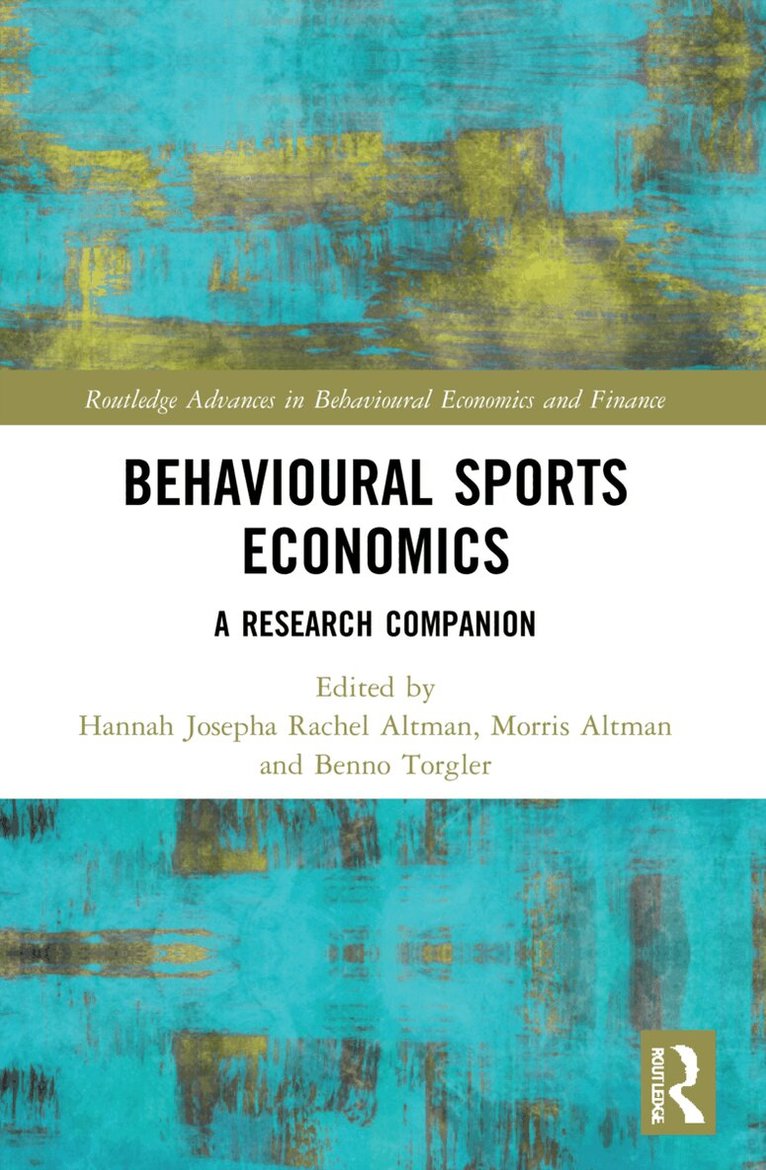
Behavioural Sports Economics
Hannah Josepha Rachel Altman, Morris Altman, Benno Torgler
Inbunden, 2021
2 645 kr
Behavioural Sports Economics
Hannah Josepha Rachel Altman, Morris Altman, Benno Torgler
Häftad, 2023
743 kr
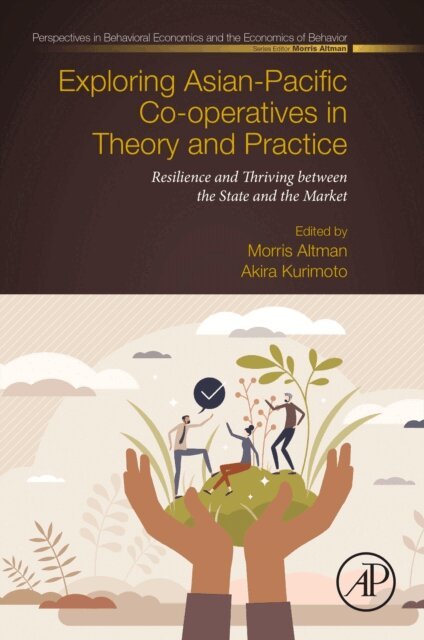
Exploring Asian-Pacific Co-operatives in Theory and Practice
Morris Altman, Akira Kurimoto
Häftad, 2025
2 115 kr
Exploring Asian-Pacific Co-operatives in Theory and Practice
Akira Kurimoto, Morris Altman
E-bok
20252 676 kr
Hoppa över listan
Du kanske också är intresserad av
- 10% rabatt på allt
Human Agency and Material Welfare: Revisions in Microeconomics and their Implications for Public Policy
Morris Altman
Inbunden, 1996
1 136 kr
Human Agency and Material Welfare: Revisions in Microeconomics and their Implications for Public Policy
Morris Altman
E-bok
20121 470 kr
How to Manage Covid-19 and Other Pandemics
Louise Lamontagne, Hannah Altman, Morris Altman
E-bok
2026436 kr