Inbunden, Engelska, 2012
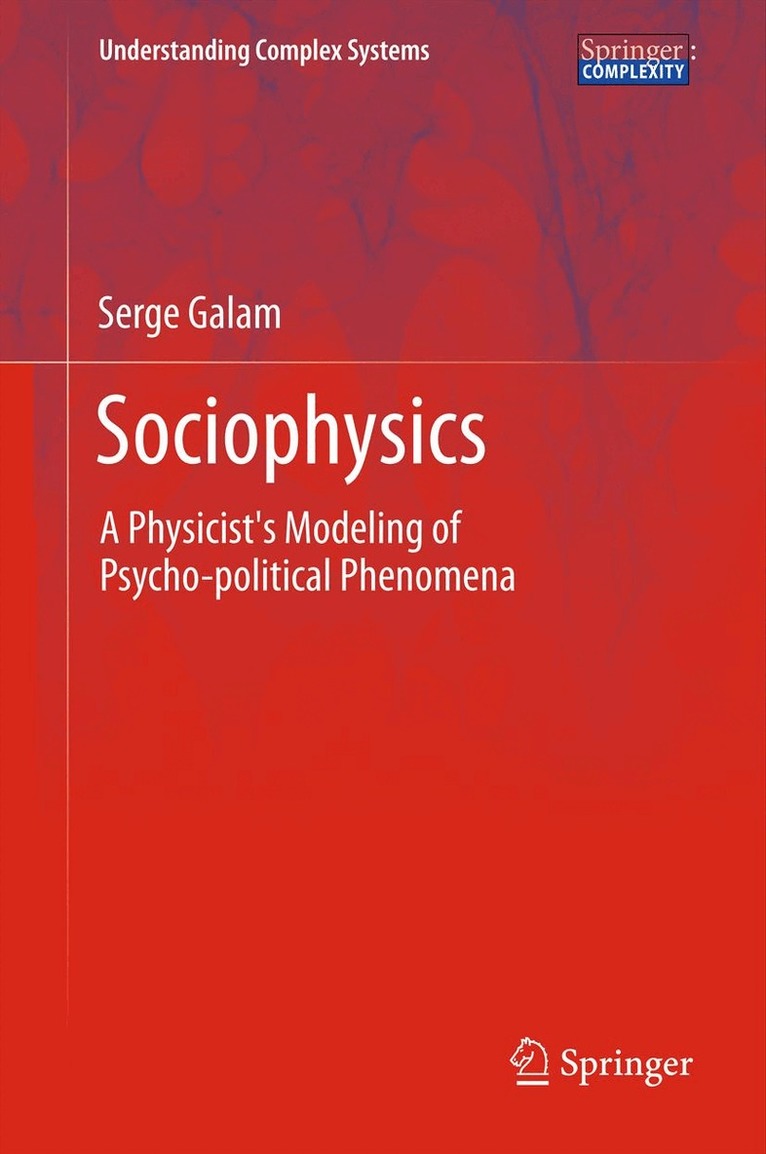
Sociophysics
Av Serge Galam
2515 kr
Beställningsvara. Skickas inom 10-15 vardagar. Fri frakt över 249 kr.
Beskrivning
Do humans behave much like atoms? Sociophysics, which uses tools and concepts from the physics of disordered matter to describe some aspects of social and political behavior, answers in the affirmative. But advocating the use of models from the physical sciences to understand human behavior could be perceived as tantamount to dismissing the existence of human free will and also enabling those seeking manipulative skills . This thought-provoking book argues it is just the contrary.Indeed, future developments and evaluation will either show sociophysics to be inadequate, thus supporting the hypothesis that people can primarily be considered to be free agents, or valid, thus opening the path to a radically different vision of society and personal responsibility. This book attempts to explain why and how humans behave much like atoms, at least in some aspects of their collective lives, and then proposes how this knowledge can serve as a unique key to a dramatic leap forwards in achieving more social freedom in the real world. At heart, sociophysics and this book are about better comprehending the richness and potential of our social interaction, and so distancing ourselves from inanimate atoms.
Produktinformation
- Utgivningsdatum: 2012-02-10
- Mått: 155 x 235 x 31 mm
- Vikt: 806 g
- Format: Inbunden
- Språk: Engelska
- Serie: Understanding Complex Systems
- Antal sidor: 439
- Upplaga: 2012
- Förlag: Springer-Verlag New York Inc.
- ISBN: 9781461420316
Utforska kategorier
Betyg & recensioner
0 recensioner
Inga recensioner tillgängliga.