Inbunden, Engelska, 2014
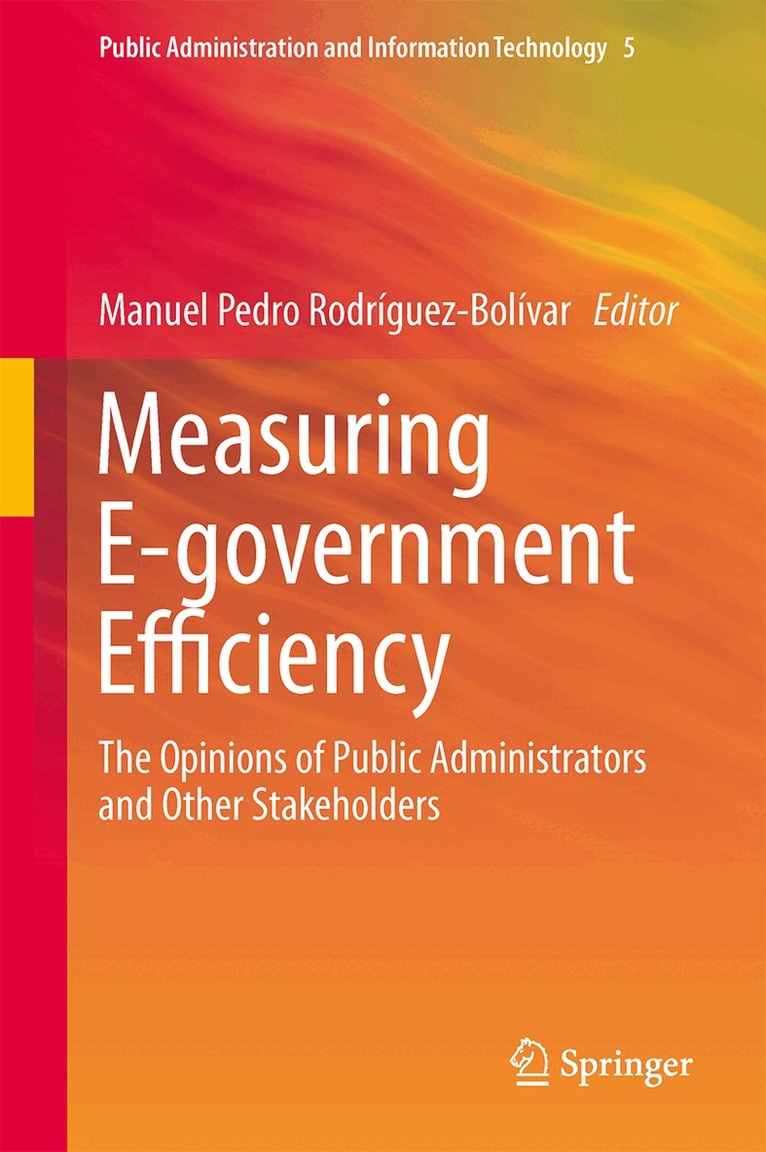
Measuring E-government Efficiency
Av Manuel Pedro Rodríguez-Bolívar
1107 kr
Skickas inom 10-15 vardagar
Beskrivning
E-government has the potential to improve public services, information transparency, and the engagement of civic participation of the public sector management. This book analyzes the achievement of expectations created by public managers, policy-makers, and stakeholders with regard to the implementation of e-government policies and applications. It also tries to determine whether e-government applications have been introduced as a fad or according to real demands from citizenry and if efforts within e-government have been effective. This book investigates how public managers and policy-makers imagine e-government policies and the impact of those policies on their management and decision-making process through the engagement of citizenry. It is also discusses whether e-government policies are merely procedural improvements that strictly introduce new ways of delivering public services or disclosing public sector information. The book's analysis of the overall expectations on e-government applications makes it of interest to scholars in public administration as well as to policy-makers and stakeholders.
Produktinformation
- Utgivningsdatum: 2014-03-19
- Mått: 155 x 235 x 17 mm
- Vikt: 566 g
- Format: Inbunden
- Språk: Engelska
- Antal sidor: 285
- Förlag: Springer-Verlag New York Inc.
- Serie: Public Administration and Information Technology
- ISBN: 9781461499817
Utforska kategorier
Betyg & recensioner
0 recensioner
Inga recensioner tillgängliga.