E-bok, Engelska, 2012
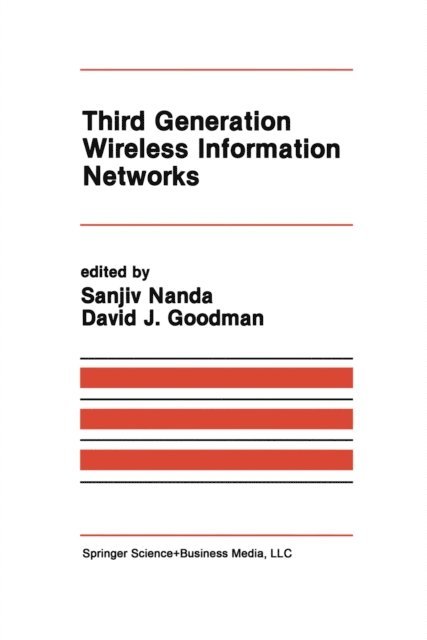
Third Generation Wireless Information Networks
Av Sanjiv Nanda, David J. Goodman
2049 kr
Läs direkt i Bokus Reader – eller ladda ned till din enhet (PDF kräver ofta zoom och scroll på små skärmar).
Beskrivning
Rutgers University launched WINLAB in 1989, just as the communications industry, the Federal government, and the financial community in the United States, were waking up to the growing public appetite for wireless communications and to the shortage of technology to feed it. The secret was already out in Europe, where no fewer than three new cordless and cellular systems were progressing from drawing board to laboratory to factory to consumers. In July 1989, the FCC held a well-attended tutorial that turned into a debate over whether second generation British or Swedish technology held the key to mass-market personal communications. Many in the audience wondered whether United States technology was out of the picture. Technology uncertainties are more acute in wireless communications than in any other information service. For example multi-gigabit optical fiber communications have followed an orderly progression from basic science leading to technology, which in turn stimulated standards, and then commercial products. Eventually applications will be found and industry and society at large will reap the benefits. By contrast, the applications of wireless communications are apparent to an eager public. A large market exists but is held in check by a shortage of capacity. The demand has led the cellular industry to formulate standards for advanced systems before the technology is in place to implement them. Everyone holds their breath waiting to observe performance of the first products. Gaps in basic science add to the uncertainty and forestall the resolution of technological debates.
Produktinformation
- Utgivningsdatum: 2012-12-06
- Språk: Engelska
- Filformat: PDF
- Kopieringsskydd: LCP
- ISBN: 9781461540120
- Förlag: Springer US
Utforska kategorier
Betyg & recensioner
0 recensioner
Inga recensioner tillgängliga.