• Fri frakt över 249 kr
  • •
  • Snabba leveranser
  • •
  • Billiga böcker
Kundservice

Du är på sajten för privatpersoner.

Företag, bibliotek eller offentlig verksamhet?

Du handlar på classic.bokus.com, där alla dina funktioner finns intakta.
Till classic.bokus.com
Bokus logotyp. Gå till startsidan.
  • Erbjudanden
  • Nyheter
  • Student
  • Topplistor
  • Barn & ungdom
  • Bokus Play
  • E-böcker
  • Pocketböcker
  • Spel & pussel

10% rabatt på allt med kod NYSTART10 →

Sidfot

Mina sidor

    Hjälp

    • Kundservice
    • Vanliga frågor och svar
    • Frakt och leverans
    • Retur vid ångerrätt
    • Reklamera vara
    • Betalning
    • Köpvillkor
    • Allmänna villkor
    • Information om webbplatsens tillgänglighet

    Om Bokus

    • Om oss
    • Pressrum
    • För studenter
    • För företag
    • För bibliotek och offentlig verksamhet
    • För leverantörer
    • Hållbarhet

    Populärt

    • Aktuella erbjudanden
    • Presentkort
    • Studentlitteratur
    • Nya böcker
    • Topplistor
    • Signerade böcker
    • Engelska böcker

    Inspiration

    • Boktips
    • BookTok
    • Populära bokserier
    • Barnbokskaraktärer
    • Populära författare
    Logotyp för Bokus
    Följ oss på Facebook (extern länk)Följ oss på Instagram (extern länk)Följ oss på YouTube (extern länk)Följ oss på TikTok (extern länk)
    bokus @ CookiesAnpassa cookiesIntegritetspolicyKöpvillkor
    Till Citymail hemsida (extern länk)Till Budbee hemsida (extern länk)Till Postnord hemsida (extern länk)Till Schenker hemsida (extern länk)Till Early Bird hemsida (extern länk)Till Walleys hemsida (extern länk)
    1. Samhälle och politik
    2. Samhälle och kultur
    3. Kultur och medier
    4. Referensverk och tvärvetenskap

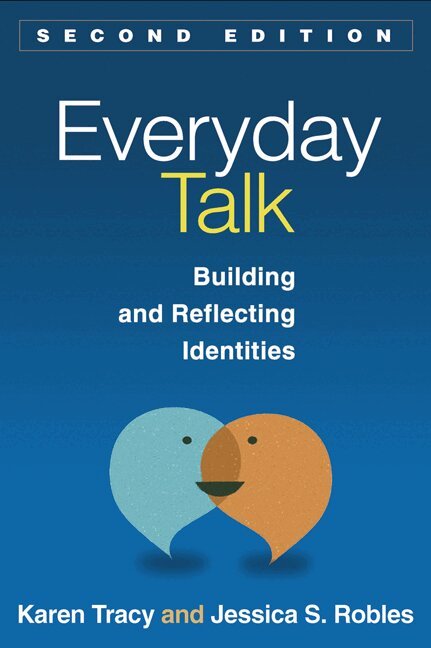
    Everyday Talk, Second Edition

    Building and Reflecting Identities

    AvKaren Tracy,Jessica S. Robles

    Häftad, Engelska, 2013

    709 kr

    Beställningsvara. Skickas inom 5-8 vardagar. Fri frakt över 249 kr.

    Beskrivning

    This engaging text explores how everyday talk--the ordinary kinds of communicating that people do in schools, workplaces, and among family and friends--expresses who we are and who we want to be. The authors interweave rhetorical and cultural perspectives on the "little stuff" of conversation: what we say and how we say it, the terms used to refer to others, the content and style of stories we tell, and more. Numerous detailed examples show how talk is the vehicle through which people build relationships. Students gain skills for thinking more deeply about their own and others' communicative practices, and for understanding and managing interactional difficulties.New to This EditionUpdated throughout to incorporate the latest discourse analysis research. Chapter on six specific speech genres (for example, organizational meetings and personal conversation). Two extended case studies with transcripts and discussion questions. Coverage of digital communication, texting, and social media. Additional cross-cultural examples. Pedagogical FeaturesA preview and summary in every chapter. Accessible explanations of core concepts. End-of-book glossary. Endnotes that identify key authors and suggest further reading.

    Produktinformation

    • Utgivningsdatum:2013-10-04
    • Mått:152 x 229 x 20 mm
    • Vikt:500 g
    • Format:Häftad
    • Språk:Engelska
    • Antal sidor:372
    • Upplaga:2
    • Förlag:Guilford Publications
    • ISBN:9781462511471

    Utforska kategorier

    • Referensverk och tvärvetenskap inom Samhälle och politik
    • Sociala och etiska frågor inom Samhälle och politik
    • Språkvetenskap och lingvistik inom Språk och ordböcker

    Mer om författaren

    Karen Tracy, PhD, is Professor of Communication at the University of Colorado Boulder, where she teaches courses on how everyday talk builds and reflects identities and on discourse analysis and ethnographic methods. She also conducts special-topics seminars that examine communicative trouble in the justice system, in higher education, and in meetings of governance groups. Dr. Tracy is the author of more than 80 journal articles and book chapters, as well as several books. Currently she is at work on a book examining the discourse in legislative hearings and state supreme courts disputing who can marry. She is past editor of the journal Research on Language and Social Interaction.Jessica S. Robles, PhD, is a lecturer in the Department of Communication at the University of Washington in Seattle, where she teaches courses related to language and social interaction, interpersonal communication, intercultural communication, and discourse analysis. She has also taught special-topics courses on moral practices and problems in everyday talk. Dr. Robles's research involves the role of moral issues and differences in interactional trouble. Her recent work includes studies of interactional activities practices, such as gifting occasions and how people's talk associates moral categories with others. Â

    Recensioner i media

    To deeply understand and study everyday talk, we need to enter into the worlds created through it. Everyday Talk, Second Edition introduces ways of doing exactly that. Readers find a rich array of routine instances of talk about which to reflect. The book links talk to issues of identity, culture, and nation, as well as morals, beliefs, and values, incorporating both rhetorical and cultural perspectives. The inclusion of new social media in the second edition is welcome. Scholars, teachers, and students will benefit from this text's systematic treatment of its subject matter and wide-ranging scope, as well as the easy access it provides through vivid examples and lively prose.--Donal Carbaugh, PhD, Department of Communication, University of Massachusetts AmherstI can't imagine a more thorough and appealing introduction to the study of language in social interaction and discourse analysis. In this second edition of Everyday Talk, Tracy and Robles meticulously interweave the field's diverse research threads, present sophisticated content in accessible ways, and offer updated, thought-provoking discussions and examples. The book is an excellent resource for both undergraduates and graduate students.--Cynthia Gordon, PhD, Department of Communication and Rhetorical Studies, Syracuse UniversityI have used Everyday Talk as the foundation text for my iteration of the departmental core course for many years, and the second edition is truly exciting. It retains the features that made the text uniquely useful all along: a clear central argument, engaging examples, a strong theoretical and research foundation, and a student-friendly writing style that also satisfies teachers' needs for rigor and precision. In the second edition, examples have been updated, a theme of social media has been woven throughout the text, and more illustrations from non-Western cultures broaden the book’s scope. This versatile text will be valuable in a wide variety of courses and with many different configurations of students.--Kristine L. Muñoz, PhD, Department of Communication Studies, University of IowaTracy and Robles give readers compelling conceptual frames and a rich analytic vocabulary to make sense of--and appreciate--the stream of conversations, encounters, texts, meetings, and more that is the stuff of human social life. The book integrates sociolinguistics, speech act theory, conversation analysis, and contemporary conceptions of identity. Lively, provocative examples illustrate how talk enables people to get things done, create and solve problems, play, argue, come together, pull apart, and navigate selves.--Phillip Glenn, PhD, Professor and Interim Dean, School of Communication, Emerson CollegeThis text is the go-to standard for any class with a language and social interaction focus. Its easy readability, coupled with coverage of all the major works in language and social interaction, makes it appropriate for everything from an introductory communication survey to a master's-level course. The second edition doesn't disappoint; it includes up-to-date studies and an even more diverse set of U.S. and international examples. Many transcript examples (some with online links) bring ethnographic, discourse, and conversation analysis to life and show concretely how 'everyday talk' performs important actions related to identity work. Students will walk away from this book with concepts, theories, and vocabulary for critically analyzing their own and others' communication.--Evelyn Y. Ho, PhD, Department of Communication Studies, University of San Francisco -A particularly welcome aspect of the book is that many illustrative examples are transcripts of 'real' everyday talk. Another commendable feature of the extracts is the rich array of socio-cultural contexts they are drawn from....I would recommend this book to students and scholars with an interest in language, communication, and social interaction....It is a scholarly, accessible and engaging synthesis of a diverse literature. Thus it is an excellent text for undergraduates and a useful sourcebook for graduates and academics.(on the first edition)--Journal of Sociolinguistics, 2/4/2013ƒƒStudents should find the book easy to follow and interesting in terms of their own conversational practices....Although intended as a textbook, libraries supporting undergraduate studies in this area may wish to acquire a copy for circulation. (on the first edition)--Choice Reviews, 2/1/2003ƒƒ“A very approachable and comprehensive autopsy of modern interactions….This is a book that will change your understanding of communication, and how relationships are built as well as how we project our identities. A useful resource for students, but also an enlightening read for anyone interested in communication.”--The Psychologist, 5/1/2014ƒƒThis accessible work can be used to support various courses within communication studies but could also be beneficial in other disciplines that require communication courses. Clearly and engagingly written, with an extensive notes section and a 34-page reference list, this is an excellent resource. Recommended. All readers.--Choice Reviews, 8/1/2014

    Innehållsförteckning

    • I. The Argument1. Talk and Identity2. Two PerspectivesII. Talk's Building Blocks3. Person-Referencing Practices4. Speech Acts5. The Sound (and Sight) of Talk 6. Interaction Structures7. Language SelectionIII. Complex Discourse Practices8. Style9. Stance 10. Narratives11. GenreIV. The Conclusion12. Putting It All TogetherGlossary