• Fri frakt över 249 kr
  • •
  • Snabba leveranser
  • •
  • Billiga böcker
Kundservice

Du är på sajten för privatpersoner.

Företag, bibliotek eller offentlig verksamhet?

Du handlar på classic.bokus.com, där alla dina funktioner finns intakta.
Till classic.bokus.com
Bokus logotyp. Gå till startsidan.
  • Erbjudanden
  • Nyheter
  • Student
  • Topplistor
  • Barn & ungdom
  • Bokus Play
  • E-böcker
  • Pocketböcker
  • Spel & pussel

10% studentrabatt med kod TERM26

Sidfot

Mina sidor

    Hjälp

    • Kundservice
    • Vanliga frågor och svar
    • Frakt och leverans
    • Retur vid ångerrätt
    • Reklamera vara
    • Betalning
    • Köpvillkor
    • Allmänna villkor
    • Information om webbplatsens tillgänglighet

    Om Bokus

    • Om oss
    • Pressrum
    • För studenter
    • För företag
    • För bibliotek och offentlig verksamhet
    • För leverantörer
    • Hållbarhet

    Populärt

    • Aktuella erbjudanden
    • Presentkort
    • Studentlitteratur
    • Nya böcker
    • Topplistor
    • Signerade böcker
    • Engelska böcker

    Inspiration

    • Boktips
    • BookTok
    • Populära bokserier
    • Barnbokskaraktärer
    • Populära författare
    Logotyp för Bokus
    Följ oss på Facebook (extern länk)Följ oss på Instagram (extern länk)Följ oss på YouTube (extern länk)Följ oss på TikTok (extern länk)
    bokus @ CookiesAnpassa cookiesIntegritetspolicyKöpvillkor
    Till Citymail hemsida (extern länk)Till Budbee hemsida (extern länk)Till Postnord hemsida (extern länk)Till Schenker hemsida (extern länk)Till Early Bird hemsida (extern länk)Till Walleys hemsida (extern länk)
    1. Naturvetenskap och teknik
    2. Geovetenskap
    3. Geografi

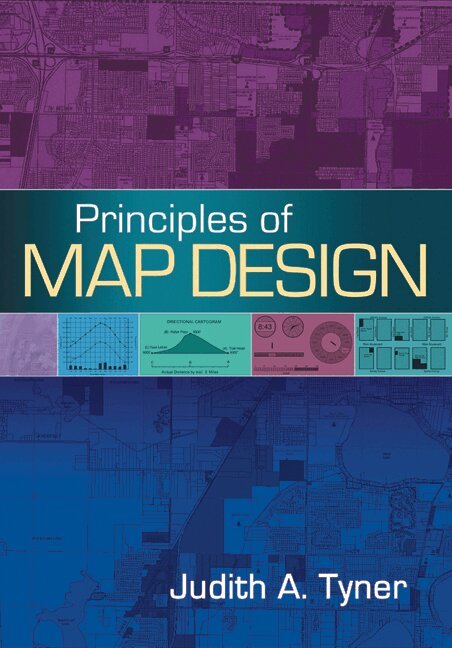
    Principles of Map Design

    AvJudith A. Tyner

    Häftad, Engelska, 2014

    723 kr

    Beställningsvara. Skickas inom 5-8 vardagar. Fri frakt över 249 kr.

    Fler format och utgåvor

    E-bok

    855 kr

    Inbunden

    Tillf. slut

    Beskrivning

    This authoritative, reader-friendly text presents core principles of good map design that apply regardless of production methods or technical approach. The book addresses the crucial questions that arise at each step of making a map: Who is the audience? What is the purpose of the map? Where and how will it be used? Students get the knowledge needed to make sound decisions about data, typography, color, projections, scale, symbols, and nontraditional mapping and advanced visualization techniques. Pedagogical Features:*Over 200 illustrations (also available at the companion website as PowerPoint slides), including 23 color plates*Suggested readings at the end of each chapter.*Recommended Web resources.*Instructive glossary

    Produktinformation

    • Utgivningsdatum:2014-05-16
    • Mått:178 x 254 x 12 mm
    • Vikt:491 g
    • Format:Häftad
    • Språk:Engelska
    • Antal sidor:259
    • Förlag:Guilford Publications
    • ISBN:9781462517121

    Utforska kategorier

    • Geografi inom Naturvetenskap och teknik

    Mer om författaren

    Judith A. Tyner, PhD, is Professor Emerita of Geography at California State University, Long Beach. She taught in the Geography Department for over 35 years, where she served as Department Chair and as Director of the Cartography/GIS Certificate Program from its inception until her retirement. While at California State Dr. Tyner taught beginning and advanced cartography, map reading and interpretation, history of cartography, and remote sensing. She is a member of the Association of American Geographers, the North American Cartographic Information Society, the Cartography and Geographic Information Society, and the California Map Society. She is the author of two previous textbooks and over 30 articles.

    Recensioner i media

    "From a respected cartographer, this is a well-written and easy-to-understand textbook for an introductory course in cartography or map design. A major advantage of this book is that it does not focus on specific GIS software; rather, the design principles can be applied to any GIS software used to make maps. Design considerations for exciting new mapping technologies--such as web mapping, animated and interactive maps, and maps for the visually impaired--are also covered."--Michael Leitner, PhD, Department of Geography and Anthropology, Louisiana State University; Editor, Cartography and Geographic Information Science"Tyner draws on years of experience to return a design-driven approach to the introductory cartography text. She weaves together practical and theoretical considerations in discussions that focus on an understanding of meaning rather than memorization of definitions and equations. Instructors will find the chapter featuring six 'map makeovers' to be particularly useful for teaching students the crucial skills of map editing and redesign."--Margaret Pearce, PhD, Department of Geography, Ohio University"As map design increasingly becomes dictated by software default options, students and professionals need a better grounding in the basic principles and conventions of cartography. Using numerous graphic examples, Tyner shows how to make appropriate design choices to effectively communicate spatial information."--Dennis Fitzsimons, PhD, Geography Department, Humboldt State University"Tyner has given us a concise, readable book that summarizes principles of map design. It will be especially valuable to those specializing in GIS who want a clear working knowledge of map planning, symbols, typography, and common thematic maps."--Eugene Turner, PhD, Department of Geography, California State University, Northridge - Judith Tyner is eminently qualified to provide us with a textbook of this ilk having taught all aspects of cartography over approximately 35 years, spanning the most interesting and fast changing period of development in modern cartography. This book brings us right up to date in a clear and readable manner supporting the traditional principles many feel have been lost in the growing output of mapping from Geographic Information Systems....With the decline of college and university courses teaching cartography, and the increasing use of maps in many guises both in the work place and for recreational use, there is a need for a good textbook to bring practitioners up to date, and also to reinvigorate the principles of good design in the cartographic process. Judith Tyner's book provides just such a text, and it is also well illustrated with a pleasingly clean design and layout. --Society of Cartographers Bulletin, 3/5/2010ƒƒ This clearly written textbook focuses on the principles of making maps. Not a how-to book, its goal is translating and summarizing current cartographic thought and practice and making this information accessible to students. --ArcUser, 9/19/2010

    Innehållsförteckning

    • I. Map Design 1. Introduction 2. Planning and Composition 3. Text Material and Typography 4. Color in Cartographic Design II. Geographic and Cartographic Framework 5. Scale, Compilation, and Generalization 6. The Earth's Graticule and Projections III. Symbolization 7. Basics of Symbolization 8. Symbolizing Geographic Data 9. Multivariate Mapping IV. Nontraditional Mapping 10. Cartograms and Diagrams 11. Continuity and Change in the Computer Era V. Critique of Maps 12. Putting It All Together Appendix A. Commonly Used Projections Appendix B. Resources Appendix C. Glossary