• Fri frakt över 249 kr
  • •
  • Snabba leveranser
  • •
  • Billiga böcker
Kundservice

Du är på sajten för privatpersoner.

Företag, bibliotek eller offentlig verksamhet?

Du handlar på classic.bokus.com, där alla dina funktioner finns intakta.
Till classic.bokus.com
Bokus logotyp. Gå till startsidan.
  • Erbjudanden
  • Nyheter
  • Student
  • Topplistor
  • Barn & ungdom
  • Bokus Play
  • E-böcker
  • Pocketböcker
  • Spel & pussel

10% rabatt på allt med kod NYSTART10 →

Sidfot

Mina sidor

    Hjälp

    • Kundservice
    • Vanliga frågor och svar
    • Frakt och leverans
    • Retur vid ångerrätt
    • Reklamera vara
    • Betalning
    • Köpvillkor
    • Allmänna villkor
    • Information om webbplatsens tillgänglighet

    Om Bokus

    • Om oss
    • Pressrum
    • För studenter
    • För företag
    • För bibliotek och offentlig verksamhet
    • För leverantörer
    • Hållbarhet

    Populärt

    • Aktuella erbjudanden
    • Presentkort
    • Studentlitteratur
    • Nya böcker
    • Topplistor
    • Signerade böcker
    • Engelska böcker

    Inspiration

    • Boktips
    • BookTok
    • Populära bokserier
    • Barnbokskaraktärer
    • Populära författare
    Logotyp för Bokus
    Följ oss på Facebook (extern länk)Följ oss på Instagram (extern länk)Följ oss på YouTube (extern länk)Följ oss på TikTok (extern länk)
    bokus @ CookiesAnpassa cookiesIntegritetspolicyKöpvillkor
    Till Citymail hemsida (extern länk)Till Budbee hemsida (extern länk)Till Postnord hemsida (extern länk)Till Schenker hemsida (extern länk)Till Early Bird hemsida (extern länk)Till Walleys hemsida (extern länk)
    1. Medicin
    2. Andra medicinska specialiteter
    3. Neurologi och klinisk neurofysiologi
    4. Autism och Aspergers syndrom

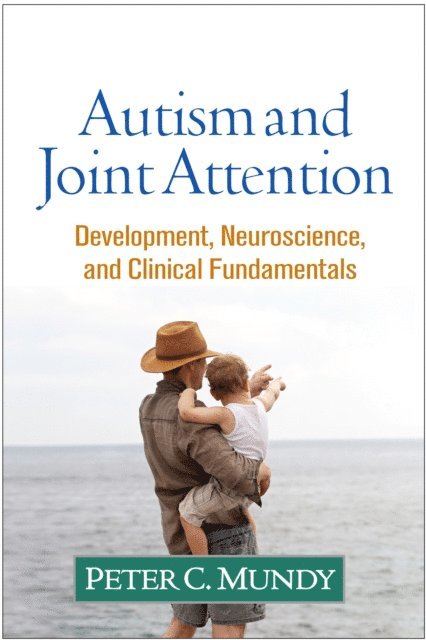
    Autism and Joint Attention

    Development, Neuroscience, and Clinical Fundamentals

    AvPeter C. Mundy

    Inbunden, Engelska, 2016

    788 kr

    Beställningsvara. Skickas inom 5-8 vardagar. Fri frakt över 249 kr.

    Fler format och utgåvor

    E-bok

    880 kr

    E-bok

    880 kr

    Beskrivning

    From a preeminent researcher, this book looks at the key role of joint attention in both typical and atypical development. Peter C. Mundy shows that no other symptom dimension is more strongly linked to early identification and treatment of autism spectrum disorder (ASD). He synthesizes a wealth of knowledge on how joint attention develops, its neurocognitive underpinnings, and how it helps to explain the learning, language, and social-cognitive features of ASD across the lifespan. Clinical implications are explored, including reviews of cutting-edge diagnostic methods and targeted treatment approaches.

    Produktinformation

    • Utgivningsdatum:2016-03-16
    • Mått:152 x 229 x 27 mm
    • Vikt:622 g
    • Format:Inbunden
    • Språk:Engelska
    • Antal sidor:350
    • Förlag:Guilford Publications
    • ISBN:9781462525096

    Utforska kategorier

    • Autism och Aspergers syndrom inom Medicin
    • Barnpsykologi och utvecklingspsykologi inom Psykologi och pedagogik
    • Pediatrik inom Medicin

    Mer om författaren

    Peter C. Mundy, PhD, is Professor and Lisa Capps Endowed Chair of Neurodevelopmental Disorders and Education in the School of Education and the Department of Psychiatry and Behavioral Sciences at the University of California, Davis (UC Davis). He is also Director of Educational Research at the UC Davis MIND Institute. A developmental and clinical psychologist, Dr. Mundy has been working on defining the nature of autism and developmental disabilities for over 30 years. An author of the Early Social Communication Scales, which was selected by Autism Speaks as a recommended measure for clinical trials, he is an associate editor of Autism Research and serves as an editorial board member or consulting editor for numerous other journals.

    Recensioner i media

    "An instant classic. While we have long known of the centrality of joint attention difficulties in young children with autism, this volume, for the first time, takes a comprehensive view of the problem. Integrating the literature on this topic and helping us understand implications for learning and development, this volume will be of great interest to clinicians and researchers alike."--Fred R. Volkmar, MD, Irving B. Harris Professor, Child Study Center, Yale University School of Medicine"By carefully examining the role of the development of joint attention, Mundy provides a compelling developmental framework for understanding ASD in the context of human nature. He skillfully integrates current research on neuroscience, genetics, early behavioral intervention, and psychological science. This book allows the reader to pull together disparate lines of autism research in a way that provides a deeper understanding and inspires further work. It is a tour de force that will be appreciated both by those just beginning to learn about ASD and by experts in the field."--Geraldine Dawson, PhD, Professor of Psychiatry and Behavioral Sciences and Director, Duke Center for Autism and Brain Development, Duke University"This landmark book is a 'must read' for everyone from basic scientists to clinicians and educators. Mundy was the first scientist to identify joint attention as one of the key symptoms of autism. His research over the past three decades has led to a wealth of exciting findings and has transformed our theoretical understanding of both joint attention and autism. Now he synthesizes a range of evidence to argue persuasively that joint attention is a foundational ability that lies at the heart of human nature. A remarkable achievement."--Helen Tager-Flusberg, PhD, Department of Psychological and Brain Sciences, Boston University"Mundy provides a thought-provoking, novel, and comprehensive discussion of joint attention, impairments in which are a central feature of children with ASD. This book is full of new insights on the neurodevelopment and treatment of ASD. It is an essential resource for clinicians and researchers of all backgrounds."--Connie Kasari, PhD, Center for Autism Research and Treatment, Semel Institute for Neuroscience and Human Behavior, University of California, Los Angeles -Provides enough detailed information to help professionals working with individuals with autism develop comprehensive treatment strategies….Mundy goes into considerable detail about what research shows regarding the role joint attention plays in autism. This book is made particularly useful as he covers a wide range of material showing how joint attention as a construct has been deemed important throughout many different hypotheses for autism….This is a book useful for any professional who wants to more fully understand autism. It should be read by anyone who expects that working to help individuals with autism should involve not only understanding specific interventions but also understanding different facets and details of this condition. Reading this book provides a strong review of autism as a neurobehavioral condition and what makes it different from other conditions. It is a book that provides a full review of different hypotheses and also genetic and neurological factors associated with autism.--PsycCRITIQUES, 10/31/2016

    Innehållsförteckning

    • 1. A Brief History of the Concept of Autism*Autism and the Myth of the Unresponsive Child*The Demise of the Unresponsive Prototype*The Dimensional Approach to the Social Nature of Autism*The Fuzzy Nature of Human Nature*The Moderator Model of Autism2. The Dimension of Joint Attention and ASD Diagnosis*Joint Attention and the Research Domain Criteria*Joint Attention and the Evolution of the DSM Criteria for ASD3. Joint Attention in Symptom Assessment and Risk Identification*Joint Attention and Defining the Social Nature of Autism*The Development of Clinical Measures of Joint Attention*Applications of Joint Attention Measures to the Study of ASD*Risk identification in Infant Siblings*Joint Attention in Other Conditions4. Joint Attention, Learning, and Social Cognition*Joint Attention, Mentalizing, and Autism*The Social-Cognitive Hypothesis of Joint Attention*Joint Attention, Developmental Dissociations, and Timing*An Alternative Theory of Joint Attention and Social Cognition*Gender Differences and Joint Attention*Joint Attention in Childhood*Summary and Conclusion5. Social Orienting, Joint Attention, and Social Motivation*Three Questions about the Development of Joint Attention*The Many Dimensions of the Social Phenotype of ASD*When Does Joint Attention Develop?*Joint Attention, Language Development, and Social Orienting*Joint Attention and Cognitive Processing in Infancy6. Early Intervention, Joint Attention, and ASD*Models of Early Intervention*Approaches to Joint Attention Intervention*The JASPER Intervention*Joint Attention and Intervention for Older Verbal Children*Summary and Conclusions7. Neurodevelopment of Joint Attention*The Need for Caution in the Cognitive Neuroscience of ASD*Choosing Dimensions in the Developmental Cognitive Neuroscience of ASD*Evidence for the Neural Network of Joint Attention*Imaging Studies of Joint Attention in Autism Spectrum Development*The Overlap between the Joint Attention and Social-Cognitive Networks*The Dynamic Development of Behavior and Social-Cognitive Neural Systems*A Functional Appraisal of the Joint Attention Neural Network*Summary and Conclusions8. The Genetics of Joint Attention and Joint Engagement*Joint Attention/Joint Engagement, Motivation, and Molecules*The Genetics of JAJE: An Overview*QTL Linkage and Joint Attention*Oxytocin and Vasopressin Pathways and Joint Attention*Animal Models of Joint Attention*Joint Attention, Gene Interactions, and Genetic Repurposing*Informing the Dimensional Approach to AutismReferencesIndex