• Fri frakt över 249 kr
  • •
  • Snabba leveranser
  • •
  • Billiga böcker
Kundservice

Du är på sajten för privatpersoner.

Företag, bibliotek eller offentlig verksamhet?

Du handlar på classic.bokus.com, där alla dina funktioner finns intakta.
Till classic.bokus.com
Bokus logotyp. Gå till startsidan.
  • Erbjudanden
  • Nyheter
  • Student
  • Topplistor
  • Barn & ungdom
  • Bokus Play
  • E-böcker
  • Pocketböcker
  • Spel & pussel

10% rabatt på allt med kod: NYSTART10 →

Sidfot

Mina sidor

    Hjälp

    • Kundservice
    • Vanliga frågor och svar
    • Frakt och leverans
    • Retur vid ångerrätt
    • Reklamera vara
    • Betalning
    • Köpvillkor
    • Allmänna villkor
    • Information om webbplatsens tillgänglighet

    Om Bokus

    • Om oss
    • Pressrum
    • För studenter
    • För företag
    • För bibliotek och offentlig verksamhet
    • För leverantörer
    • Hållbarhet

    Populärt

    • Aktuella erbjudanden
    • Presentkort
    • Studentlitteratur
    • Nya böcker
    • Topplistor
    • Signerade böcker
    • Engelska böcker

    Inspiration

    • Boktips
    • BookTok
    • Populära bokserier
    • Barnbokskaraktärer
    • Populära författare
    Logotyp för Bokus
    Följ oss på Facebook (extern länk)Följ oss på Instagram (extern länk)Följ oss på YouTube (extern länk)Följ oss på TikTok (extern länk)
    bokus @ CookiesAnpassa cookiesIntegritetspolicyKöpvillkor
    Till Citymail hemsida (extern länk)Till Budbee hemsida (extern länk)Till Postnord hemsida (extern länk)Till Schenker hemsida (extern länk)Till Early Bird hemsida (extern länk)Till Walleys hemsida (extern länk)
    1. Psykologi och pedagogik
    2. Psykologi
    3. Biologisk psykologi och neuropsykologi

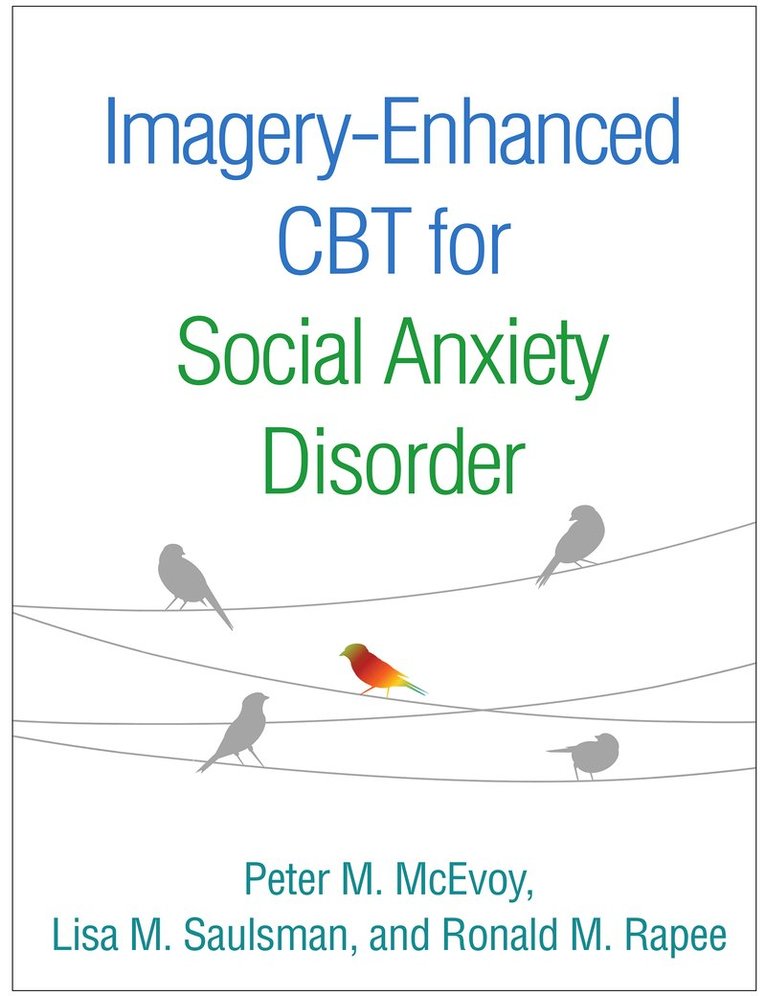
    Imagery-Enhanced CBT for Social Anxiety Disorder

    AvPeter M. McEvoy,Lisa M. Saulsman

    Häftad, Engelska, 2018

    539 kr

    Beställningsvara. Skickas inom 5-8 vardagar. Fri frakt över 249 kr.

    Fler format och utgåvor

    Inbunden

    Tillf. slut

    Beskrivning

    Negative, distorted self-images are a key feature of social anxiety disorder (SAD)--and working with imagery can make cognitive-behavioral therapy (CBT) more effective for those who struggle with this debilitating problem. This book presents an innovative modular framework that incorporates vivid multisensory imagery into all aspects of treatment. Step-by-step guidance for implementing this evidence-based approach with individuals or groups is illustrated with rich case material. In a large-size format for easy photocopying, the book includes 35 reproducible worksheets and handouts. Purchasers get access to a Web page where they can download and print the reproducible materials.

    Produktinformation

    • Utgivningsdatum:2018-03-21
    • Mått:203 x 267 x 16 mm
    • Vikt:640 g
    • Format:Häftad
    • Språk:Engelska
    • Antal sidor:282
    • Förlag:Guilford Publications
    • ISBN:9781462533053

    Utforska kategorier

    • Biologisk psykologi och neuropsykologi inom Psykologi och pedagogik
    • Psykologi inom Psykologi och pedagogik
    • Psykoterapi som behandlingsmetod inom Medicin

    Mer om författaren

    Peter M. McEvoy, PhD, is Professor in the School of Psychology and Speech Pathology at Curtin University in Perth, Australia. He is also clinical research director at the Centre for Clinical Interventions of the Western Australia Department of Health. An associate editor of the Journal of Anxiety Disorders and the Journal of Experimental Psychopathology, Dr. McEvoy has published articles on the treatment of anxiety and depression, transdiagnostic approaches to mental disorders, and mechanisms of change.Lisa M. Saulsman, PhD, is a senior clinical psychologist at the Centre for Clinical Interventions (CCI) of the Western Australia Department of Health. She provides individual and group interventions for adults with anxiety and depression and coordinates the workshop program in evidence-supported treatments for emotional disorders. Dr. Saulsman has published articles on the use of imagery to enhance CBT and the role of personality in psychopathology. She has a private practice offering CBT-based training and workshops to professionals, businesses, and the general public.Ronald M. Rapee, PhD, is Distinguished Professor of Psychology at Macquarie University, in Sydney, Australia, and Director of the University's Centre for Emotional Health. He is best known for his theoretical models of the development of anxiety disorders and his creation of empirically validated intervention programs that are widely used internationally. Dr. Rapee is a recipient of the Distinguished Career Award from the Australian Association for Cognitive and Behaviour Therapy and the Distinguished Contribution to Science Award from the Australian Psychological Society. He is an Australian Research Council Laureate Fellow and has been appointed as a Member of the Order of Australia for his contributions to clinical psychology.

    Recensioner i media

    "An excellent work that covers the most up-to-date research on and treatment for SAD. What sets this book apart is its emphasis on imagery, an aspect of CBT that many practitioners neglect in both their conceptualizations and treatment. Identifying and responding to relevant spontaneous images and inducing images for therapeutic effect can help clients change their cognitions at the emotional level. Therapists of any level of experience will find this book useful in constructing personal models of anxiety, focusing on the six maintaining factors of the disorder. The many case examples, session transcripts, and reproducible worksheets are valuable."--Judith S. Beck, PhD, President, Beck Institute for Cognitive Behavior Therapy"Recent years have seen an explosion of interest in mental imagery among practitioners and scientists alike. Even our best psychological treatments do not work for everyone, and we need to improve our techniques. Research on the mental imagery enhancements described in this book suggests they increase treatment completion rates and reduce symptoms. McEvoy, Saulsman, and Rapee are pioneering experts who are well positioned to integrate imagery innovations with existing evidence-based treatments. This volume is a 'must have' for all interested in expanding their clinical skills by adding mental imagery techniques to their toolboxes. The authors are to be commended for a most exciting book!"--Emily A. Holmes, DClinPsy, PhD, Department of Clinical Neuroscience, Karolinska Institutet, Sweden"This excellent book provides an intervention for individuals (or groups) with SAD that builds well on general CBT practice. The authors make a compelling case for the integration of imagery-based procedures as a means to increase the emotional impact of typical CBT procedures. They lay out their approach in a systematic and detailed but entirely accessible manner, which should be of great utility to novice clinicians and seasoned veterans alike."--Richard G. Heimberg, PhD, Department of Psychology and Director, Adult Anxiety Clinic of Temple, Temple University"This is a wonderful, much-needed volume written by authors highly respected for their research on and treatment for SAD. The book provides a cogent rationale for the benefits of incorporating imagery-based interventions in therapy and presents a step-by-step description of each phase of an empirically validated imagery-enhanced CBT protocol. Case examples, detailed scripts, and downloadable worksheets and handouts are included. A particularly welcome feature is the emphasis on treatment process. Straightforward and clearly organized, the book provides exemplary guidance for professionals, including those with only introductory knowledge of CBT. I will use this book in my graduate CBT seminars, as well as in our training clinic."--Lynn E. Alden, PhD, Department of Psychology, University of British Columbia, Canada -

    Innehållsförteckning

    • I. Overview of Social Anxiety and Its Treatment1. What Is Social Anxiety Disorder?2. Cognitive-Behavioral Models and Treatments for SAD3. Overview of Imagery-Enhanced CBT for SADII. Treatment Modules4. Socializing Clients to the Treatment Model5. Negative Thoughts and Images6. Avoidance and Safety Behaviors7. Negative Self-Image8. Attention Biases9. Negative Core Beliefs10. Maintenance and Relapse PreventionAppendix. Reproducible Worksheets and Handouts