• Fri frakt över 249 kr
  • •
  • Snabba leveranser
  • •
  • Billiga böcker
Kundservice

Du är på sajten för privatpersoner.

Företag, bibliotek eller offentlig verksamhet?

Du handlar på classic.bokus.com, där alla dina funktioner finns intakta.
Till classic.bokus.com
Bokus logotyp. Gå till startsidan.
  • Erbjudanden
  • Nyheter
  • Student
  • Topplistor
  • Barn & ungdom
  • Bokus Play
  • E-böcker
  • Pocketböcker
  • Spel & pussel

10% rabatt på allt med kod: NYSTART10 →

Sidfot

Mina sidor

    Hjälp

    • Kundservice
    • Vanliga frågor och svar
    • Frakt och leverans
    • Retur vid ångerrätt
    • Reklamera vara
    • Betalning
    • Köpvillkor
    • Allmänna villkor
    • Information om webbplatsens tillgänglighet

    Om Bokus

    • Om oss
    • Pressrum
    • För studenter
    • För företag
    • För bibliotek och offentlig verksamhet
    • För leverantörer
    • Hållbarhet

    Populärt

    • Aktuella erbjudanden
    • Presentkort
    • Studentlitteratur
    • Nya böcker
    • Topplistor
    • Signerade böcker
    • Engelska böcker

    Inspiration

    • Boktips
    • BookTok
    • Populära bokserier
    • Barnbokskaraktärer
    • Populära författare
    Logotyp för Bokus
    Följ oss på Facebook (extern länk)Följ oss på Instagram (extern länk)Följ oss på YouTube (extern länk)Följ oss på TikTok (extern länk)
    bokus @ CookiesAnpassa cookiesIntegritetspolicyKöpvillkor
    Till Citymail hemsida (extern länk)Till Budbee hemsida (extern länk)Till Postnord hemsida (extern länk)Till Schenker hemsida (extern länk)Till Early Bird hemsida (extern länk)Till Walleys hemsida (extern länk)
    1. Medicin
    2. Andra medicinska specialiteter
    3. Olycksfalls- och akutmedicin

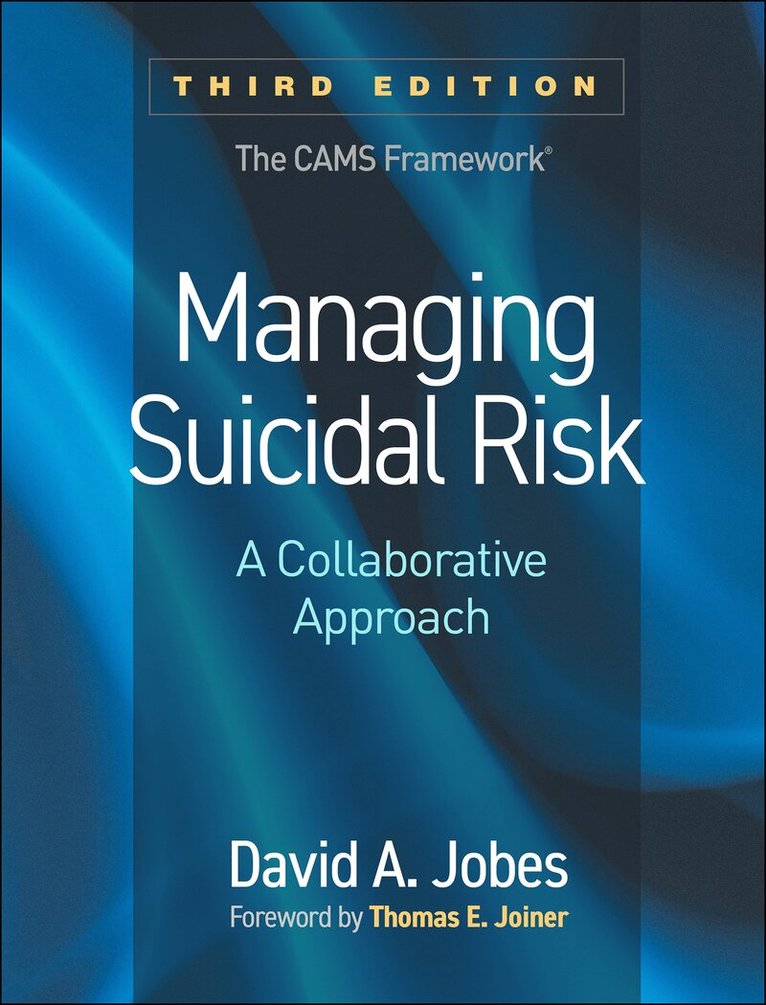
    Managing Suicidal Risk, Third Edition

    A Collaborative Approach

    AvDavid A. Jobes

    Häftad, Engelska, 2023

    600 kr

    Beställningsvara. Skickas inom 5-8 vardagar. Fri frakt över 249 kr.

    Fler format och utgåvor

    Inbunden

    904 kr

    Beskrivning

    Now in an extensively revised third edition with 65% new material, this is the authoritative presentation of the Collaborative Assessment and Management of Suicidality (CAMS) therapeutic framework. CAMS provides proven tools to help clinicians of any orientation evaluate suicidal risk and develop a suicide-focused treatment plan. In addition to their clinical utility, the procedures used for assessment, stabilization, and treatment of suicidal risk within CAMS can help reduce the risk of malpractice liability. In a convenient large-size format, the book includes the latest version of the Suicide Status Form (SSF-5) plus other valuable reproducible tools, which can be downloaded and printed for repeated use. For CAMS training opportunities offered by David A. Jobes, visit https://cams-care.com.New to This EditionMajor updates based on ongoing clinical research, including tools and adaptations for additional populations and settings. Increased focus on implementation with adolescents, with a new extended case example. Vital guidance for effectively using CAMS via telehealth. Additional reproducible forms to photocopy or download, including a fillable PDF of the Suicide Status Form, optimized for electronic medical records.

    Produktinformation

    • Utgivningsdatum:2023-08-18
    • Mått:266 x 203 x 21 mm
    • Vikt:800 g
    • Format:Häftad
    • Språk:Engelska
    • Antal sidor:362
    • Upplaga:3
    • Förlag:Guilford Publications
    • ISBN:9781462552696

    Utforska kategorier

    • Olycksfalls- och akutmedicin inom Medicin
    • Psykiatri inom Medicin
    • Psykoterapi som behandlingsmetod inom Medicin

    Mer om författaren

    David A. Jobes, PhD, ABPP, is Professor of Psychology, Associate Director of Clinical Training, and Director of the Suicide Prevention Laboratory at The Catholic University of America. He is also Adjunct Professor of Psychiatry in the School of Medicine at the Uniformed Services University. With research interests in suicidology for over 40 years, he has published extensively in the field and routinely conducts professional training in clinical suicidology, professional ethics, and risk management. Dr. Jobes has served as a consultant to the Department of Defense, the Department of Veterans Affairs, the Centers for Disease Control and Prevention, the National Institute of Mental Health, the National Academy of Medicine, and the U.S. Army Intelligence and Security Command. A past president of the American Association of Suicidology (AAS), he is a member of the Board of Directors of the American Foundation for Suicide Prevention (AFSP), serves on AFSP’s Scientific Council, and is Chair of the AFSP Public Policy Council. His work has been recognized by the Edwin S. Shneidman Award for early career contribution to suicidology, the Louis I. Dublin Award for career contribution to suicidology, and the Marsha M. Linehan Award for outstanding research in the treatment of suicide risk from AAS. He is also the recipient of the Alfred M. Wellner Award for Lifetime Achievement (for research) from the National Register of Health Service Psychologists and the 2025 Erwin Ringel Service Award from the International Association of Suicide Prevention. Dr. Jobes is a Fellow of the American Psychological Association and is board certified in clinical psychology. He maintains a private clinical, consulting, and forensic practice in Maryland and Washington, DC.

    Recensioner i media

    "No mental health professional is immune to the possibility of working with suicidal clients, and it is imperative that every clinician learn how to deliver expert care in order to save lives. The third edition of this book is a resource that every clinician would benefit from reading and drawing on in times of crisis. It offers a practical, empathic, evidence-based approach that draws on decades of experience and refinements. Jobes has once again provided an extremely valuable work for clinicians everywhere looking for ways to improve the lives of their most high-risk clients."--Shireen L. Rizvi, PhD, ABPP, Graduate School of Applied and Professional Psychology, Rutgers, The State University of New Jersey"Through his remarkable, sustained 40-year career focused on studying and helping people who experience suicidal thoughts and behavior, Jobes has moved the field toward a more patient-centered approach. An emphasis on the patient's perspective and the clinical alliance is reflected in the four pillars of CAMS: empathy, collaboration, honesty, and suicide focus. In the third edition of this book, Jobes walks the reader through the journey of his discoveries, includes useful clinical vignettes, and provides a practical roadmap for incorporating CAMS into any clinical practice."--Christine Yu Moutier, MD, Chief Medical Officer, American Foundation for Suicide Prevention"The third edition of this volume is notable for its readability and instructiveness. Very useful details about how best to implement CAMS with clients are seamlessly merged with empirical data supporting the approach. Many examples of successful (and less optimal) client outcomes, helpful worksheets, frequently asked questions, and innovative applications, including using CAMS via telehealth, contribute to the book's clinical utility. Adoption of the comprehensive CAMS framework will help allay the anxiety that clinicians experience when treating suicidal clients. The wealth of clinical wisdom imparted throughout this book makes it a 'must read.'"--Anthony Spirito, PhD, ABPP, Department of Psychiatry and Human Behavior, Alpert Medical School of Brown University"CAMS is arguably one of the most widely used approaches to clinical care for suicidal patients. Jobes's third edition outlines the latest advances and refinements to this incredibly effective patient-centered approach. User-friendly and accessible, the CAMS model can be readily integrated into any clinician’s therapeutic practice, regardless of background or training. The documentation templates provide an added bonus by helping clinicians ensure they meet standards of care surrounding risk assessment and documentation. Every clinician should pick up a copy of this book and keep it within easy reach."--Craig J. Bryan, PsyD, ABPP, Trott Gebhardt Philips Professor of Psychiatry and Behavioral Health, The Ohio State University-Provides a clear and flexible framework for the treatment of suicidal behavior in outpatient settings. (on the second edition)--Journal of Contemporary Psychotherapy, 6/26/2017ƒƒThis book is indubitably a masterpiece and ought to benefit providers and patients alike....Those of us who, due to the nature of our practice or preference, can see the patients along the continuum--from inpatient to outpatient care--will gain a lot from this book. (on the first edition)--Journal of Clinical Psychiatry, 5/1/2008ƒƒUser-friendly....This manual packs quite a wallop for a book so deceptively easy to read. It is a genuine advance in the state of the art and science of suicide prevention. (on the first edition)--PsycCRITIQUES, 7/1/2007ƒƒDavid Jobes, an expert in the field of suicidology, offers an innovative method of approaching...assessment, treating, and tracking outcomes with suicidal individuals....The text is likely to resonate with a wide variety of clinicians, from the novice to the expert with years of experience. (on the first edition)--Bulletin of the Menninger Clinic, 12/1/2008

    Innehållsförteckning

    • Foreword, Thomas E. Joiner1. The Collaborative Assessment and Management of Suicidality2. The Suicide Status Form3. Optimizing the Use of the CAMS Framework4. CAMS Risk Assessment5. CAMS Treatment Planning6. CAMS Interim Care7. CAMS Clinical Outcomes and Disposition8. CAMS as a Means of Decreasing Malpractice Liability9. CAMS Adaptations and Future DevelopmentsEpilogueAppendix A. Contemporary Mental Health Care Developments Related to Suicide PreventionAppendix B. Suicide Status Form–5 (SSF-5): First Session, Interim Sessions, Final SessionAppendix C. Coding Manual for the SSF Core Assessment Scales: Qualitative AssessmentAppendix D. Coding Manual for SSF Reasons for Living versus Reasons for DyingAppendix E. Coding Manual for the SSF One-Thing ResponseAppendix F. CAMS-Related Empirical ResearchAppendix G. CAMS Quick Check Preparation GuideAppendix H. CAMS Therapeutic WorksheetAppendix I. Stabilization Support PlanAppendix J. Complete CAMS Case Example of CarmenAppendix K. CAMS Living Status FormAppendix L. CAMS Rating Scale (CRS.3)Appendix M. Frequently Asked Questions about CAMSReferencesIndex