E-bok, Engelska, 2000
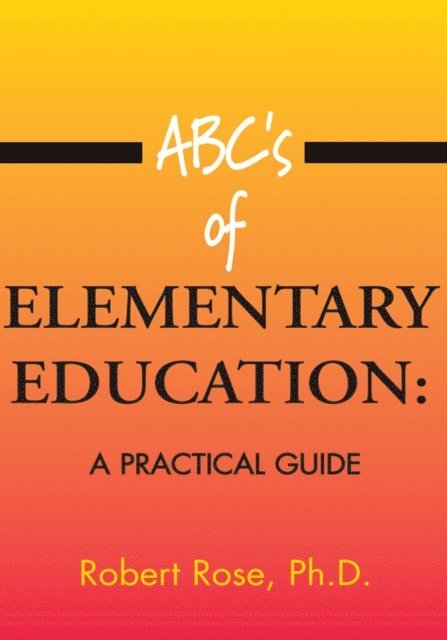
Abc's of Elementary Education:
Av Robert Rose
116 kr
Läs direkt i Bokus Reader – eller ladda ned till din enhet
Beskrivning
Throughout the 20th Century theorists and teachers argued about the best way to teach reading. In California, when the whole language approach was in vogue, many teachers were forced to ignore phonics. I said forced and this was true. Either they had to teach phonics secretly or they would be insulted, degraded, and intimidated to teach using whole language. I ignored it like I had every other dictate that came from above that I knew was the latest way to teacher-proof the curriculum. Many children who could have benefited from an auditory method of learning reading were crippled in their decoding skills.
In Los Angeles in the Sixties teachers had to teach a phonics lesson every day, but the sight word method was totally ignored. A teacher could be in trouble if he emphasized the sight words. At the time I started teaching I was only vaguely aware of the importance of the 220 most frequently used words. It was when I began to teach Special Education children did I discover the importance of these words. I incorporated teaching them into my reading and spelling lessons and for years they were the basis of my great successes at teaching first graders to decode far beyond their grade level. They also became the mainstay of my SIGHT, SOUND, TOUCH Reading System kit.
When I read about the teacher who used language, a writing approach to reading, I tried it. Instead of forcing them to read books, she helped them write their own. They read the one they wrote, plus they eagerly read those written by their classmates. I did it and it worked. (I will be using this approach during the 2000-2001 school year with Hispanic fourth graders who are the lowest in reading.) With some of my Special Education children I found that TOUCH worked. I had them writing words and sentences in the sandbox. It worked.
Another reading method that worked was having the children listen to tapes of the books they were expected to read. In San Bernardino I worked for months dictating all the mandatory and supplemental readers, the science and social studies textbooks up to the fourth grade level. I would have these placed in listening centers with up to six headphones. This worked too.
The truth was that everything worked, but some children learned easier and faster with one method than with another. Since I did not have an accurate way to diagnose which child learned best with each method of presentation, I used them all. I found that instead of arguing which was best that everyone benefited from a wide variety of materials and techniques. I would emphasize one for a few weeks and then go to another. It was very effective. In ABCs I discuss each approach and how I used it.
My spelling method was very briefly discussed in the magazine THE INSTRUCTOR in 1980. It is easy to do and the children love it. Especially the days they get to Challenge Dr. Rose! They look up words in any dictionary and I have to try and spell it. They have to give me the same clues that I give them every day. They must pronounce it correctly, give me the number of letters in the word, break it into syllables and give the number of letters in each, and give me the definition. With those clues I can spell almost any word, but they love to stump me, which they do. Besides spelling they learn new words while they use a dictionary.
After years of frustration trying to put on plays I began to write my own. I had experienced the frustration of long plays with a huge cast so every child had some lines. I was tired of screaming at the children who were bored, inattentive, and got into mischief because they were waiting around to say their lines. I had academic work for them, but the action on the stage was distracting and I was busy as THE Director! My plays we
Produktinformation
- Utgivningsdatum: 2000-10-13
- Språk: Engelska
- Filformat: EPUB
- Kopieringsskydd: LCP
- ISBN: 9781462831579
- Förlag: Xlibris US
Utforska kategorier
Betyg & recensioner
0 recensioner
Inga recensioner tillgängliga.