• Fri frakt över 249 kr
  • •
  • Snabba leveranser
  • •
  • Billiga böcker
Kundservice

Du är på sajten för privatpersoner.

Företag, bibliotek eller offentlig verksamhet?

Du handlar på classic.bokus.com, där alla dina funktioner finns intakta.
Till classic.bokus.com
Bokus logotyp. Gå till startsidan.
  • Erbjudanden
  • Nyheter
  • Student
  • Topplistor
  • Barn & ungdom
  • Bokus Play
  • E-böcker
  • Pocketböcker
  • Spel & pussel

10% rabatt på allt med kod NYSTART10 →

Sidfot

Mina sidor

    Hjälp

    • Kundservice
    • Vanliga frågor och svar
    • Frakt och leverans
    • Retur vid ångerrätt
    • Reklamera vara
    • Betalning
    • Köpvillkor
    • Allmänna villkor
    • Information om webbplatsens tillgänglighet

    Om Bokus

    • Om oss
    • Pressrum
    • För studenter
    • För företag
    • För bibliotek och offentlig verksamhet
    • För leverantörer
    • Hållbarhet

    Populärt

    • Aktuella erbjudanden
    • Presentkort
    • Studentlitteratur
    • Nya böcker
    • Topplistor
    • Signerade böcker
    • Engelska böcker

    Inspiration

    • Boktips
    • BookTok
    • Populära bokserier
    • Barnbokskaraktärer
    • Populära författare
    Logotyp för Bokus
    Följ oss på Facebook (extern länk)Följ oss på Instagram (extern länk)Följ oss på YouTube (extern länk)Följ oss på TikTok (extern länk)
    bokus @ CookiesAnpassa cookiesIntegritetspolicyKöpvillkor
    Till Citymail hemsida (extern länk)Till Budbee hemsida (extern länk)Till Postnord hemsida (extern länk)Till Schenker hemsida (extern länk)Till Early Bird hemsida (extern länk)Till Walleys hemsida (extern länk)
    1. Naturvetenskap och teknik
    2. Geovetenskap
    3. Miljövetenskap och miljöpolitik

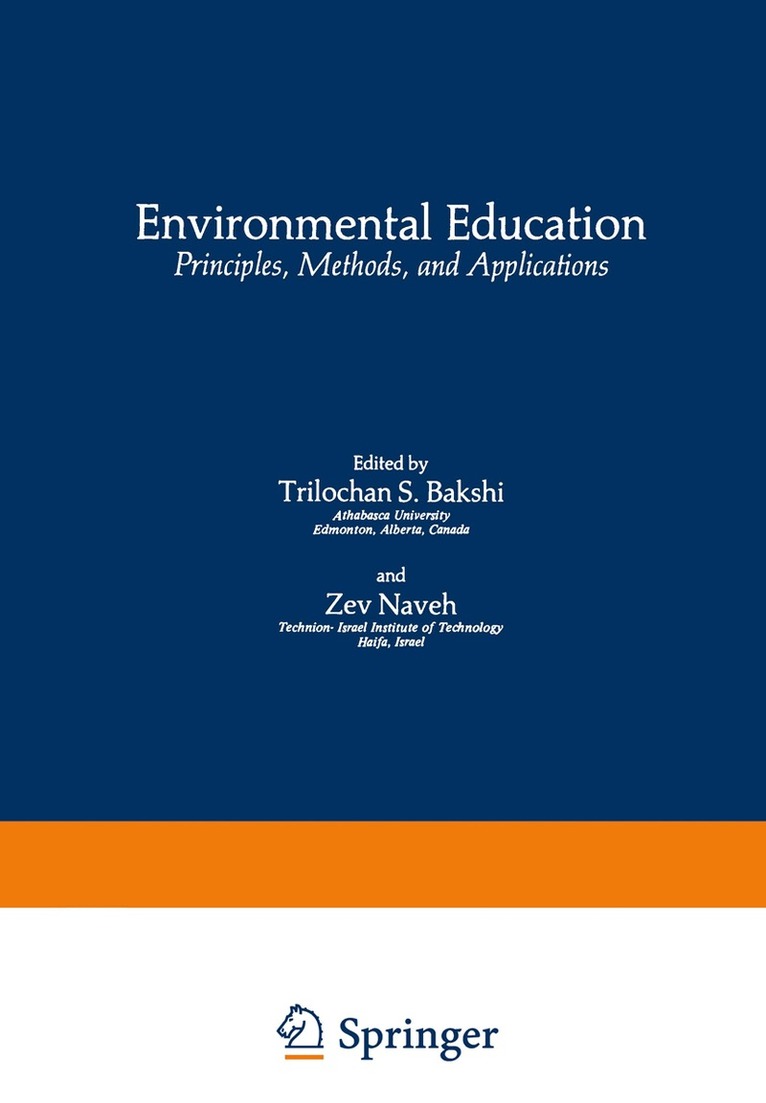
    Environmental Education

    Principles, Methods, and Applications

    AvTrilochan S. Bakshi,Zev Naveh

    Häftad, Engelska, 2012

    Del 18 i serien Environmental Science Research

    546 kr

    Beställningsvara. Skickas inom 10-15 vardagar. Fri frakt över 249 kr.

    Beskrivning

    The environmental movement of the 1960s made educationists in some parts of the world aware of the significance and importance of ecology in curricula at all levels of education, from kindergarten to post-secondary. A great deal of progress was made in the early 1970s in incorporating environmental awareness programs into educa­ tional systems go that what was once considered a fad was gradually becoming a part of formal education in a number of institutions, especially in Canada and the U.S.A. It was therefore appropriate that an international scientific body devote some time to the issue of ecology in education. Early in 1976, I suggested to the International Association for Ecology (Inteco1) that a symposium on Environmental Education be included in the program of the Second International Congress of Ecology scheduled to be held in Jerusalem in September 1978. In the first draft program of the Congress, the topic was included as a poster session. I considered this inadequate and appealed to the Congress Steering Committee to focus greater attention on environ­ mental education. The first draft program contained phrases like "utilization of resources", "conservation problems", "environmental moni toring", and "irreversible changes". These phrases more or less assumed that people in general understood ecological principles. Literature on environmental education seems to suggest that a wide gap separated most of the professional ecologists from a large portion of mankind primarily because we the ecologists have paid scant attention to the ecological education of world's citizens.

    Produktinformation

    • Utgivningsdatum:2012-06-15
    • Mått:170 x 244 x 17 mm
    • Vikt:528 g
    • Format:Häftad
    • Språk:Engelska
    • Serie:Environmental Science Research
    • Antal sidor:298
    • Förlag:Springer-Verlag New York Inc.
    • ISBN:9781468437157

    Utforska kategorier

    • Miljövetenskap och miljöpolitik inom Naturvetenskap och teknik

    Innehållsförteckning

    • Section I Nature of Environmental Education.- Environmental Education — A New Word or a New Philosophy of Teaching?.- Why Environmental Educations.- Challenge of Environmental Education.- Environmental Education is Too Important to be Left in the Hands of Teachers Alone.- Section II Successes and Failures of Environmental Education.- Ecology and Environmental Education in Taiwan.- Environmental Education in Scotland: Prospects and Problems.- Ecological Training for Developing Countries: Strategies and Actions of the MAB Programme.- The Role of UNEP in Environmental Education.- Section III Methodologies of Environmental Education.- Simulation and Games in Environmental Education: A Workshop.- Decision Making in Environmental Education.- Section IV Integrative Sciences and Environmental Education.- The Biocybernetic Approach to Understand and Plan our Environment.- A Theory of Education as a Basis for Environmental Education.- Systems Theory and Environmental Education.- Landscape Ecology as a Scientific and Educational Tool for Teaching the Total Human Ecosystem.- Section V Application of Integrated Environmental Education.- Curriculum Development.- How to Understand and Implement Environmental Education in Japanese High Schools.- Application of Some Guiding Principles in the Development of a Curriculum for Teaching the Total Human Ecosystem: A Case Study.- Environmental Education for India — A Proposed Plan.- Teaching Ecosystems in Classrooms.- Teaching Man-Made Ecosystems.- The Education of Secondary School Teachers in Environmental Studies.- Teaching the Complex Biological Problems of Wild Vertebrate Populations.- Energy Systems and Environmental Education.- Field-Oriented Environmental Education.- Field-Oriented Workshop on Environmental Education at Sde Boker,Israel.- Developing the Sde Boker Version of Environmental Education.- The Desert Biome — A Simple System for Field Investigations of Ecological Principles.- Ecoshop Development at an Environmental High School in Israel.- Summary of Discussions on Environmental Education at Sde Boker, Israel.- Closing Statement on the Field-Oriented Workshop at Sde Boker, Israel.- Contributors.