• Fri frakt över 249 kr
  • •
  • Snabba leveranser
  • •
  • Billiga böcker
Kundservice

Du är på sajten för privatpersoner.

Företag, bibliotek eller offentlig verksamhet?

Du handlar på classic.bokus.com, där alla dina funktioner finns intakta.
Till classic.bokus.com
Bokus logotyp. Gå till startsidan.
  • Erbjudanden
  • Nyheter
  • Student
  • Topplistor
  • Barn & ungdom
  • Bokus Play
  • E-böcker
  • Pocketböcker
  • Spel & pussel

10% studentrabatt med kod TERM26

Sidfot

Mina sidor

    Hjälp

    • Kundservice
    • Vanliga frågor och svar
    • Frakt och leverans
    • Retur vid ångerrätt
    • Reklamera vara
    • Betalning
    • Köpvillkor
    • Allmänna villkor
    • Information om webbplatsens tillgänglighet

    Om Bokus

    • Om oss
    • Pressrum
    • För studenter
    • För företag
    • För bibliotek och offentlig verksamhet
    • För leverantörer
    • Hållbarhet

    Populärt

    • Aktuella erbjudanden
    • Presentkort
    • Studentlitteratur
    • Nya böcker
    • Topplistor
    • Signerade böcker
    • Engelska böcker

    Inspiration

    • Boktips
    • BookTok
    • Populära bokserier
    • Barnbokskaraktärer
    • Populära författare
    Logotyp för Bokus
    Följ oss på Facebook (extern länk)Följ oss på Instagram (extern länk)Följ oss på YouTube (extern länk)Följ oss på TikTok (extern länk)
    bokus @ CookiesAnpassa cookiesIntegritetspolicyKöpvillkor
    Till Citymail hemsida (extern länk)Till Budbee hemsida (extern länk)Till Postnord hemsida (extern länk)Till Schenker hemsida (extern länk)Till Early Bird hemsida (extern länk)Till Walleys hemsida (extern länk)
    1. Djur och Natur
    2. Naturböcker
    3. Växtböcker

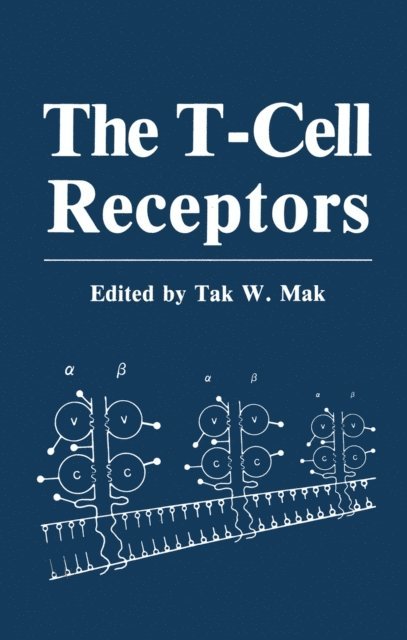
    T-Cell Receptors

    AvTak W. Mak

    Häftad, Engelska, 2012

    1 124 kr

    Beställningsvara. Skickas inom 10-15 vardagar. Fri frakt över 249 kr.

    Beskrivning

    The importance of thymus-dependent cells, or T cells, in the generation of a successful immune response was first realized in the early sixties. In the follow­ ing two decades, a succession of elegant experiments established the antigen specificity of T cells and their ability to perform both as regulatory and effector cells. T cells were shown to be essential in most immune reactions, playing a crucial role in augmenting the activity of effector T and B cells against 'foreign' antigen, as well as in the suppression of effector activity against self antigens. The means by which T cells differentiate 'foreign' from 'self' antigens is based on their recognition of antigen almost exclusively in the context of self major histocompatibility complex products, unlike B cells, which recognize an­ tigen alone. It is this recognition, mediated by the T-cell receptor, that sets into motion the diverse cell-cell interactions, which control the differentiation and regulation of the immune response. Although its importance was well established, the molecular nature of the T-cell receptor remained elusive for two decades. Many hypotheses as to its structure and precise function were put forward, using immunoglobulin as a basis for conjecture, but "the Holy Grail of Immunology" remained ephemeral until three years ago. In the ensuing years, both immunologists and molecular biologists have contributed to an explosion of data unsurpassed by any previous period in the field.

    Produktinformation

    • Utgivningsdatum:2012-03-14
    • Mått:152 x 229 x 15 mm
    • Vikt:376 g
    • Format:Häftad
    • Språk:Engelska
    • Antal sidor:235
    • Förlag:Springer-Verlag New York Inc.
    • ISBN:9781468454086

    Utforska kategorier

    • Växtböcker inom Djur och Natur
    • Onkologi inom Medicin
    • Botanik inom Naturvetenskap och teknik

    Innehållsförteckning

    • 1 Introduction.- 2 The ? and ? Chains of the T-Cell Receptor.- 1. Introduction.- 2. The Genomic Structure of the T-Cell Receptor Genes.- 3. Rearrangement of T-Cell Receptor Genes.- 4. The Generation of T-Cell Receptor Diversity.- 5. The T-Cell Receptor Repertoire.- 6. T-Cell Receptor Diversity.- 7. Conclusion.- References.- 3 Immunoglobulin-Related Structures Associated with Vertebrate Cell Surfaces.- 1. Members of the Ig Superfamily.- 2. Igs and the Domain Hypothesis.- 3. Statistical Significance of the Similarities to Ig.- 4. Categories of Molecules in the Ig Superfamily.- 5. Gene Organization.- 6. Evolution of Structural Types in the Ig Superfamily.- 7. Possible Functional Derivation of the Ig Superfamily.- References.- 4 T-Cell Receptor Genes: Mutant Mice and Genes.- 1. Introduction.- 2. TcR ?-Chain Locus.- 3. Deletion Type Mutants.- 4. Nondeletion Mutants.- References.- 5 Thymic Ontogeny and the T-Cell Receptor Genes.- 1. Thymic Ontogeny.- 2. The T-Cell Receptor and Thymic Ontogeny.- 3. Thymic Leukemias.- 4. Conclusions.- References.- 6 The T-Cell Receptor/T3 Complex on the Surface of Human and Murine T Lymphocytes.- 1. T-Cell Receptors for Antigen.- 2. Antigen Recognition by T-Cell Receptors after the Establishment of Cell-Cell Interactions.- 3. The T Cell Receptor-T3 Structure.- 4. Organization of the Genes Encoding the T3 Proteins.- 5. Expression of the T3-Genes during Intrathymic Differentiation.- References.- 7 Role of the T3/T-Cell Antigen Receptor Complex in T-Cell Activation.- 1. Introduction.- 2. The T3/Ti Complex.- 3. The T3/Ti Antibodies Provide One Stimulus Required for Human T-Cell Activation.- 4. T3/Ti-Induced Hydrolysis of Polyphosphoinositides and Increase in the Concentration of Cytoplasmic Free Calcium.- 5. T-Cell Activation Induced by Solubleor Immobilized T3 MAb.- 6. The Role of Activation of Protein Kinase C for the Activation of Resting T Lymphocytes.- 7. Summary.- References.- 8 The Structure and Expression of the T-Cell ?-, ?-, and ?-Chain Genes in Human Malignancies.- 1. Introduction.- 2. T-Cell Malignancies.- 3. Technical Considerations.- 4. Rearrangement and Expression of the TcR Genes in Human Neoplasias and Related Disorders.- 5. T-Cell Malignancies.- 6. Observations.- 7. T-Cell Ontogeny.- 8. Conclusion.- References.- 9 The Involvement of the T-Cell Receptor in Chromosomal Aberrations.- 1. The Involvement of the T-Cell Receptor in Chromosomal Aberrations.- 2. The Burkitt’s Lymphoma Model.- 3. What is the Mechanism of Translocation in Burkitt’s Lymphoma and Other B-Lymphocyte Tumors?.- 4. The Chromosomal Locations of the T-Cell Receptor ?, ?, and ? Chains—Relevance to Chromosomal Aberrations That Highlight Regions of Genomic Activity in Differentiated Cells.- 5. Cloning Studies of Chromosomal Aberrations in T Cells.- 6. The Relevance of the Involvement of the T-Cell Receptor Genes in Chromosomal Aberrations of T Cells.- 7. Summary.- References.- 10 MHC-Disease Associations and T-Cell-Mediated Immunopathology.- 1. Introduction.- 2. Proposal.- 3. Host-Parasite Relationship: General Parameters.- 4. Supporting Evidence.- References.- 11 The ?-? Heterodimer: A Second T-Cell Receptor?.- 1. Cloning of the ? Chain.- 2. Genomic Organization of the ?-Chain Loci in Mouse and Man.- 3. ?-Chain Expression.- 4. ?? as a Possible Second T-Cell Receptor.- 5. Possible Function of the ? Receptor.- 6. Conclusion.- References.