• Fri frakt över 249 kr
  • •
  • Snabba leveranser
  • •
  • Billiga böcker
Kundservice

Du är på sajten för privatpersoner.

Företag, bibliotek eller offentlig verksamhet?

Du handlar på classic.bokus.com, där alla dina funktioner finns intakta.
Till classic.bokus.com
Bokus logotyp. Gå till startsidan.
  • Erbjudanden
  • Nyheter
  • Student
  • Topplistor
  • Barn & ungdom
  • Bokus Play
  • E-böcker
  • Pocketböcker
  • Spel & pussel

Må bättre, för mindre! Upp till 50% rabatt på hälsoböcker

Sidfot

Mina sidor

    Hjälp

    • Kundservice
    • Vanliga frågor och svar
    • Frakt och leverans
    • Retur vid ångerrätt
    • Reklamera vara
    • Betalning
    • Köpvillkor
    • Allmänna villkor
    • Information om webbplatsens tillgänglighet

    Om Bokus

    • Om oss
    • Pressrum
    • För studenter
    • För företag
    • För bibliotek och offentlig verksamhet
    • För leverantörer
    • Hållbarhet

    Populärt

    • Aktuella erbjudanden
    • Presentkort
    • Studentlitteratur
    • Nya böcker
    • Topplistor
    • Signerade böcker
    • Engelska böcker

    Inspiration

    • Boktips
    • BookTok
    • Populära bokserier
    • Barnbokskaraktärer
    • Populära författare
    Logotyp för Bokus
    Följ oss på Facebook (extern länk)Följ oss på Instagram (extern länk)Följ oss på YouTube (extern länk)Följ oss på TikTok (extern länk)
    bokus @ CookiesAnpassa cookiesIntegritetspolicyKöpvillkor
    Till Citymail hemsida (extern länk)Till Budbee hemsida (extern länk)Till Postnord hemsida (extern länk)Till Schenker hemsida (extern länk)Till Early Bird hemsida (extern länk)Till Walleys hemsida (extern länk)
    1. Samhälle och politik
    2. Samhälle och kultur
    3. Kultur och medier
    4. Referensverk och tvärvetenskap

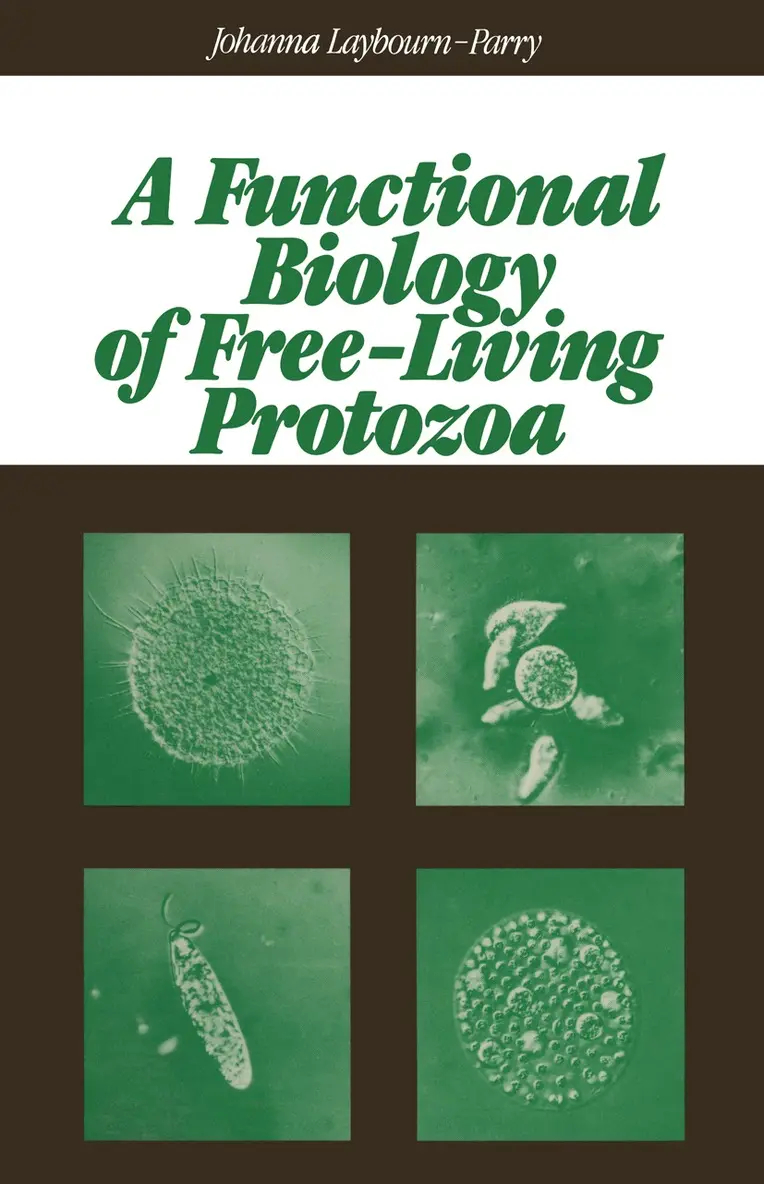
    Functional Biology of Free-Living Protozoa

    AvJohanna. Laybourn-Parry

    Häftad, Engelska, 2012

    Del i serien Functional Biology Series

    539 kr

    Beställningsvara. Skickas inom 10-15 vardagar. Fri frakt över 249 kr.

    Fler format och utgåvor

    E-bok

    702 kr

    Beskrivning

    General Editor: Peter Calow, Department of Zoology, University of Sheffield, England The main aim of this series will be to illustrate and to explain the way organisms 'make a living' in nature. At the heart of this - their func­ tional biology - is the way organisms acquire and then make use of resources in metabolism, movement, growth, reproduction, and so on. These processes will form the fundamental framework of all the books in the series. Each book will concentrate on a particular taxon (species, family, class or even phylum) and will bring together information on the form, physiology, ecology and evolutionary biology of the group. The aim will be not only to describe how organisms work, but also to consider why they have come to work in that way. By concentrating on taxa which are well known, it is hoped that the series will not only illustrate the success of selection, but also show the constraints imposed upon it by the physiological, morphological and developmental limita­ tions of the groups. Another important feature of the series will be its organismic orienta­ tion. Each book will emphasise the importance of functional integra­ tion in the day-to-day lives and the evolution of organisms. This is crucial since, though it may be true that organisms can be considered as collections of gene-determined traits, they nevertheless interact with their environment as integrated wholes and it is in this context that individual traits have been subjected to natural selection and have evolved.

    Produktinformation

    • Utgivningsdatum:2012-04-08
    • Mått:140 x 216 x 13 mm
    • Vikt:288 g
    • Format:Häftad
    • Språk:Engelska
    • Serie:Functional Biology Series
    • Antal sidor:208
    • Förlag:Springer-Verlag New York Inc.
    • ISBN:9781468473186

    Utforska kategorier

    • Referensverk och tvärvetenskap inom Samhälle och politik

    Innehållsförteckning

    • 1. The Protozoan Cell.- A. Introduction.- B. Protozoan Systematics.- C. Evolution of Protozoa.- D. Free-living Protozoa.- E. The Protozoan Cell.- 2. How Protozoa Obtain Energy.- A. Introduction.- B. Modes of Feeding.- C. Food Selection in Protozoa.- D. Digestive Processes.- E. Symbiotic Relationships in Protozoa.- F. Factors Influencing Feeding.- 3. Physiological Functioning of Protozoa.- A. Introduction.- B. Asexual Life-cycle.- C. Sexual Reproduction.- D. Respiration.- E. Osmoregulation and Excretion.- 4. Movement.- A. Introduction.- B. The Structure of Locomotory Organelles.- C. Chemical Basis of Movement.- D. Forms of Locomotion.- E. Factors Influencing Speed of Movement.- 5. Trophic Relations of Protozoa.- A. Introduction.- B. Protozoan Energetics.- C. r-K Selection in Protozoan Populations.- D. Interactions of Bacterivorous Protozoa with their Food Source.- E. Predators of Protozoa.- 6. Ecology and Adaptability.- A. Introduction.- B. Ecology and Adaptation in the Natural Environment.- C. Encystment.- D. Protozoa in Sewage Treatment.- E. The Role of Protozoa in Polluted Ecosystems.- 7. Conclusions.