• Fri frakt över 249 kr
  • •
  • Snabba leveranser
  • •
  • Billiga böcker
Kundservice

Du är på sajten för privatpersoner.

Företag, bibliotek eller offentlig verksamhet?

Du handlar på classic.bokus.com, där alla dina funktioner finns intakta.
Till classic.bokus.com
Bokus logotyp. Gå till startsidan.
  • Erbjudanden
  • Nyheter
  • Student
  • Topplistor
  • Barn & ungdom
  • Bokus Play
  • E-böcker
  • Pocketböcker
  • Spel & pussel

10% rabatt på allt med kod: NYSTART10 →

Sidfot

Mina sidor

    Hjälp

    • Kundservice
    • Vanliga frågor och svar
    • Frakt och leverans
    • Retur vid ångerrätt
    • Reklamera vara
    • Betalning
    • Köpvillkor
    • Allmänna villkor
    • Information om webbplatsens tillgänglighet

    Om Bokus

    • Om oss
    • Pressrum
    • För studenter
    • För företag
    • För bibliotek och offentlig verksamhet
    • För leverantörer
    • Hållbarhet

    Populärt

    • Aktuella erbjudanden
    • Presentkort
    • Studentlitteratur
    • Nya böcker
    • Topplistor
    • Signerade böcker
    • Engelska böcker

    Inspiration

    • Boktips
    • BookTok
    • Populära bokserier
    • Barnbokskaraktärer
    • Populära författare
    Logotyp för Bokus
    Följ oss på Facebook (extern länk)Följ oss på Instagram (extern länk)Följ oss på YouTube (extern länk)Följ oss på TikTok (extern länk)
    bokus @ CookiesAnpassa cookiesIntegritetspolicyKöpvillkor
    Till Citymail hemsida (extern länk)Till Budbee hemsida (extern länk)Till Postnord hemsida (extern länk)Till Schenker hemsida (extern länk)Till Early Bird hemsida (extern länk)Till Walleys hemsida (extern länk)
    1. Naturvetenskap och teknik
    2. Teknik och industri
    3. Tillverkningsteknik

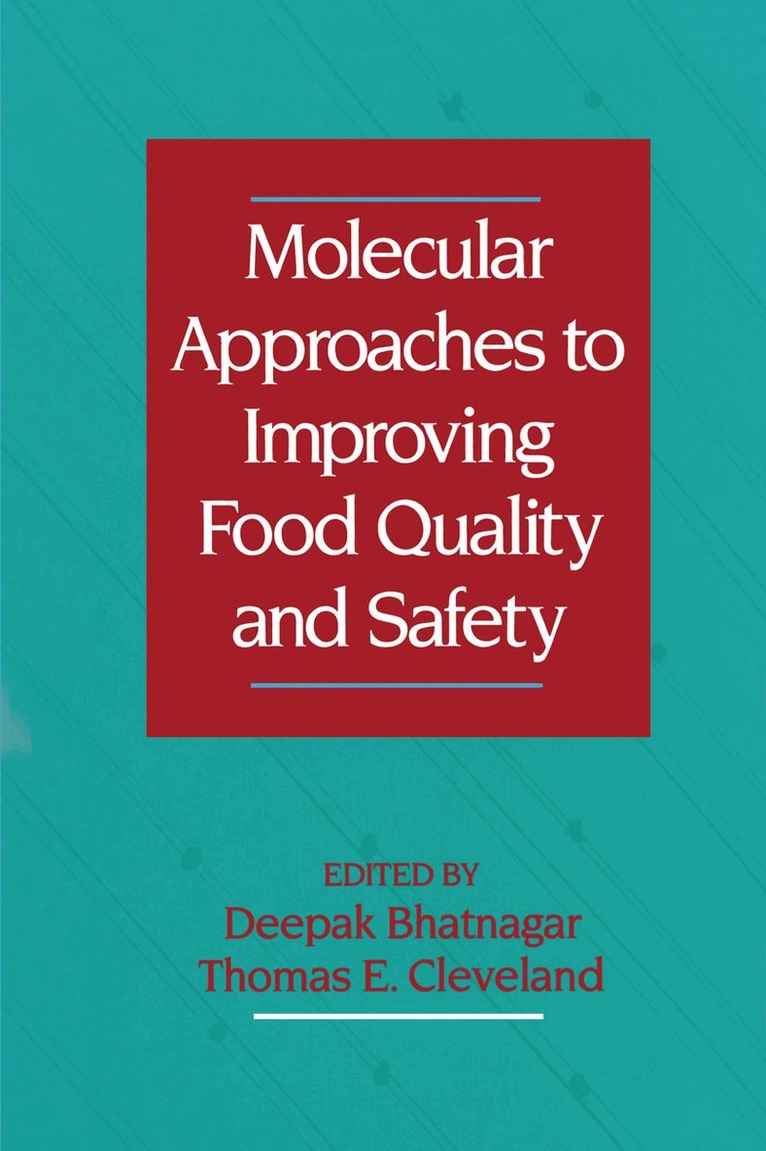
    Molecular Approaches to Improving Food Quality and Safety

    AvDeepak Bhatnagar

    Häftad, Engelska, 2012

    547 kr

    Beställningsvara. Skickas inom 10-15 vardagar. Fri frakt över 249 kr.

    Beskrivning

    Conventional food safety and quality research have traditionally dealt with the whole organism or food product, either plant or animal, or with the microorganisms that associate with these food-producing plants and ani­ mals at various stages of growth, development, and maturation. However, conventional research methods no longer are sufficient to bring about the improvements in quality and safety of foods that are demanded in today's marketplace by increasingly educated and sophisticated consumers. Improved quality has generally been thought to mean (l) unblemished products, particularly fruits and vegetables, and (2) the desired functional­ ity of protein, carbohydrates, and fats in grain oilseeds and the like to achieve the intended purpose in processing foods; for example, dough char­ acteristics to make bread or pasta. However, it also means the year-round ready availability of nutritious and appealing choices in all food groups that can be quickly and easily prepared. This promotes optimum nutrition, particularly necessary in children, the elderly, and special-needs groups, and it allows health conscious consumers to match their calorie intake with indi­ vidual needs to achieve and maintain desirable body weight.

    Produktinformation

    • Utgivningsdatum:2012-11-26
    • Mått:152 x 229 x 15 mm
    • Vikt:382 g
    • Format:Häftad
    • Språk:Engelska
    • Antal sidor:246
    • Upplaga:1992
    • Förlag:Springer-Verlag New York Inc.
    • ISBN:9781468480726

    Utforska kategorier

    • Tillverkningsteknik inom Naturvetenskap och teknik

    Innehållsförteckning

    • 1. Enhancing the Nutritional Quality of Crop Plants: Design, Construction, and Expression of an Artificial Plant Storage Protein Gene.- 2. Deamidation and Phosphorylation to Improve Protein Functionality in Foods.- 3. Natural Enzyme and Biocontrol Methods for Improving Fruits and Fruit Quality.- 4. Safety Evaluation of Food Enzymes from Genetically Engineered Organisms.- 5. Toward the Genetic Engineering of Disease Resistance in Plants: The Transfer of Pea Genes to Potatoes.- 6. Automated System for Microbial Screening/Breeding.- 7. DNA Probes for the Identification of Pathogenic Foodborne Bacteria and Viruses.- 8. Rapid Methods for the Detection of Listeria.- 9. Molecular Strategies for Reducing Aflatoxin Levels in Crops before Harvest.- 10. Molecular Strategies for Improving the Quality of Muscle Food Products.