Häftad, Engelska, 2017
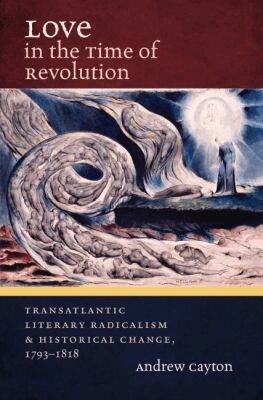
Love in the Time of Revolution
Transatlantic Literary Radicalism and Historical Change, 1793-1818
445 kr
Beställningsvara. Skickas inom 10-15 vardagar. Fri frakt över 249 kr.
Beskrivning
Produktinformation
- Utgivningsdatum: 2017-02-01
- Mått: 165 x 241 x 223 mm
- Vikt: 540 g
- Format: Häftad
- Språk: Engelska
- Serie: Published by the Omohundro Institute of Early American History and Culture and the University of North Carolina Press
- Antal sidor: 368
- Förlag: The University of North Carolina Press
- ISBN: 9781469633497
Utforska kategorier
Mer om författaren
Andrew Cayton (1954-2015) held the Warner Woodring Chair in History at the Ohio State University. Previously, he was University Distinguished Professor of History at Miami University, where he taught for twenty-five years. With Fred Anderson, he was co-author of The Dominion of War: Empire and Liberty in North America, 1500-2000.
Recensioner i media
I cannot think of a recent scholarly work in Atlantic studies that is more agreeably written or better oriented toward the general reader.--New England Quarterly|Demonstrates a remarkable versatility in his analysis and willingness to engage with different genres.--The Journal of Modern History|Working mostly from published sources, but some archival collections as well, Cayton evokes the intense interplay between what Wollstonecraft and her circle were reading, and how they were living.--SEL|A well-written imaginative re-creation, based on historical research, of the motives, thoughts, arguments, and interrelationships of important British and American radicals.--American Historical Review|[This] study is most successful in its detail, and [Cayton's] methodical research into the transatlantic commerce in emotional theories is particularly impressive. . . . Cayton's subject is a well-chosen and fascinating one.--Times Literary Supplement|In his carefully crafted, emotionally evocative study, Love in the Time of Revolution: Transatlantic Literary Radicalism and Historical Change, 1793-1818, Andrew Cayton invites us to revisit this familiar story and reconsider it in the contexts of eighteenth-century political economy and literary production.--William and Mary Quarterly
Betyg & recensioner
0 recensioner
Inga recensioner tillgängliga.