• Fri frakt över 249 kr
  • •
  • Snabba leveranser
  • •
  • Billiga böcker
Kundservice

Du är på sajten för privatpersoner.

Företag, bibliotek eller offentlig verksamhet?

Du handlar på classic.bokus.com, där alla dina funktioner finns intakta.
Till classic.bokus.com
Bokus logotyp. Gå till startsidan.
  • Erbjudanden
  • Nyheter
  • Student
  • Topplistor
  • Barn & ungdom
  • Bokus Play
  • E-böcker
  • Pocketböcker
  • Spel & pussel

10% rabatt på allt med kod: NYSTART10 →

Sidfot

Mina sidor

    Hjälp

    • Kundservice
    • Vanliga frågor och svar
    • Frakt och leverans
    • Retur vid ångerrätt
    • Reklamera vara
    • Betalning
    • Köpvillkor
    • Allmänna villkor
    • Information om webbplatsens tillgänglighet

    Om Bokus

    • Om oss
    • Pressrum
    • För studenter
    • För företag
    • För bibliotek och offentlig verksamhet
    • För leverantörer
    • Hållbarhet

    Populärt

    • Aktuella erbjudanden
    • Presentkort
    • Studentlitteratur
    • Nya böcker
    • Topplistor
    • Signerade böcker
    • Engelska böcker

    Inspiration

    • Boktips
    • BookTok
    • Populära bokserier
    • Barnbokskaraktärer
    • Populära författare
    Logotyp för Bokus
    Följ oss på Facebook (extern länk)Följ oss på Instagram (extern länk)Följ oss på YouTube (extern länk)Följ oss på TikTok (extern länk)
    bokus @ CookiesAnpassa cookiesIntegritetspolicyKöpvillkor
    Till Citymail hemsida (extern länk)Till Budbee hemsida (extern länk)Till Postnord hemsida (extern länk)Till Schenker hemsida (extern länk)Till Early Bird hemsida (extern länk)Till Walleys hemsida (extern länk)
    1. Medicin
    2. Medicin: allmänt
    3. Rättsliga frågor i hälso- och sjukvården

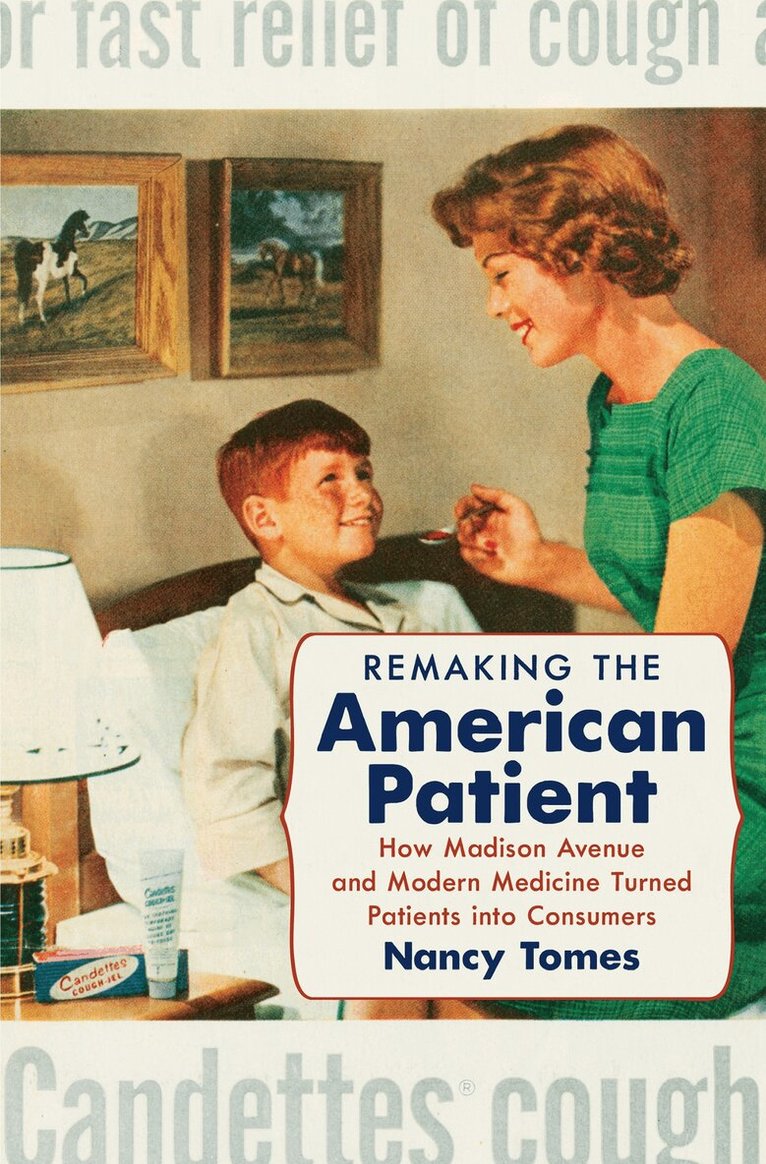
    Remaking the American Patient

    How Madison Avenue and Modern Medicine Turned Patients Into Consumers

    AvNancy Tomes

    Häftad, Engelska, 2025

    Del i serien Studies in Social Medicine

    422 kr

    Beställningsvara. Skickas inom 10-15 vardagar. Fri frakt över 249 kr.

    Fler format och utgåvor

    Inbunden

    562 kr

    E-bok

    416 kr

    E-bok

    1 710 kr

    E-bok

    244 kr

    E-bok

    1 710 kr

    Beskrivning

    In a work that spans the twentieth century, Nancy Tomes questions the popular--and largely unexamined--idea that in order to get good health care, people must learn to shop for it. Remaking the American Patient explores the consequences of the consumer economy and American medicine having come of age at exactly the same time. Tracing the robust development of advertising, marketing, and public relations within the medical profession and the vast realm we now think of as "health care," Tomes considers what it means to be a "good" patient. As she shows, this history of the coevolution of medicine and consumer culture tells us much about our current predicament over health care in the United States. Understanding where the shopping model came from, why it was so long resisted in medicine, and why it finally triumphed in the late twentieth century helps explain why, despite striking changes that seem to empower patients, so many Americans remain unhappy and confused about their status as patients today.

    Produktinformation

    • Utgivningsdatum:2025-02-01
    • Mått:155 x 235 x 33 mm
    • Vikt:942 g
    • Format:Häftad
    • Språk:Engelska
    • Serie:Studies in Social Medicine
    • Antal sidor:560
    • Förlag:The University of North Carolina Press
    • ISBN:9781469688442

    Utforska kategorier

    • Rättsliga frågor i hälso- och sjukvården inom Medicin
    • Amerikas historia inom Historia och arkeologi
    • Hälso- och sjukvård inom Medicin

    Mer om författaren

    Nancy Tomes is professor of history at Stony Brook University and author of The Gospel of Germs: Men, Women, and the Microbe in American Life.

    Recensioner i media

    A fluent and immensely readable chronology, minutely referenced, instructive and ruefully entertaining. . . . [The] last chapter is a particular tour de force, a virtuoso summary of our present circumstances as we find ourselves both far better off, healthwise, than we have ever been and yet somehow right back where we began"—New York Times"This fascinating book . . . will intrigue health care professionals and policymakers as well as interested lay readers."—Library Journal, starred review"A sweeping book that is thoughtfully researched and meticulously documented . . . [and] disproves several reigning myths about the current culture of medicine in the United States."—Health Affairs"Casts the history of American medicine in a new light and helps explains the roots of contemporary patients' and physicians' predicaments."—American Historical Review"Tomes successfully derives valuable insights into current concerns from her historical analysis of the fading distinction between medical professionalism and commerce."—CHOICE"An even-handed account, noting that patients have long maintained unrealistic expectations of medicine, fueled in turn by advertising puffery."—Bulletin of the History of Medicine"Tomes is the first to longitudinally examine patient consumerism—and the capacity of laypeople to stand back, examine, and critique medical care--from the 19th century to the present day."—Perspectives in Biology and Medicine"Strongly recommended for scholars of medical history, for use in graduate and advanced undergraduate classes, and for anyone interested in health care reform."—Canadian Journal of History"This is truly a comprehensive and detailed analysis of twentieth-century healthcare. . . . Remaking the American Patient is a wonderful book; having the opportunity to review it in the midst of some of the most vitriolic political debate about health care in modern memory was a distinct pleasure."—Charlotte Borst, Journal of the History of Medicine and Allied Sciences "All this is written in a vivid and engaging style, which makes a complex history easily available to lay readers and satisfying for specialists. Tomes moves with ease between pithy anecdotes, artifacts of popular culture, vignettes of earnest advocates or self-righteous doctors, and the high politics of health care. The result is a narrative with pace and direction."—Reviews in History