• Fri frakt över 249 kr
  • •
  • Snabba leveranser
  • •
  • Billiga böcker
Kundservice

Du är på sajten för privatpersoner.

Företag, bibliotek eller offentlig verksamhet?

Du handlar på classic.bokus.com, där alla dina funktioner finns intakta.
Till classic.bokus.com
Bokus logotyp. Gå till startsidan.
  • Erbjudanden
  • Student
  • Topplistor
  • Barn & ungdom
  • Bokus Play
  • E-böcker
  • Ljudböcker
  • Pocketböcker
  • Spel och pussel

5% studentrabatt – använd koden KURSBOK27 →

Sidfot

Mina sidor

    Hjälp

    • Kundservice
    • Vanliga frågor och svar
    • Frakt och leverans
    • Retur vid ångerrätt
    • Reklamera vara
    • Betalning
    • Köpvillkor
    • Allmänna villkor
    • Information om webbplatsens tillgänglighet

    Om Bokus

    • Om oss
    • Pressrum
    • För studenter
    • För företag
    • För bibliotek och offentlig verksamhet
    • För leverantörer
    • Hållbarhet

    Populärt

    • Aktuella erbjudanden
    • Presentkort
    • Studentlitteratur
    • Nya böcker
    • Topplistor
    • Signerade böcker
    • Engelska böcker

    Inspiration

    • Boktips
    • BookTok
    • Barnbokskaraktärer
    • Populära författare
    Logotyp för Bokus
    Följ oss på Facebook (extern länk)Följ oss på Instagram (extern länk)Följ oss på YouTube (extern länk)Följ oss på TikTok (extern länk)
    bokus @ CookiesAnpassa cookiesIntegritetspolicyKöpvillkor
    Till Citymail hemsida (extern länk)Till Budbee hemsida (extern länk)Till Postnord hemsida (extern länk)Till Schenker hemsida (extern länk)Till Early Bird hemsida (extern länk)Till Walleys hemsida (extern länk)
    1. Psykologi och pedagogik
    2. Pedagogik
    3. Studieteknik och inlärningsförmåga

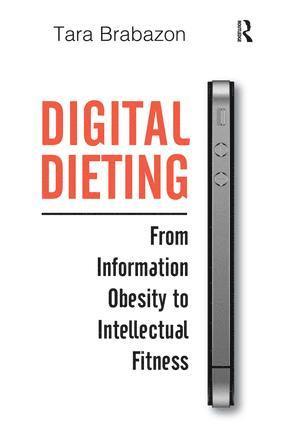
    Digital Dieting

    From Information Obesity to Intellectual Fitness

    AvTara Brabazon

    Inbunden, Engelska, 2013

    2 347 kr

    Beställningsvara. Skickas inom 10-15 vardagar. Fri frakt över 249 kr.

    Fler format och utgåvor

    Häftad

    592 kr

    E-bok

    701 kr

    E-bok

    701 kr

    Beskrivning

    Imagine if a student spent as much time managing information as celebrities doted on dieting? While eating too much food may be the basis of a moral panic about obesity, excessive information is rarely discussed as a crisis of a similar scale. Obviously, plentiful and high quality food is not a problem if eating is balanced with exercise. But without the skills of media and information literacy, students and citizens wade through low quality online information that fills their day yet does not enable intellectual challenge, imagination and questioning. Digital Dieting: From Information Obesity to Intellectual Fitness probes the social, political and academic difficulties in managing large quantities of low quality information. But this book does not diagnose a crisis. Instead, Digital Dieting provides strategies to develop intellectual fitness that sorts the important from the irrelevant and the remarkable from the banal. In April 2010, and for the first time, Facebook received more independent visitors than Google. Increasingly there is a desire to share rather than search. But what is the impact of such a change on higher education? If students complain that the reading is ’too hard’, then one response is to make it easier. If students complain that assignments are too difficult, then one way to manage this challenge is to make the assignments simpler. Both are passive responses that damage the calibre of education and universities in the long term. Digital Dieting: From Information Obesity to Intellectual Fitness provides active, conscious, careful and applicable strategies to move students and citizens from searching to researching, sharing to thinking, and shopping to reading.

    Produktinformation

    • Utgivningsdatum:2013-10-03
    • Mått:156 x 234 x 27 mm
    • Vikt:790 g
    • Format:Inbunden
    • Språk:Engelska
    • Antal sidor:342
    • Förlag:Taylor & Francis Ltd
    • ISBN:9781472409379

    Utforska kategorier

    • Studieteknik och inlärningsförmåga inom Psykologi och pedagogik

    Mer om författaren

    Tara Brabazon is Professor of Education and Head of the School of Teacher Education, Charles Sturt University, Australia.

    Recensioner i media

    ’This book provides a new and fresh dimension on how much media really enhances the learning experience, and bridges the gap between learners and best practice. It is an honest, direct and powerful reflection on the reality of day-to-day lectures and the challenges of (over) using technologies to enrich the learning experience.’ Dr Maria A. Rodriguez-Yborra, The University of Bolton, UK ’Brabazon confronts directly and in very practical ways the critical issues that underpin the apparently irresistible "revolution" in teaching and learning promised by the Internet and related new technologies. This is a vital book, generous, thought provoking and always useful. I would recommend it to all who want to understand the challenges of teaching in today’s information rich world including managers who are accountable for improving the student experience and the quality of teaching and learning at their institutions.’ Nazlin Bhimani, Research Support & Special Collections Librarian, Institute of Education, University of London, UK 'This very accessible and informative book may be frank about the down and dirty of teaching in the modern university, but it is replete with strategies for addressing students’ information-age malaise.' Times Higher Education 'The breadth of the book is staggering at times, as Brabazon explores a wide range of issues that surround the digital media and information landscape today, including the concept of digital justice and equality, how the "conspicuous consumption" of iPads and other branded technologies can "control" the information we receive, and how to help learners effectively migrate through the different stages and levels of literacy. Throughout, Brabazon’s strategies are delivered in a way that is refreshingly personal, honest and passionate. Her desire to improve the quality of student learning and engagement permeates every page. Some of her ideas and techniques may (inadvertently) make great soundbytes, however

    Innehållsförteckning

    • Introduction; One: Context; One: From Information Obesity to Digital Dieting; Two: Take the red pill: A new matrix of literacy; Two: Intervention; Three: Mayhem, magic, movement and methods: teaching and learning about hearing and listening; Four: Learning to leisure? When social media becomes educational media; Three: From Social Media to Media Literacies; Five: The iPad Effect: Conspicuous consumption and wasted learning; Six: Note to Self: Note taking and the control of information; Seven: Dead Media: know when to fold 'em — know when to run; Conclusion