• Fri frakt över 249 kr
  • •
  • Snabba leveranser
  • •
  • Billiga böcker
Kundservice

Du är på sajten för privatpersoner.

Företag, bibliotek eller offentlig verksamhet?

Du handlar på classic.bokus.com, där alla dina funktioner finns intakta.
Till classic.bokus.com
Bokus logotyp. Gå till startsidan.
  • Erbjudanden
  • Nyheter
  • Student
  • Topplistor
  • Barn & ungdom
  • Bokus Play
  • E-böcker
  • Pocketböcker
  • Spel & pussel

10% rabatt på allt med kod NYSTART10 →

Sidfot

Mina sidor

    Hjälp

    • Kundservice
    • Vanliga frågor och svar
    • Frakt och leverans
    • Retur vid ångerrätt
    • Reklamera vara
    • Betalning
    • Köpvillkor
    • Allmänna villkor
    • Information om webbplatsens tillgänglighet

    Om Bokus

    • Om oss
    • Pressrum
    • För studenter
    • För företag
    • För bibliotek och offentlig verksamhet
    • För leverantörer
    • Hållbarhet

    Populärt

    • Aktuella erbjudanden
    • Presentkort
    • Studentlitteratur
    • Nya böcker
    • Topplistor
    • Signerade böcker
    • Engelska böcker

    Inspiration

    • Boktips
    • BookTok
    • Populära bokserier
    • Barnbokskaraktärer
    • Populära författare
    Logotyp för Bokus
    Följ oss på Facebook (extern länk)Följ oss på Instagram (extern länk)Följ oss på YouTube (extern länk)Följ oss på TikTok (extern länk)
    bokus @ CookiesAnpassa cookiesIntegritetspolicyKöpvillkor
    Till Citymail hemsida (extern länk)Till Budbee hemsida (extern länk)Till Postnord hemsida (extern länk)Till Schenker hemsida (extern länk)Till Early Bird hemsida (extern länk)Till Walleys hemsida (extern länk)
    1. Kultur
    2. Arkitektur

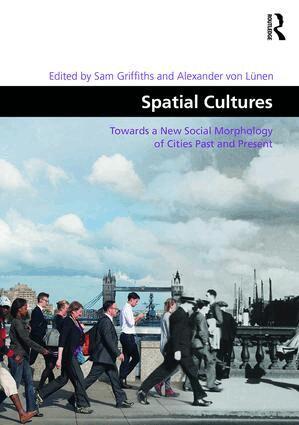
    Spatial Cultures

    Towards a New Social Morphology of Cities Past and Present

    AvSam Griffiths,Alexander von Lünen

    Inbunden, Engelska, 2016

    Del i serien Design and the Built Environment

    2 495 kr

    Beställningsvara. Skickas inom 10-15 vardagar. Fri frakt över 249 kr.

    Beskrivning

    What is the relationship between how cities work and what cities mean? Spatial Cultures: Towards a New Social Morphology of Cities Past and Present announces an innovative research agenda for urban studies in which themes and methods from urban history, social theory and built environment research are brought into dialogue across disciplinary and chronological boundaries. The collection confronts the recurrent epistemological impasse that arises between research focussing on the description of material built environments and that which is concerned primarily with the people who inhabit, govern and write about cities past and present. A reluctance to engage substantively with this issue has been detrimental to scholarly efforts to understand the urban built environment as a meaningful agent of human social experience. Drawing on a wide range of historical and contemporary urban case studies, as well as a selection of theoretical and methodological reflections, the contributions to this volume seek to historically, geographically and architecturally contextualize diverse spatial practices including movement, encounter, play, procession and neighbourhood. The aim is to challenge their tacit treatment as universal categories in much writing on cities and to propose alternative research possibilities with implications as much for urban design thinking as for history and the social sciences.

    Produktinformation

    • Utgivningsdatum:2016-06-22
    • Mått:174 x 246 x 24 mm
    • Vikt:840 g
    • Format:Inbunden
    • Språk:Engelska
    • Serie:Design and the Built Environment
    • Antal sidor:314
    • Förlag:Taylor & Francis Ltd
    • ISBN:9781472450296

    Utforska kategorier

    • Arkitektur inom Kultur
    • Regional planering inom Naturvetenskap och teknik
    • Geografi inom Naturvetenskap och teknik

    Mer om författaren

    Sam Griffiths is Lecturer in Spatial Cultures and a member of the Space Syntax Laboratory at the UCL Bartlett School of Architecture. His research interests include the spatial cultures of industrial cities, processional culture, high streets, the representation of spatial cultures in literary and historical writing, and interdisciplinary spatial-morphological theory and methods. He teaches a range of topics in spatial cultures on UCL’s Arts and Sciences BASc and MSc 'Spatial Design: Architecture and Cities' programmes. He has published widely on a range of urban and suburban topics.Alexander von Lünen is Senior Lecturer in Digital Humanities at the University of Huddersfield. He holds a degree in computer science and a doctorate in history, both from the Technische Universität Darmstadt, Germany. From 2007 to 2012 he was technical lead for the Great Britain Historical GIS and its website 'A Vision of Britain through Time'. He is co-editor, with Charles Travis, of History and GIS: Epistemologies, Considerations and Reflections (2013).

    Recensioner i media

    ’As someone who learns urban history by walking the streets and thinking about the past, I welcome this collection of essays. It is a book for thinking with. Its great strength is its enormous range, from ancient Rome to the digital, from theory to case study.’ R.J. Morris, Edinburgh University, UK

    Innehållsförteckning

    • 1: Spatial cultures in the ancient and medieval worlds; 1: Ancient Rome; 2: The ancient city and Huizinga's Homo Ludens; 3: ‘Spatial culture' of an institution; 4: Approaching a lived experience of ancient domestic space; 5: Space for neighbourhood; 2: Spatial cultures in the long nineteenth century; 6: Thirdspace?; 7: From lines on maps to symbolic order in the city?; 8: Weaving patterns in the suburban fabric; 9: Plasticine cities; 10: What has the future of urban parks to do with their past?; 3: Historical cities, contemporary spatial cultures; 11: Between urban and digital spaces; 12: Artefact and rhythm; 13: Mediated spatial cultures; 14: Commuting with others; 15: Grindr Guys #7; 4: Perspectives and methods for spatial cultures research; 16: So long, and thanks for the GIS; 17: Making space for each other; 18: Reassembling Durkheimian sociology of space; 19: Movement in Adaptive Architecture; 20: Mobilities Design