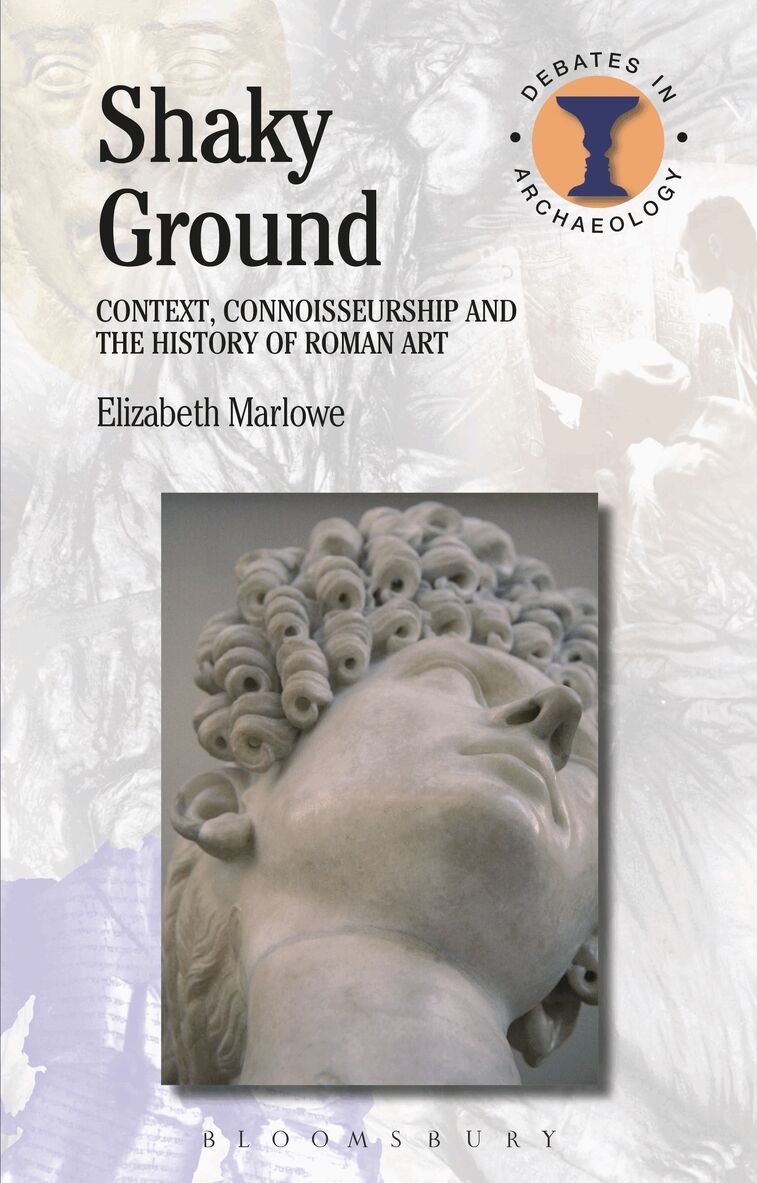
Häftad, Engelska, 2015
Shaky Ground
Context, Connoisseurship and the History of Roman Art
Av Elizabeth Marlowe, Richard Hodges
Del i serien Debates in Archaeology
569 kr
Beställningsvara. Skickas inom 10-15 vardagar. Fri frakt över 249 kr.
Fler format och utgåvor
Beskrivning
Produktinformation
- Utgivningsdatum: 2015-04-23
- Mått: 138 x 216 x 11 mm
- Vikt: 222 g
- Format: Häftad
- Språk: Engelska
- Serie: Debates in Archaeology
- Antal sidor: 184
- Förlag: Bloomsbury Publishing PLC
- ISBN: 9781474234665
Utforska kategorier
Mer om författaren
Elizabeth Marlowe is Assistant Professor of Art and Art History at Colgate University, USA.
Recensioner i media
Marlowe’s book casts a raking light on a central problem long-embedded in scholarship on the history and meaning of Roman art—the practice of using “ungrounded” works (those for which little or no excavation history is available) as historical evidence. Many such works currently populate textbook histories of Roman art almost solely based on their style. The traditional reliance on connoisseurship and circular reasoning to underpin chronological and aesthetic judgments concerning these works comes in for especially sharp criticism. Advocating for a more holistic, socio-historical approach, Marlowe demonstrates how “grounded” works from controlled excavations can change the traditional picture. By taking account of the wide array of physical and historical evidence that accompanies “grounded” works, one can construct a far more complex story of how Roman art developed and functioned, and what it meant in the society of its time. This bold and refreshing look at traditional practices and assumptions will surely raise the awareness of—and stimulate debate among—archaeologists and art historians who must grapple with incomplete evidence to construct meaningful histories of Roman art.
Betyg & recensioner
0 recensioner
Inga recensioner tillgängliga.