• Fri frakt över 249 kr
  • •
  • Snabba leveranser
  • •
  • Billiga böcker
Kundservice

Du är på sajten för privatpersoner.

Företag, bibliotek eller offentlig verksamhet?

Du handlar på classic.bokus.com, där alla dina funktioner finns intakta.
Till classic.bokus.com
Bokus logotyp. Gå till startsidan.
  • Erbjudanden
  • Nyheter
  • Student
  • Topplistor
  • Barn & ungdom
  • Bokus Play
  • E-böcker
  • Pocketböcker
  • Spel & pussel

10% rabatt på allt med kod: NYSTART10 →

Sidfot

Mina sidor

    Hjälp

    • Kundservice
    • Vanliga frågor och svar
    • Frakt och leverans
    • Retur vid ångerrätt
    • Reklamera vara
    • Betalning
    • Köpvillkor
    • Allmänna villkor
    • Information om webbplatsens tillgänglighet

    Om Bokus

    • Om oss
    • Pressrum
    • För studenter
    • För företag
    • För bibliotek och offentlig verksamhet
    • För leverantörer
    • Hållbarhet

    Populärt

    • Aktuella erbjudanden
    • Presentkort
    • Studentlitteratur
    • Nya böcker
    • Topplistor
    • Signerade böcker
    • Engelska böcker

    Inspiration

    • Boktips
    • BookTok
    • Populära bokserier
    • Barnbokskaraktärer
    • Populära författare
    Logotyp för Bokus
    Följ oss på Facebook (extern länk)Följ oss på Instagram (extern länk)Följ oss på YouTube (extern länk)Följ oss på TikTok (extern länk)
    bokus @ CookiesAnpassa cookiesIntegritetspolicyKöpvillkor
    Till Citymail hemsida (extern länk)Till Budbee hemsida (extern länk)Till Postnord hemsida (extern länk)Till Schenker hemsida (extern länk)Till Early Bird hemsida (extern länk)Till Walleys hemsida (extern länk)
    1. Språk och ordböcker
    2. Språkvetenskap och lingvistik

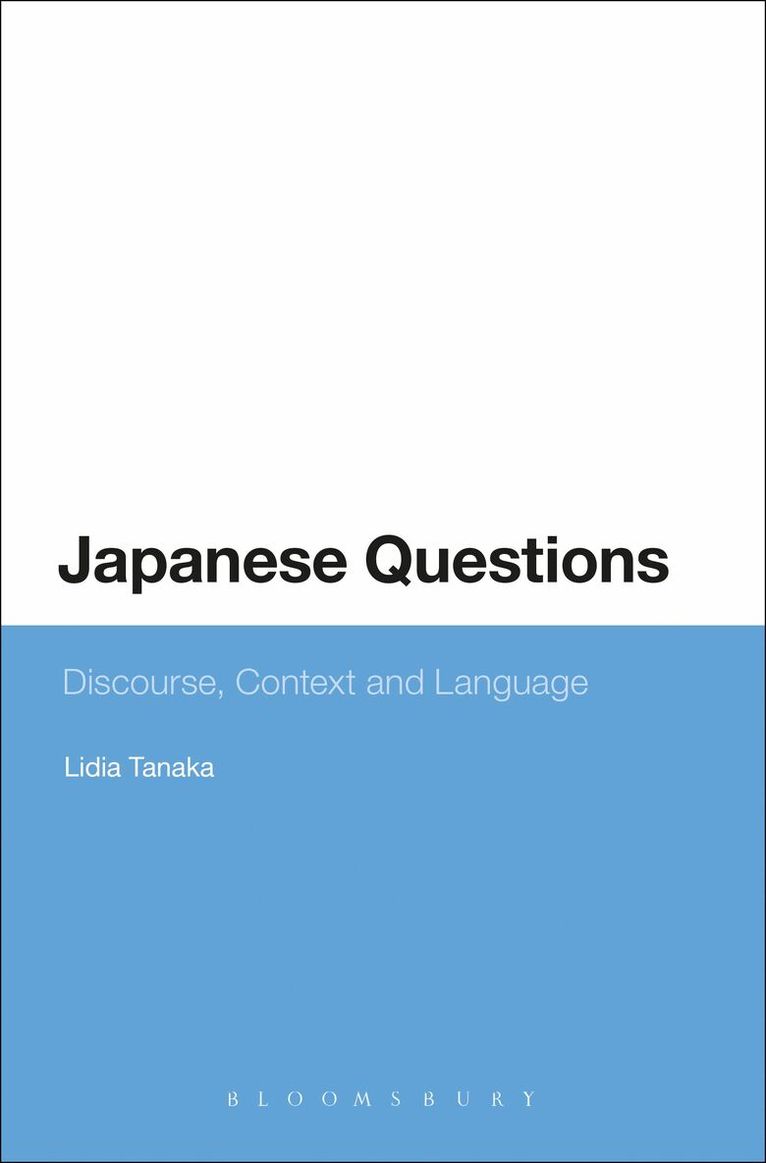
    Japanese Questions: Discourse, Context and Language

    AvLidia Tanaka

    Häftad, Engelska, 2016

    565 kr

    Beställningsvara. Skickas inom 10-15 vardagar. Fri frakt över 249 kr.

    Fler format och utgåvor

    Inbunden

    2 010 kr

    E-bok

    606 kr

    E-bok

    606 kr

    Beskrivning

    Questions and interrogatives in Japanese discourse have attracted considerable interest from grammarians, but the communicative aspect has received little attention. This book fills this gap. Through detailed analyses of formal and informal interactions, this book demonstrates that the inherent multi-functional and polysemous aspect of language can also be observed in the use of questions. What emerges is a sense of the considerable variety of question forms and also an understanding of how questions are used to perform a wide range of social actions.The importance of context is stressed throughout the book; both in guiding the speakers’ choices of question types and in helping to create the particular stance that characterizes those interactions.The data used in this book shows that speakers prefer questions that are not canonical. When speakers do use canonical questions, these are overwhelmingly accompanied by some mollifiers. This phenomenon suggests that in Japanese communication the illocutionary force of canonical questions is too strong. To soften the interaction, speakers tend to use other types of interrogative forms such as statements with rising intonation or, at least, to leave questions grammatically unfinished. The findings in this book contribute to the understanding of how Japanese speakers use questions in different communicative interactions and provide new evidence of the gap between prescriptive grammar and actual communication.

    Produktinformation

    • Utgivningsdatum:2016-05-19
    • Mått:156 x 234 x 14 mm
    • Vikt:376 g
    • Format:Häftad
    • Språk:Engelska
    • Antal sidor:264
    • Förlag:Bloomsbury Publishing PLC
    • ISBN:9781474288088

    Utforska kategorier

    • Språkvetenskap och lingvistik inom Språk och ordböcker

    Mer om författaren

    Lidia Tanaka is Senior Lecturer and Japanese Program Co-ordinator in the Japanese Program, Faculty of Humanities and Social Sciences, La Trobe University, Australia

    Recensioner i media

    Japanese Questions presents an original, well-researched and fascinating exploration of discourse and social context. It provides fresh insights into the use of questions in Japanese through a wide range of examples and sophisticated analysis.

    Innehållsförteckning

    • List of Tables & FiguresList of Abbreviations and ConventionsList of Data Transcription ConventionsRomanization of JapaneseAcknowledgements1. Introduction2. Japanese Questions and Interrogativity3. Establishing Topics and Eliciting Talk: Questions in Television Interviews4. Information Collection and Footing: Questions in Radio Phone-in Programs5. Nourishing the Friendship: Questions in Friends’ Talk6. Categorizing, Introducing and Maintaining Topical Talk: Questions in Unacquainted Interactions7. Questions in Japanese Discourse: Discussion and ConclusionReferences Index