• Fri frakt över 249 kr
  • •
  • Snabba leveranser
  • •
  • Billiga böcker
Kundservice

Du är på sajten för privatpersoner.

Företag, bibliotek eller offentlig verksamhet?

Du handlar på classic.bokus.com, där alla dina funktioner finns intakta.
Till classic.bokus.com
Bokus logotyp. Gå till startsidan.
  • Erbjudanden
  • Nyheter
  • Student
  • Topplistor
  • Barn & ungdom
  • Bokus Play
  • E-böcker
  • Pocketböcker
  • Spel & pussel

10% rabatt på allt med kod NYSTART10 →

Sidfot

Mina sidor

    Hjälp

    • Kundservice
    • Vanliga frågor och svar
    • Frakt och leverans
    • Retur vid ångerrätt
    • Reklamera vara
    • Betalning
    • Köpvillkor
    • Allmänna villkor
    • Information om webbplatsens tillgänglighet

    Om Bokus

    • Om oss
    • Pressrum
    • För studenter
    • För företag
    • För bibliotek och offentlig verksamhet
    • För leverantörer
    • Hållbarhet

    Populärt

    • Aktuella erbjudanden
    • Presentkort
    • Studentlitteratur
    • Nya böcker
    • Topplistor
    • Signerade böcker
    • Engelska böcker

    Inspiration

    • Boktips
    • BookTok
    • Populära bokserier
    • Barnbokskaraktärer
    • Populära författare
    Logotyp för Bokus
    Följ oss på Facebook (extern länk)Följ oss på Instagram (extern länk)Följ oss på YouTube (extern länk)Följ oss på TikTok (extern länk)
    bokus @ CookiesAnpassa cookiesIntegritetspolicyKöpvillkor
    Till Citymail hemsida (extern länk)Till Budbee hemsida (extern länk)Till Postnord hemsida (extern länk)Till Schenker hemsida (extern länk)Till Early Bird hemsida (extern länk)Till Walleys hemsida (extern länk)
    1. Kultur
    2. Scenkonst och film
    3. Film

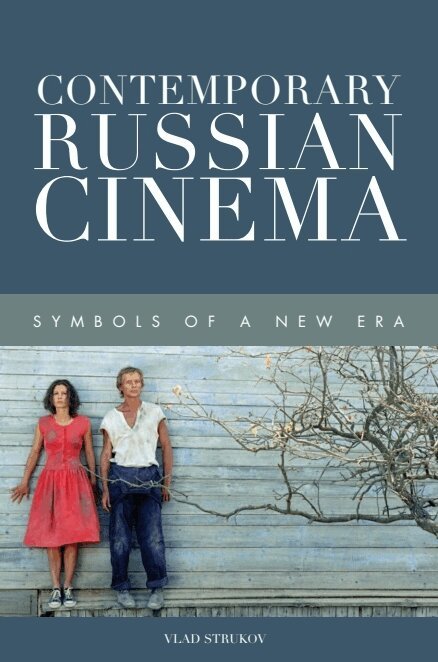
    Contemporary Russian Cinema

    Symbols of a New Era

    AvVlad Strukov

    Inbunden, Engelska, 2016

    2 012 kr

    Beställningsvara. Skickas inom 3-6 vardagar. Fri frakt över 249 kr.

    Beskrivning

    One of the first books to explore Russian cinema in the new millennium, this volume captures the emergence of a new cinematic sensibility and interprets it through the framework of the symbolic mode. Analysing films by established directors such as Sokurov, Zviagintsev and Zel’dovich, as well as lesser-known filmmakers like Balabanov, Fedorchenko and Kalatozishvili, Contemporary Russian Cinema: Symbols of a New Era explores the particular style of film presentation that has emerged in Russia since 2000, characterised by its use of highly abstract concepts and visual language. Whether directed towards a mystical world, or even towards an afterlife, the symbolic mode defines the emergence of a specific mindscape which has escaped previous representational forms and is intrinsically linked to Russia’s dramatic political and economic development since the turn of the 21st century.

    Produktinformation

    • Utgivningsdatum:2016-04-26
    • Mått:156 x 234 x 23 mm
    • Vikt:605 g
    • Format:Inbunden
    • Språk:Engelska
    • Antal sidor:304
    • Förlag:Edinburgh University Press
    • ISBN:9781474407649

    Utforska kategorier

    • Film inom Kultur

    Mer om författaren

    Vlad Strukov is Associate Professor at the University of Leeds, specialising in world cinemas, digital media and cultural theory

    Recensioner i media

    Pioneering and original, this book brings contemporary theory to the study of modern Russian film and brings recent Russian film to the attention of cultural theorists. Full of penetrating and exciting insights, it deepens our understanding of how contemporary Russian authorial cinema works and reminds us why it is important.

    Innehållsförteckning

    • IntroductionChapter 1: Abstracted Subjectivity and Knowledge-Worlds: Aleksandr Sokurov’s Taurus (2001)Chapter 2: The Lacking Sense of Cinema: Aleksandr Proshkin’s The Miracle (2009)Chapter 3: Gatekeepers of (Non-)Knowledge: Aleksei Balabanov’s Morphine (2008)Chapter 4: Symbolic Folds and Flattened Discourse: Andrei Zviagintsev’s Elena (2010)Chapter 5: Non-Knowledge and the Symbolic Mode: Nikolai Khomeriki’s A Tale About Darkness (2009)Chapter 6: The World and the Event: Kirill Serebrennikov’s St. George’s Day (2008)Chapter 7: A Plea for the Dead (Self): Renata Litvinova’s Goddess: How I Fell in Love (2004)Chapter 8: Body in Crisis and Posthumous Subjectivity: Igor’ Voloshin’s Nirvana (2008)Chapter 9: The Difficulty of Being Dead: Aleksandr Veledinskii’s Alive (2006)Chapter 10: Intentionality and Modelled Subjectivities: Aleksei Fedorchenko’s Silent Souls (2010)Chapter 11: Abandoned Being: Mikhail Kalatozishvili’s The Wild Field (2008)Chapter 12: Conclusions: Amplifications of Subjectivity: Aleksandr Zel’dovich’s The Target (2010)FilmographyBibliographyIndex