• Fri frakt över 249 kr
  • •
  • Snabba leveranser
  • •
  • Billiga böcker
Kundservice

Du är på sajten för privatpersoner.

Företag, bibliotek eller offentlig verksamhet?

Du handlar på classic.bokus.com, där alla dina funktioner finns intakta.
Till classic.bokus.com
Bokus logotyp. Gå till startsidan.
  • Erbjudanden
  • Nyheter
  • Student
  • Topplistor
  • Barn & ungdom
  • Bokus Play
  • E-böcker
  • Pocketböcker
  • Spel & pussel

10% rabatt på allt med kod NYSTART10 →

Sidfot

Mina sidor

    Hjälp

    • Kundservice
    • Vanliga frågor och svar
    • Frakt och leverans
    • Retur vid ångerrätt
    • Reklamera vara
    • Betalning
    • Köpvillkor
    • Allmänna villkor
    • Information om webbplatsens tillgänglighet

    Om Bokus

    • Om oss
    • Pressrum
    • För studenter
    • För företag
    • För bibliotek och offentlig verksamhet
    • För leverantörer
    • Hållbarhet

    Populärt

    • Aktuella erbjudanden
    • Presentkort
    • Studentlitteratur
    • Nya böcker
    • Topplistor
    • Signerade böcker
    • Engelska böcker

    Inspiration

    • Boktips
    • BookTok
    • Populära bokserier
    • Barnbokskaraktärer
    • Populära författare
    Logotyp för Bokus
    Följ oss på Facebook (extern länk)Följ oss på Instagram (extern länk)Följ oss på YouTube (extern länk)Följ oss på TikTok (extern länk)
    bokus @ CookiesAnpassa cookiesIntegritetspolicyKöpvillkor
    Till Citymail hemsida (extern länk)Till Budbee hemsida (extern länk)Till Postnord hemsida (extern länk)Till Schenker hemsida (extern länk)Till Early Bird hemsida (extern länk)Till Walleys hemsida (extern länk)
    1. Kultur
    2. Scenkonst och film
    3. Film

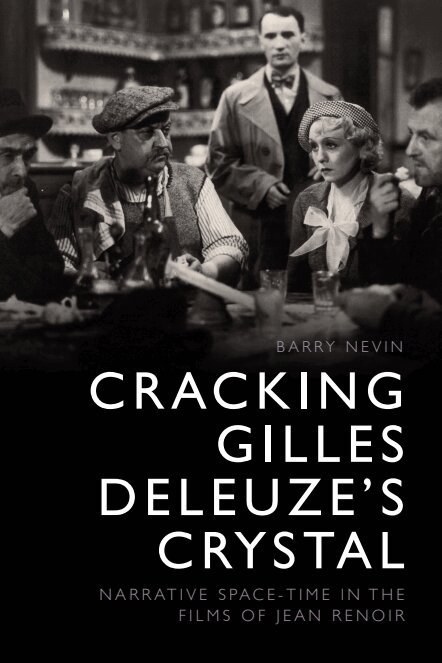
    Cracking Gilles Deleuze’s Crystal

    Narrative Space-time in the Films of Jean Renoir

    AvBarry Nevin

    Inbunden, Engelska, 2018

    1 368 kr

    Beställningsvara. Skickas inom 7-10 vardagar. Fri frakt över 249 kr.

    Beskrivning

    Jean Renoir is widely considered as one of the most important technical innovators and politically engaged filmmakers in cinema history. Reassessing the unique qualities of Renoir’s influential visual style by interpreting his films through Gilles Deleuze’s film philosophy, and through previously unpublished production files, Barry Nevin provides a fresh and accessible interdisciplinary perspective that illuminates both the consistency and diversity of Renoir’s oeuvre. Exploring canonised landmarks in Renoir’s career, including La Grande Illusion (1937) and La Règle du jeu (1939), the book also considers neglected films such as Le Bled (1929) and Diary of a Chambermaid (1946) to present a rounded analysis of this quintessential French auteur’s oeuvre.

    Produktinformation

    • Utgivningsdatum:2018-08-01
    • Mått:156 x 234 x 21 mm
    • Vikt:527 g
    • Format:Inbunden
    • Språk:Engelska
    • Antal sidor:256
    • Förlag:Edinburgh University Press
    • ISBN:9781474426299

    Utforska kategorier

    • Film inom Kultur

    Mer om författaren

    Barry Nevin is Assistant Lecturer in French at the Dublin Institute of Technology and Teaching Visitor in Film Studies at Trinity College Dublin. His research focuses on French cinema of the 1930s, particularly the films of Jean Renoir, Jacques Feyder and Marcel Carné. His work has been published in a wide range of academic journals including Studies in French Cinema, French Cultural Studies and the Journal of Urban Cultural Studies.

    Recensioner i media

    Barry Nevin has written a compelling book that should inspire readers to (re)turn to Renoir. He fortifies his arguments with brand new research from the Renoir archives at UCLA, while also showing a wonderful interpretive eye. Indeed, his analysis of the periscope in Eléna et les hommes is just one of many moments that has changed the way I look at the film in question (p. 166). And if a work of film-philosophy can change the films it has made you watch, it is truly film-philosophy worthy of the name.

    Innehållsförteckning

    • AcknowledgementsPrefaceIntroductionTheorising Renoir’s narrative style: Bazin, Faulkner, and Braudy. The future beyond the point de fuite: opening the image-temps to spaceOpen spaces / open futures: filming spatial politics Reading Deleuze on Renoir: critical opinionsDiscursive positioning: Renoir auteurChapter 1 – Teatro Mundi: Framing Urban Dynamics in Renoir’s ParisIntroduction: Renoir, cinema and the cityLa Chienne (1931)Boudu sauvé des eaux (1932)La Règle du jeu (1939)Conclusion: Renoir’s Ville-conceptChapter 2 – From Desert to Dreamscape: Viewing Renoir’s Rural Landscapes as Spatial ArenasIntroduction: opening the natural landscape to space-time Le Bled (1929)The Southerner (1945)The River (1951)Conclusion: dynamising the natural landscapeChapter 3 – Portraying the Future(s) of the Front PopulaireIntroduction: theory and texts in contextLe Crime de Monsieur Lange (1936)Les Bas-fonds (1936)La Grande Illusion (1937)Conclusion: ‘We are dancing on a volcano’. Chapter 4 – Renoir’s Crises Anti-réalistes: Framing le Temps GeléIntroduction: seeing time in the image planeDiary of a Chambermaid (1946)The Golden Coach (1952)Eléna et les hommes (1956)Conclusion: society and spectacleConclusionBibliography Appendix: Corpus Breakdown