• Fri frakt över 249 kr
  • •
  • Snabba leveranser
  • •
  • Billiga böcker
Kundservice

Du är på sajten för privatpersoner.

Företag, bibliotek eller offentlig verksamhet?

Du handlar på classic.bokus.com, där alla dina funktioner finns intakta.
Till classic.bokus.com
Bokus logotyp. Gå till startsidan.
  • Erbjudanden
  • Nyheter
  • Student
  • Topplistor
  • Barn & ungdom
  • Bokus Play
  • E-böcker
  • Pocketböcker
  • Spel & pussel

10% rabatt på allt med kod: NYSTART10 →

Sidfot

Mina sidor

    Hjälp

    • Kundservice
    • Vanliga frågor och svar
    • Frakt och leverans
    • Retur vid ångerrätt
    • Reklamera vara
    • Betalning
    • Köpvillkor
    • Allmänna villkor
    • Information om webbplatsens tillgänglighet

    Om Bokus

    • Om oss
    • Pressrum
    • För studenter
    • För företag
    • För bibliotek och offentlig verksamhet
    • För leverantörer
    • Hållbarhet

    Populärt

    • Aktuella erbjudanden
    • Presentkort
    • Studentlitteratur
    • Nya böcker
    • Topplistor
    • Signerade böcker
    • Engelska böcker

    Inspiration

    • Boktips
    • BookTok
    • Populära bokserier
    • Barnbokskaraktärer
    • Populära författare
    Logotyp för Bokus
    Följ oss på Facebook (extern länk)Följ oss på Instagram (extern länk)Följ oss på YouTube (extern länk)Följ oss på TikTok (extern länk)
    bokus @ CookiesAnpassa cookiesIntegritetspolicyKöpvillkor
    Till Citymail hemsida (extern länk)Till Budbee hemsida (extern länk)Till Postnord hemsida (extern länk)Till Schenker hemsida (extern länk)Till Early Bird hemsida (extern länk)Till Walleys hemsida (extern länk)
    1. Filosofi och religion
    2. Filosofi
    3. Filosofiska discipliner

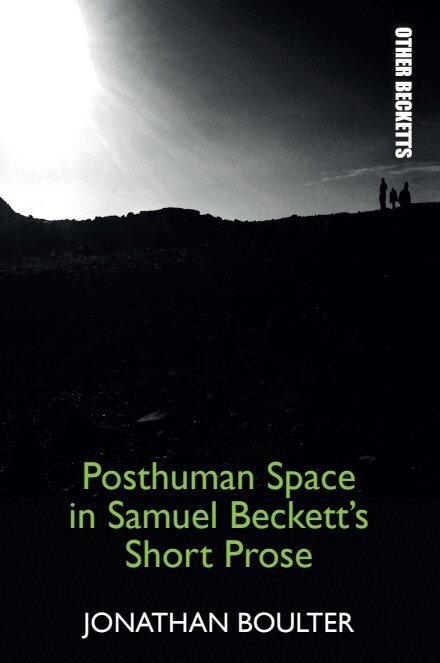
    Posthuman Space in Samuel Beckett's Short Prose

    AvJonathan Boulter

    Häftad, Engelska, 2020

    Del i serien Other Becketts

    573 kr

    Beställningsvara. Skickas inom 3-6 vardagar. Fri frakt över 249 kr.

    Fler format och utgåvor

    Inbunden

    2 340 kr

    Beskrivning

    A reading of the philosophical idea of world as it relates to the posthuman subject in Beckett’s short proseJonathan Boulter offers the reader a way of understanding Beckett’s presentation of the human, more precisely, posthuman, subject in his short prose. These texts are notoriously difficult yet utterly compelling. This compelling difficulty arises from Beckett’s radical dismantling of the idea of the human. His short texts offer instead an image of a being who may be posthumous, or ultimately beyond categories of life and death. And yet, despite this dismantling, the narrators of these texts still find themselves placed within material, recognisable, spaces. This book explores what the idea of ‘world’ can mean to a subject who appears to have moved into a material, even ecological, space that is beyond categories of life and death, being and world.Key Features:Provides a philosophical reading of Samuel BeckettRethinks Beckett in relation to the posthumanContributes to a relatively ignored aspect of Samuel Beckett's writing, the short prose

    Produktinformation

    • Utgivningsdatum:2020-11-03
    • Mått:156 x 234 x 17 mm
    • Vikt:357 g
    • Format:Häftad
    • Språk:Engelska
    • Serie:Other Becketts
    • Antal sidor:232
    • Förlag:Edinburgh University Press
    • ISBN:9781474430265

    Utforska kategorier

    • Filosofiska discipliner inom Filosofi och religion
    • Litteraturvetenskap inom Skönlitteratur

    Mer om författaren

    Jonathan Boulter is Professor of English at Western University, London, Canada. His previous publications include Posthuman Space in Samuel Beckett’s Short Prose (Edinburgh University Press, 2019), Parables of the Posthuman: Digital Realities, Gaming, and the Player Experience (Wayne State UP, 2015), Melancholy and the Archive: Trauma, History and Memory in the Contemporary Novel (Continuum, 2011), Samuel Beckett: A Guide for the Perplexed (Continuum, 2008), and Interpreting Narrative in the Novels of Samuel Beckett (University Press of Florida, 2001).

    Recensioner i media

    Boulter’s compelling book shows that one needs Heidegger and Blanchot as well as Hayles and Haraway to make sense of the textual strategies deployed by Beckett when he creates a spectral subjectivity after the decomposition of the subject. Beckett’s shorter texts, powerfully and systematically read with Blanchot and Heidegger, usher in a post-humanism whose positive yield is a new ecology of space, a space without subjective positioning, a space carved out by relentless fables of destitution, homelessness and powerlessness, just to show what remains after one has lost the world.

    Innehållsförteckning

    • AcknowledgmentsSeries Editor’s PrefaceAbbreviationsIntroduction: Beckett, Heidegger, the WorldHomelessness: The Expelled, The Calmative, The EndThe Poverty of World: Texts for NothingSpaces of Ruin: All Strange Away, Imagination Dead Imagine, The Lost Ones, Ping, LessnessSpace and Trauma: FizzlesFables of Posthuman Space: Company, Ill Seen Ill Said, Worstward HoConclusion: ‘neither’ReferencesIndex