• Fri frakt över 249 kr
  • •
  • Snabba leveranser
  • •
  • Billiga böcker
Kundservice

Du är på sajten för privatpersoner.

Företag, bibliotek eller offentlig verksamhet?

Du handlar på classic.bokus.com, där alla dina funktioner finns intakta.
Till classic.bokus.com
Bokus logotyp. Gå till startsidan.
  • Erbjudanden
  • Nyheter
  • Student
  • Topplistor
  • Barn & ungdom
  • Bokus Play
  • E-böcker
  • Pocketböcker
  • Spel & pussel

10% rabatt på allt med kod: NYSTART10 →

Sidfot

Mina sidor

    Hjälp

    • Kundservice
    • Vanliga frågor och svar
    • Frakt och leverans
    • Retur vid ångerrätt
    • Reklamera vara
    • Betalning
    • Köpvillkor
    • Allmänna villkor
    • Information om webbplatsens tillgänglighet

    Om Bokus

    • Om oss
    • Pressrum
    • För studenter
    • För företag
    • För bibliotek och offentlig verksamhet
    • För leverantörer
    • Hållbarhet

    Populärt

    • Aktuella erbjudanden
    • Presentkort
    • Studentlitteratur
    • Nya böcker
    • Topplistor
    • Signerade böcker
    • Engelska böcker

    Inspiration

    • Boktips
    • BookTok
    • Populära bokserier
    • Barnbokskaraktärer
    • Populära författare
    Logotyp för Bokus
    Följ oss på Facebook (extern länk)Följ oss på Instagram (extern länk)Följ oss på YouTube (extern länk)Följ oss på TikTok (extern länk)
    bokus @ CookiesAnpassa cookiesIntegritetspolicyKöpvillkor
    Till Citymail hemsida (extern länk)Till Budbee hemsida (extern länk)Till Postnord hemsida (extern länk)Till Schenker hemsida (extern länk)Till Early Bird hemsida (extern länk)Till Walleys hemsida (extern länk)
    1. Språk och ordböcker
    2. Språkvetenskap och lingvistik

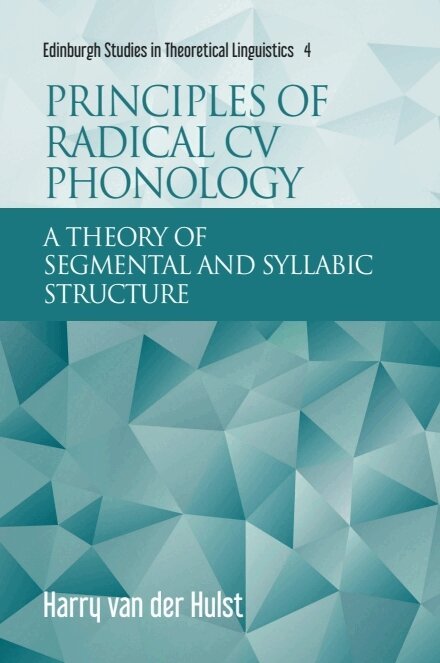
    Principles of Radical CV Phonology

    A Theory of Segmental and Syllabic Structure

    AvHarry van der Hulst

    Häftad, Engelska, 2022

    Del i serien Edinburgh Studies in Theoretical Linguistics

    614 kr

    Beställningsvara. Skickas inom 3-6 vardagar. Fri frakt över 249 kr.

    Fler format och utgåvor

    Inbunden

    3 174 kr

    Beskrivning

    Based on 30 years of research, this book presents a theory about the 'speech sounds' that occur in human spoken and signed languages. Identifying the ultimate elements of which speech sounds consist, Harry van der Hulst proposes a radical theory that recognises only two elements: |C| and |V|. Based on a small set of first principles, the book explains what a possible speech sound is and provides explicit structures for all speech sounds that occur in the world's languages. With numerous examples from hundreds of languages, including Dutch, Czech, Japanese, Kabardian, Hungarian, Korean and Zulu, the book also provides insight into current theories of segmental structure, commonly used feature systems and recurrent controversies.

    Produktinformation

    • Utgivningsdatum:2022-05-30
    • Mått:156 x 234 x 35 mm
    • Vikt:774 g
    • Format:Häftad
    • Språk:Engelska
    • Serie:Edinburgh Studies in Theoretical Linguistics
    • Antal sidor:504
    • Förlag:Edinburgh University Press
    • ISBN:9781474454674

    Utforska kategorier

    • Språkvetenskap och lingvistik inom Språk och ordböcker

    Mer om författaren

    Harry van der Hulst is Professor of Linguistics and Director of Undergraduate Studies at the Department of Linguistics, University of Connecticut.

    Recensioner i media

    Principles of Radical cv Phonology is the culmination of many years of work and reflection on the nature of phonological representations. The theory, presented in a clear and thorough manner, builds on and synthesizes ideas from a number of different theoretical and descriptive approaches. Its comprehensive treatment of every major issue relating to the basic units of phonology makes this book a valuable resource for anyone with an interest in the cognitive organization of speech sounds and its relation to phonetics.

    Innehållsförteckning

    • Preface; List of abbreviationsChapter 1. Basic assumptions about phonology1.1 Introduction1.2 What is phonology?1.3 Six theses concerning phonological primes1.4 Is phonology different?1.5 Alternations and processes1.6 Summary and concluding remarksChapter 2: Background: Dependency and Government Phonology2.1 Introduction2.2 Monovalency, grouping, dependency and contrastivity2.3 Government Phonology2.4 Toward Radical CV Phonology2.5 Summary and Concluding remarksChapter 3: Radical CV Phonology3.1 Introduction3.2 An outline of Radical CV Phonology3.3 Summary and Concluding remarksChapter 4: Manner4.1 Introduction4.2 Onset 4.3 Rhyme4.4 Syllabic consonants (sonorants)4.5 Long vowels, diphthongs and geminates4.6 Summary and concluding remarksChapter 5: Place5.1 Introduction5.2 Edge (onset head): obstruents5.3 Nucleus (rhyme head): vowels5.4 Bridge and coda5.5 Summary and concluding remarksChapter 6: Laryngeal: phonation and tone6.1 Introduction 6.2 Edge (onset head): consonants (phonation)6.3 Nucleus (rhyme head): vowels (tone)6.4 Four issues6.5 Bridge and coda6.6 Summary and concluding remarksChapter 7: Special structures7.1 Introduction7.2 Incomplete structures7.3 Overcomplete structures7.4 Summary and Concluding remarksChapter 8: Predictability and preference8.1 Introduction8.2 Harmony 8.3 Preference ranking of segments per syllabic position8.4 Preferred segmental systems8.5 Summary and Concluding remarksChapter 9: Minimal specification 9.1 Introduction9.2 A typology of redundant properties9.3 Radical underspecification9.4 Contrastive and radical underspecification in a unary framework 9.5 Markedness, complexity and salience9.6 Examples of minimal specification9.7 Can redundant elements become active?9.8 Constraints and learnability9.9 Summary and ConclusionsChapter 10: RcvP applied to sign phonology10.1 Introduction10.2 The macro structure of signs10.3 The micro structure of signs10.4 Two-handed signs10.5 What about syllable structure?10.6 Summary and Concluding remarksChapter 11: Comparison to other models11.1 Introduction11.2 Feature Geometry Models11.3 Other models11.4 Summary and Concluding remarksChapter 12: Conclusions12.1 Introduction12.2 Goals and basic principles12.3 X-bar structure everywhere12.4 Strength and weakness12.5 Do we need the element A after all?12.6 What’s next?References; Subject Index; Language Index