• Fri frakt över 249 kr
  • •
  • Snabba leveranser
  • •
  • Billiga böcker
Kundservice

Du är på sajten för privatpersoner.

Företag, bibliotek eller offentlig verksamhet?

Du handlar på classic.bokus.com, där alla dina funktioner finns intakta.
Till classic.bokus.com
Bokus logotyp. Gå till startsidan.
  • Erbjudanden
  • Nyheter
  • Student
  • Topplistor
  • Barn & ungdom
  • Bokus Play
  • E-böcker
  • Pocketböcker
  • Spel & pussel

10% rabatt på allt med kod NYSTART10 →

Sidfot

Mina sidor

    Hjälp

    • Kundservice
    • Vanliga frågor och svar
    • Frakt och leverans
    • Retur vid ångerrätt
    • Reklamera vara
    • Betalning
    • Köpvillkor
    • Allmänna villkor
    • Information om webbplatsens tillgänglighet

    Om Bokus

    • Om oss
    • Pressrum
    • För studenter
    • För företag
    • För bibliotek och offentlig verksamhet
    • För leverantörer
    • Hållbarhet

    Populärt

    • Aktuella erbjudanden
    • Presentkort
    • Studentlitteratur
    • Nya böcker
    • Topplistor
    • Signerade böcker
    • Engelska böcker

    Inspiration

    • Boktips
    • BookTok
    • Populära bokserier
    • Barnbokskaraktärer
    • Populära författare
    Logotyp för Bokus
    Följ oss på Facebook (extern länk)Följ oss på Instagram (extern länk)Följ oss på YouTube (extern länk)Följ oss på TikTok (extern länk)
    bokus @ CookiesAnpassa cookiesIntegritetspolicyKöpvillkor
    Till Citymail hemsida (extern länk)Till Budbee hemsida (extern länk)Till Postnord hemsida (extern länk)Till Schenker hemsida (extern länk)Till Early Bird hemsida (extern länk)Till Walleys hemsida (extern länk)
    1. Historia och arkeologi
    2. Historia
    3. Mellanösterns historia

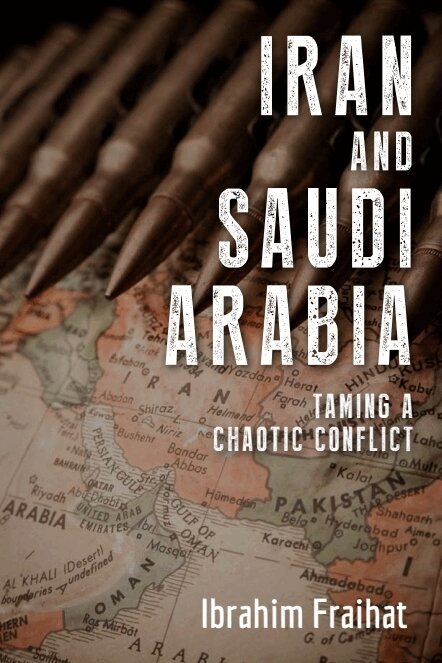
    Iran and Saudi Arabia

    Taming a Chaotic Conflict

    AvIbrahim Fraihat

    Häftad, Engelska, 2020

    443 kr

    Beställningsvara. Skickas inom 3-6 vardagar. Fri frakt över 249 kr.

    Beskrivning

    Hostile relations between Iran and Saudi Arabia are partially responsible for the political instability plaguing the Middle East. This book argues that rapprochement between Tehran and Riyadh is possible and it sets out a realistic agenda for managing their intractable conflict. Ibrahim Fraihat interviewed over sixty scholars, policy makers, think-tank experts and activists to gain an clear, all-round view of Iran-Saudi relations since the invasion of Iraq by US troops in 2003. His research shows that effective peacebuilding would be achievable if the participating countries integrated their diplomatic efforts on three levels: government, Track Two and grassroots. The result is a fresh perspective on a dangerous and unpredictable rift that affects not only its primary parties - Iran and Saudi Arabia - but also the future of the wider Middle East.

    Produktinformation

    • Utgivningsdatum:2020-02-28
    • Mått:156 x 234 x 14 mm
    • Vikt:410 g
    • Format:Häftad
    • Språk:Engelska
    • Antal sidor:224
    • Förlag:Edinburgh University Press
    • ISBN:9781474466196

    Utforska kategorier

    • Mellanösterns historia inom Historia och arkeologi
    • Internationella relationer inom Samhälle och politik

    Mer om författaren

    Ibrahim Fraihat is an international conflict resolution professor at the Doha Institute for Graduate Studies. He previously served as senior foreign policy scholar at the Brookings Institution and taught conflict resolution at Georgetown University. He is the author of Unfinished Revolutions: Yemen, Libya, and Tunisia after the Arab Spring (Yale UP, 2016) and co-author of Libya's Displacement Crisis: Uprooted by Revolution and Civil War (Georgetown UP, 2015). His analysis on Middle East politics has also appeared in Foreign Affairs, Foreign Policy, the New York Times, Huffington Post, Newsweek, and Al Jazeera. Graduate of George Mason University in 2006, he is the recipient of the University's Distinguished Alumni Award (2014) for his achievements in the field of conflict resolution in the Middle East. Fraihat is a non-resident fellow at the Middle East Studies Forum at Deakin University in Australia. He consulted for numerous international organization on Middle East affairs like conflict resolution, national reconciliation, national dialogue, mediation, post-conflict reconstruction, and political transitions.

    Recensioner i media

    ‘Ibrahim Fraihat’s tome is a welcome and timely contribution and, more importantly, offers a degree of hope. While many see the rivalry between Saudi Arabia and Iran in zero-sum ways, Fraihat argues that rapprochement is possible, in a radical and welcome departure from other literature on the topic. Drawing on first hand attempts to facilitate conflict reconciliation, this rich and insightful tome is essential reading for policy makers, peace-builders, academics and anyone wishing to better understand the politics of the region.’ -- Simon Mabon, Lancaster University. ‘Remarkable for its lucidity, fieldwork, and command of the literature, this is a timely and authoritative study of the Middle East's most consequential bilateral relationship. Ibrahim Fraihat wisely jettisons timeworn primordialist tropes about the intractability and immutability of the Saudi-Iranian rivalry and focuses instead on how tensions between the two powers can be regulated and managed through wiser statecraft, grassroots activism, and domestic reforms. What sets this magisterial book apart from others on this topic is that it moves beyond diagnosis and analysis to propose creative policy recommendations.’ -- Frederic Wehrey, Carnegie Endowment for International Peace. ‘In this eminently fair and balanced assessment of the intractable conflict between Iran and Saudi Arabia, Ibrahim Fraihat is in an unenviable position to try to make sense of a nonsensical hostility between two ruling regimes that are wasting their respective nations’ resources and endangering an entire volatile region. A superb strategic intervention as to how to avert a colossal calamity from happening.’ -- Hamid Dabashi, Columbia University. ‘A timely and well-informed analysis of one of the Middle East’s most enduring and consequential rivalries.  Fraihat offers an insider’s perspective into the Iran-Saudi conflict along with practical suggestions for de-escalation through the lens of conflict resolution. A must for anyone seeking to understand the origins and manifestations of the regional ‘cold war’ between Saudi Arabia and Iran - and potential strategies for ending it.’ -- Justin Gengler, Social and Economic Survey Research Institute, Qatar University. ‘This is exactly the book we need right now! Whereas much has been already been written about the causes and developments of the Iran-Saudi Arabia rivalry, we have precious little knowledge about how this conflict can be peacefully managed and ultimately resolved. Fraihat combines his own personal experiences of participation in dialogue efforts over the years with the scholarly insights of the large body of research on conflict resolution, in order to shed light on this. The book gives us a solid basis for analysing the prospects and challenges for how to transform the current destructive relationship between these two regional powers into more constructive interactions, a transformation that would radically change the Middle East region, and thereby the world.’ -- Isak Svensson, Department of Peace and Conflict Research, Uppsala University. Ibrahim Fraihat is not a newcomer to the field and has already distinguished himself with a strong body of work on Saudi Arabia, Iran, and also KSA-IRI relations. It is clear in this book that Ibrahim comes closest to shining light on the way forward. I think we all need to take note of this outstanding research and learn from it, for both scholarly and practical reasons.’ -- Anoush Ehteshami, Durham University. ‘This is a thorough account of one of the most important interstate rivalries in recent decades, one that has done much damage in the wider Middle East and Islamic World. This book stands out for not only providing a lucid analysis of the drivers of conflict between Saudi Arabia and Iran, but also for offering concrete suggestions for reducing tensions between those two regional powers.’ -- Toby Matthiesen, University of Oxford.

    Innehållsförteckning

    • Acknowledgments1. Introduction2. History of Iran-Saudi Arabian Rivalry and Peacemaking efforts3. Conflict IssuesSecuritySectarianismGeopolitics and leadershipThe external factor4. Conflict ManagementCrisis management systemConfidence building measuresDialoguePeace zones5. Conflict Resolution Restoring the Regional Order’s Balance of PowerReforming conflict strategiesFormal Track 1 Government MediationTrack twoOther approachesBottom-up rapprochementPeace plans – Gestures of conciliationShia Arab role 6. ConclusionBibliographyIndex