Inbunden, Engelska, 2021
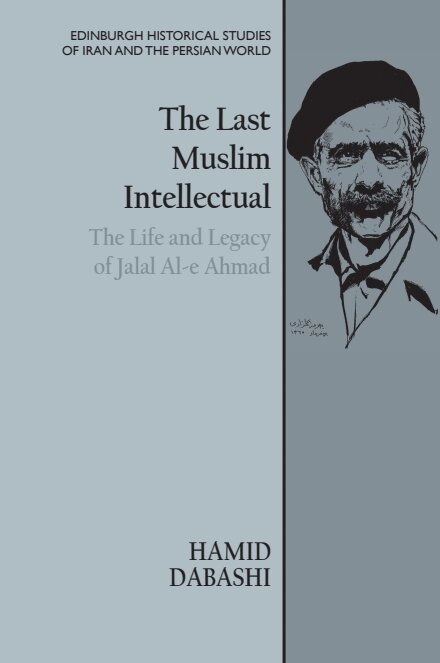
Last Muslim Intellectual
The Life and Legacy of Jalal Al-e Ahmad
Del i serien Edinburgh Historical Studies of Iran and the Persian World
1413 kr
Beställningsvara. Skickas inom 7-10 vardagar. Fri frakt över 249 kr.
Beskrivning
Produktinformation
- Utgivningsdatum: 2021-03-31
- Mått: 156 x 234 x 25 mm
- Vikt: 680 g
- Format: Inbunden
- Språk: Engelska
- Serie: Edinburgh Historical Studies of Iran and the Persian World
- Antal sidor: 304
- Förlag: Edinburgh University Press
- ISBN: 9781474479288
Utforska kategorier
Mer om författaren
Hamid Dabashi is Hagop Kevorkian Professor of Iranian Studies and Comparative Literature at Columbia University in New York. He is the author of many books and articles on the social and intellectual history of Islam, both medieval and modern, many of them translated into other languages. He is a globally recognized critical thinker on contemporary affairs and a regular columnist for Aljazeera.
Recensioner i media
Hamid Dabashi’s remarkable work on Iranian ‘cosmopolitan humanism’ has already expanded the parameters of discussions on non-western thought to highlight the quest for an anticolonial modernity as integral to its global reach. In this well-balanced and elegantly written volume, Dabashi treats Al-e Ahmad, a preeminent intellectual of his time, as a pioneering -anticolonial theorist who Islamist thinkers, such as Ali Shari‘ati, would only later develop an elective affinity for, in the process recasting him an anti-western nativist. Dabashi situates Al-e Ahmad alongside other anticolonial thinkers to remind us that "Al-e Ahmad could not have anticipated Shari’ati would have taken him all the way to the borderlines of a committed Islamist ideologue." Along the way, this provocative work raises important questions about the evolution of an anticolonial canon and the crystallization of sectarian divisions.
Betyg & recensioner
0 recensioner
Inga recensioner tillgängliga.