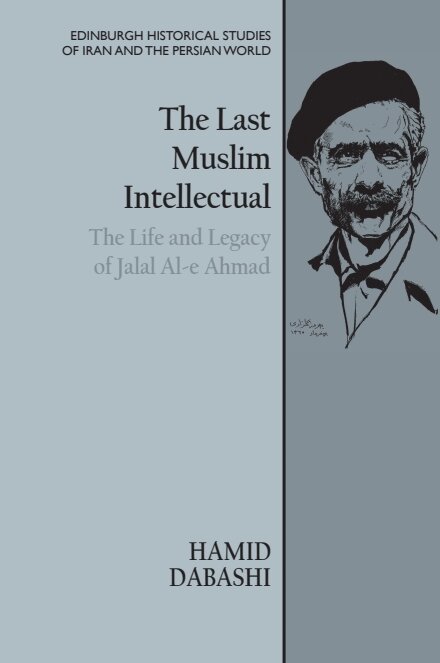
Häftad, Engelska, 2022
Last Muslim Intellectual
The Life and Legacy of Jalal Al-e Ahmad
Del i serien Edinburgh Historical Studies of Iran and the Persian World
657 kr
Beställningsvara. Skickas inom 3-6 vardagar. Fri frakt över 249 kr.
Beskrivning
Produktinformation
- Utgivningsdatum: 2022-11-28
- Mått: 156 x 234 x 22 mm
- Vikt: 610 g
- Format: Häftad
- Språk: Engelska
- Serie: Edinburgh Historical Studies of Iran and the Persian World
- Antal sidor: 344
- Förlag: Edinburgh University Press
- ISBN: 9781474479295
Utforska kategorier
Mer om författaren
Hamid Dabashi is Hagop Kevorkian Professor of Iranian Studies and Comparative Literature at Columbia University in New York where he is a founding member of its Institute for Comparative Literature and Society. He is the author of over 25 books, including The World of Persian Literary Humanism (2014); Persophilia: Persian Culture on the Global Scene (2015); Iran without Borders: Towards a Critique of the Postcolonial Nation (2016); Iran: Rebirth of a Nation (2017); The Shahnameh: The Persian Epic as World Literature (2019); The Last Muslim Intellectual: The Life and Legacy of Jalal Al-e Ahmad (EUP, 2021). His most recent book is Mashya and Mashyana Unearthed: Myth, Metonymy and the Unknowing Subject (EUP 2024).
Recensioner i media
Hamid Dabashi’s remarkable work on Iranian ‘cosmopolitan humanism’ has already expanded the parameters of discussions on non-western thought to highlight the quest for an anticolonial modernity as integral to its global reach. In this well-balanced and elegantly written volume, Dabashi treats Al-e Ahmad, a preeminent intellectual of his time, as a pioneering -anticolonial theorist who Islamist thinkers, such as Ali Shari‘ati, would only later develop an elective affinity for, in the process recasting him an anti-western nativist. Dabashi situates Al-e Ahmad alongside other anticolonial thinkers to remind us that "Al-e Ahmad could not have anticipated Shari’ati would have taken him all the way to the borderlines of a committed Islamist ideologue." Along the way, this provocative work raises important questions about the evolution of an anticolonial canon and the crystallization of sectarian divisions.
Betyg & recensioner
0 recensioner
Inga recensioner tillgängliga.