318 kr
Skickas . Fri frakt över 249 kr.
Beskrivning
Produktinformation
- Utgivningsdatum:2021-11-01
- Mått:170 x 244 x 28 mm
- Vikt:1 067 g
- Format:Häftad
- Språk:Engelska
- Antal sidor:424
- Förlag:Edinburgh University Press
- ISBN:9781474488068
Utforska kategorier
Mer om författaren
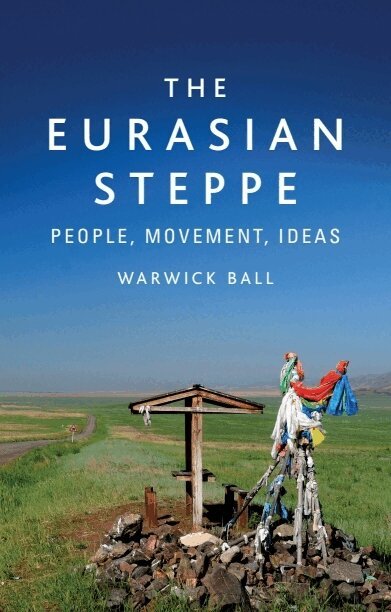
Warwick Ball is a Near Eastern archaeologist and author who spent over twenty years carrying out excavations, architectural studies and monumental restoration throughout the Middle East and adjacent regions. Over the past fifty years he has lived, worked and travelled in most countries between Europe and China covered by this book, in particular in remote parts of Inner Asia. He has excavated in Iran, Libya, Ethiopia, Afghanistan (where he was Acting Director of the British Institute of Afghan Studies), Jordan, and Iraq (where he was Director of Excavations with the British School of Archaeology in Iraq). For five years he was founder, editor and Editor-in-Chief of Afghanistan, the journal of the American Institute of Afghanistan Studies published by Edinburgh University Press. He has written widely on the history and archaeology of the region, including Syria: An Architectural and Historical Guide (3rd edition 2006) and The Monuments of Afghanistan: History, Archaeology, Architecture (2008). Two major academic books, the Archaeological Gazetteer of Afghanistan (Oxford University Press) and The Archaeology of Afghanistan (Edinburgh University Press) were published in 2019. In 2020, the University of St Andrews confirmed they would be offering the honorary degree of Doctor of Letters on the author in recognition of his work in Near Eastern archaeology.
Recensioner i media
Written for a general audience, Ball’s book nevertheless synthesises the latest archaeological research and historical debate on the steppe’s ancient and modern peoples, archaeological research on the steppe’s history, delving back into the deepest mists of time. The burgeoning community of esoteric archaeology and anthropology posters on Twitter will surely appreciate his summarising of the latest research on the origins of the Indo-Europeans, the fate of the Khazars and the birth and decline of the great Scythian kingdoms.
Innehållsförteckning
- Introduction1. The Nature of the Steppe. Some Geographical ObservationsThe steppeThe way of the nomad Waves, hordes and movementDominoes and boundariesNomads and conquestThe steppe and trade2. The Beginnings of Eurasia. Permanence, Movement and PrehistoryPermanence in a nomadic environmentThe Cucuteni-Tripolye ‘mega-sitesMaikop: treasures, wheels and burials of the north CaucasusAcross the Caucasus and beyond: the Kuro-Araxes expansionAn island sanctuary: the megaliths of Vera IslandYamnaya and Afanasievo Cultures: the first Indo-Europeans?Newcomers from the East? The mysterious Okunev of south SiberiaA country of towns and chariotsThe beginning of the nomad culturesAndronovo, Seimo-Turbino and forest-steppe symbiosisThe Oxus CivilisationThe dance of the steppe: movement over vast areas3. Indo-Europe. Prehistory and LanguagePhilosopher’s stone or can of worms: the search for the Indo-EuropeansHistories in prehistoryThe devil in the divine: is there a common Indo-European identity?The great Tokharian trekWestward-ho: hard-wired to win4. History and Myth. Cimmerians, Scythians and Sarmatians; Gog, Magog and ExcaliburThe Scythian homelandKarasuk originsTagar monumental kurgansThe frozen tombsTo the western steppeFrom Kurdistan to India and China: the Scythian kingdoms in the EastKurdistanFrom Sakastan to Indo-ScythiaFrom China through the Karakoram PassesThe western steppeThe Gomer, the Ashkenaz, and Gog and MagogFirst Scythian settlements in the westContact and conflict: the Greek states of the Black SeaThe Black Sea Scythian kingdomsSarmatian warriorsThe Scythian and Sarmatian legacy5. Amazons. Women of the Steppe and the Idea of the Female Warrior?Greeks bearing mythsMatriarchy ‘Old Europe’Evidence from archaeologyEvidence from ethnologyOttoman women: a case studyThe idea of the warrior womanA ‘lande of Amazony’?6. The Art of the Steppe. From Animal Style to Art NouveauGoldThe main elements of Scythian and Sarmatian artOrigins of the animal styleLater survivals of steppe art7. Twilight of the Gods. The Huns, Attila and the End of AntiquityThe end of civilisation?Origins in the eastXiongnu material remainsThe Huns in Central Asia, Persia and IndiaA Hun kingdom in EuropeThe kingdom of AttilaWalling off the BarbarianLegacy of the Huns8. Descendants of the She-wolf. The Emergence of Turkish-speaking PeoplesWhat is a ‘Turk’?Huns, wolves, caves and princessesTurks and Buddhism: the Northern Wei of ChinaThe first Eurasian empireRevival under the UighursSlaves, merchants and conquerorsProsperity, power and civilisation: the lure of Islam9. European Nations from the Steppe. Nomads and Early Medieval EuropeFinns, Karelians, Estonians and epic identitiesThe Avars and European knighthoodThe Bulgars and the beginning of statehood in RussiaThe formation of the Bulgarian EmpireFrom Siberia to Holy Roman Empire: the formation of HungaryPolovtsian dances10. The Atlantis of the Steppe. The Khazar Empire and its LegacyOrigin of the Khazars: Cossack or Caesar?Conversion to JudaismA route paved with silverThe cities of KhazariaCans of worms and the Khazar legacy11. The ‘Men from Hell’. Setting the West Ablaze: The Mongols in EuropeAn ‘Age of Catastrophe’Dress rehearsal: the Western LiaoFrom ‘just and resolute butcher’ to ‘Buddhist holy man’The invasion of EuropePrester John and the CrusadesXanadu to the Volga12. Golden Hordes. The Tatar Khanates of RussiaUnder the shadow of Genghis Khan: the house of TamerlaneA people of Europe?Poland-Lithuania and the Horde versus Muscovy and CrimeaEurope’s last Mongol stateThe last migration13. A Modern Steppe Empire. Russian Identity and the SteppeRussia east or west?The Mongol legacyThe Mongols create a churchMuscovy becomes a steppe empireEurasia as politicsThe steppe, archaeology and identity in RussiaThe steppe, art and identity in RussiaBibliographyIndex
Du kanske också är intresserad av
- Signerad!
- Nyhet
SIGNERAD - Där färgen får styra : En berättelse i akvarell
Maximilian Svensson, Linda Newnham
319 kr
- Nyhet