E-bok, Engelska, 2013
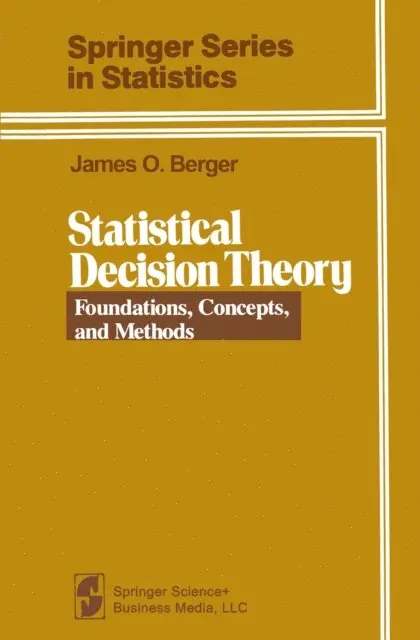
Statistical Decision Theory
Av James Berger
1174 kr
Läs direkt i Bokus Reader – eller ladda ned till din enhet (PDF kräver ofta zoom och scroll på små skärmar).
Beskrivning
Decision theory is generally taught in one of two very different ways. When of opti taught by theoretical statisticians, it tends to be presented as a set of mathematical techniques mality principles, together with a collection of various statistical procedures. When useful in establishing the optimality taught by applied decision theorists, it is usually a course in Bayesian analysis, showing how this one decision principle can be applied in various practical situations. The original goal I had in writing this book was to find some middle ground. I wanted a book which discussed the more theoretical ideas and techniques of decision theory, but in a manner that was constantly oriented towards solving statistical problems. In particular, it seemed crucial to include a discussion of when and why the various decision prin ciples should be used, and indeed why decision theory is needed at all. This original goal seemed indicated by my philosophical position at the time, which can best be described as basically neutral. I felt that no one approach to decision theory (or statistics) was clearly superior to the others, and so planned a rather low key and impartial presentation of the competing ideas. In the course of writing the book, however, I turned into a rabid Bayesian. There was no single cause for this conversion; just a gradual realization that things seemed to ultimately make sense only when looked at from the Bayesian viewpoint.
Produktinformation
- Utgivningsdatum: 2013-04-17
- Språk: Engelska
- Filformat: PDF
- Kopieringsskydd: LCP
- ISBN: 9781475717273
- Förlag: Springer New York
Utforska kategorier
Betyg & recensioner
0 recensioner
Inga recensioner tillgängliga.