• Fri frakt över 249 kr
  • •
  • Snabba leveranser
  • •
  • Billiga böcker
Kundservice

Du är på sajten för privatpersoner.

Företag, bibliotek eller offentlig verksamhet?

Du handlar på classic.bokus.com, där alla dina funktioner finns intakta.
Till classic.bokus.com
Bokus logotyp. Gå till startsidan.
  • Erbjudanden
  • Nyheter
  • Student
  • Topplistor
  • Barn & ungdom
  • Bokus Play
  • E-böcker
  • Pocketböcker
  • Spel & pussel

Må bättre, för mindre! Upp till 50% rabatt på hälsoböcker

Sidfot

Mina sidor

    Hjälp

    • Kundservice
    • Vanliga frågor och svar
    • Frakt och leverans
    • Retur vid ångerrätt
    • Reklamera vara
    • Betalning
    • Köpvillkor
    • Allmänna villkor
    • Information om webbplatsens tillgänglighet

    Om Bokus

    • Om oss
    • Pressrum
    • För studenter
    • För företag
    • För bibliotek och offentlig verksamhet
    • För leverantörer
    • Hållbarhet

    Populärt

    • Aktuella erbjudanden
    • Presentkort
    • Studentlitteratur
    • Nya böcker
    • Topplistor
    • Signerade böcker
    • Engelska böcker

    Inspiration

    • Boktips
    • BookTok
    • Populära bokserier
    • Barnbokskaraktärer
    • Populära författare
    Logotyp för Bokus
    Följ oss på Facebook (extern länk)Följ oss på Instagram (extern länk)Följ oss på YouTube (extern länk)Följ oss på TikTok (extern länk)
    bokus @ CookiesAnpassa cookiesIntegritetspolicyKöpvillkor
    Till Citymail hemsida (extern länk)Till Budbee hemsida (extern länk)Till Postnord hemsida (extern länk)Till Schenker hemsida (extern länk)Till Early Bird hemsida (extern länk)Till Walleys hemsida (extern länk)
    1. Psykologi och pedagogik
    2. Pedagogik
    3. Skolan och förskolan

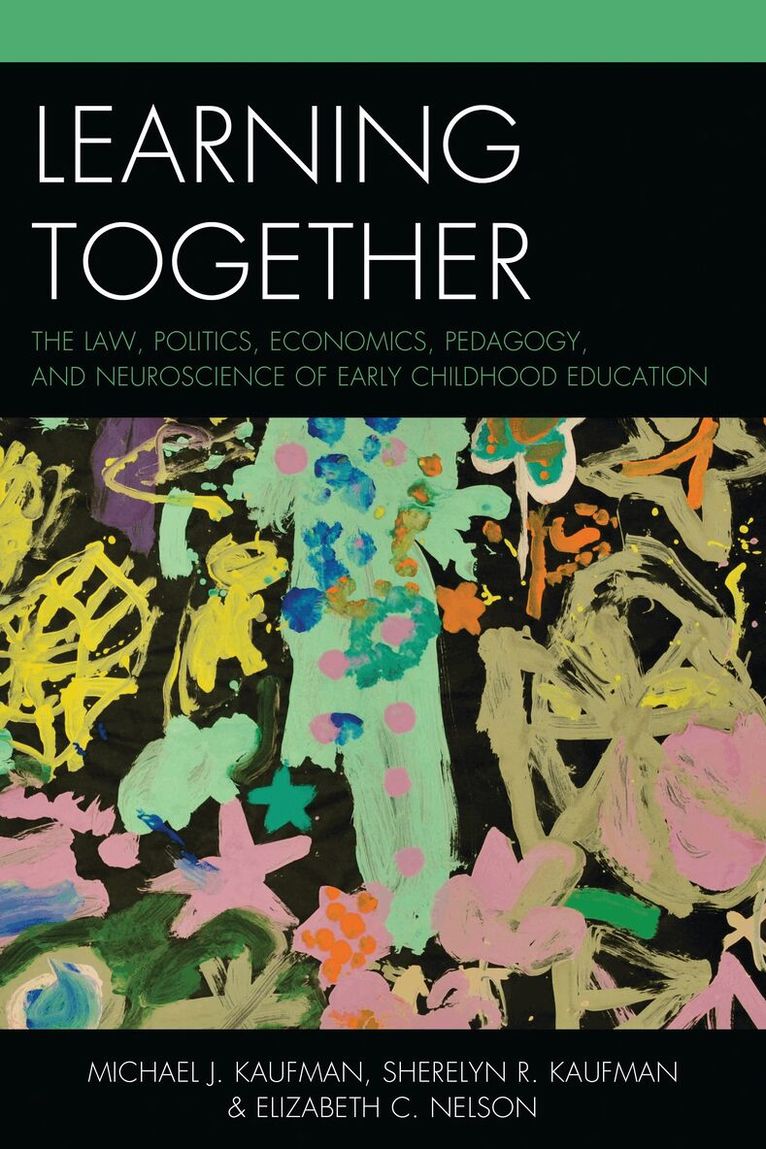
    Learning Together

    The Law, Politics, Economics, Pedagogy, and Neuroscience of Early Childhood Education

    AvMichael J. Kaufman,Sherelyn R. Kaufman

    Inbunden, Engelska, 2015

    1 288 kr

    Beställningsvara. Skickas inom 10-15 vardagar. Fri frakt över 249 kr.

    Fler format och utgåvor

    Häftad

    600 kr

    E-bok

    645 kr

    Beskrivning

    This book makes a comprehensive, multi-disciplinary argument for investing in effective early childhood education programs, especially those that develop in children their proven natural capacity to construct knowledge by building meaningful relationships. Recent insights in the fields of law, policy, economics, pedagogy, and neuroscience demonstrate that these particular programs produce robust educational, social, and economic benefits for children and for the country. The book also provides legal and political strategies for achieving these proven benefits as well as pedagogical strategies for developing the most effective early childhood education programs. The book concludes by making visible the wonderful learning that can take place in an early education environment where teachers are afforded the professional judgment to encourage children to construct their own knowledge through indispensable learning relationships.

    Produktinformation

    • Utgivningsdatum:2015-03-30
    • Mått:152 x 229 x 22 mm
    • Vikt:637 g
    • Format:Inbunden
    • Språk:Engelska
    • Antal sidor:296
    • Förlag:Bloomsbury Publishing Plc
    • ISBN:9781475806434

    Utforska kategorier

    • Skolan och förskolan inom Psykologi och pedagogik

    Mer om författaren

    Michael J. Kaufman, J.D., M.A., is Associate Dean for Academic Affairs, Professor of Law, and Director of the Education Law and Policy Institute at Loyola University Chicago School of Law. Dean Kaufman has written countless books and countless articles regarding education law and policy and has served for many years on the Board of Education of a large, diverse public school district in the Chicago area. Sherelyn R. Kaufman, J.D., M.A.T., is a Professor on the Adjunct Faculty at the Erikson Institute Graduate School of Child Development. She has practiced education law in private law firms and the United States Department of Education, Office for Civil Rights, has taught students in virtually every grade level, has served as the director of an early childhood education program, and has provided expert consulting to many early childhood programs.Elizabeth C. Nelson, J. D. M.A.T., is a Professor on the Adjunct Faculty at Loyola University Chicago School of Law, specializing in education law and policy, as well as professional skills development. She has practiced law in the Office of the Attorney General for the State of Illinois and taught third grade in the city of Chicago.

    Recensioner i media

    For too long, early childhood education has been conceived of as simply “pre-school,” rather than as a critical and foundational school experience. Weaving together research and rationale from a wide variety of disciplines, the authors build an airtight case for recognizing early education as the “real” schooling it is, and for investing in quality programming for all of our children.

    Innehållsförteckning

    • PrefaceIntroductionSection 1: The Political, Pedagogical, Legal, and Economic Case for Investing in Early Childhood Education Chapter 1: The Foundations of American Education Policy1.Classical Philosophies of Education: Early Education Must Be a Public Concern Because It Has the Power to Shape Character and Support the Particular Political Regime2.Modern Educational Philosophy: Public Education Is Vital to Freedom and Self-Government 3.The Foundation of American Educational Policy: Democratic Education Must Develop Meaningful Relationships Between Individuals and the Community 4.The Foundations of Contemporary Debates About American Educational Policy 5.Reconciling the Authoritarian and Progressive Movements: Educating Children for the Future by Encouraging them to Construct Knowledge through Meaningful Relationships6.American Education Policy Establishes a Strong Foundation for Early Childhood Education Programs Designed to Construct Knowledge Through Meaningful RelationshipsChapter 2: The Pedagogical Foundations of American Early Childhood Education1.The Framers’ Nuanced Understanding of Human Nature and Human Development2.The Pedagogical Consequences of the Framers’ Nuanced View of Human Nature and Human Development 3.The Political Consequences of the Framers’ Nuanced View of Human Nature and Human DevelopmentChapter 3: The Legal Foundations of American Early Childhood Education1.The Fundamental Relationship Between Federal and State Control Over Education2.The Relationship Between the State’s Power to Regulate Education and the Constitutional Rights of Parents and Guardians to Direct the Upbringing of their Children3.The Relationship Between the State’s Power to Regulate Education and Federal and State Constitutional Rights to Equitable and Adequate Educational Funding 4.The Relationship Between the State’s Power to Regulate Education And Federal Statutory Rights and Protections for Young Children with Educational Disabilities5.The Foundations of American Education Law Support Compelling Legal Arguments for Providing Access to Early Childhood Education ProgramsChapter 4: The Economic Foundations of American Early Childhood Education1.America’s Schools and Their StudentsB. America’s Early Childhood Education Programs and Their StudentsC. The Sources of Revenue to Support American Education4.The Sources of Revenue to Support Early Childhood Education E. The Inadequate and Inequitable Funding of American Education 6.The Changing Economic Landscape 7.Investing in Early Childhood Education 8.The Robust Economic Returns from an Investment in Early Childhood Education Chapter 5: The Relationship Between Investing in Early Childhood Education and Other Reform Initiatives 1.Accountability2.Privatization3.Remedial Education and Vocational Training ProgramsSection 2: The Proven Benefits of Early Childhood Education Programs that Encourage Children to Construct Knowledge by Building Meaningful RelationshipsChapter 6: Pedagogical Approaches to Early Childhood Education1.Direct Instruction of Traditional Academic Skills2.The Constructivist Approach 3.The Social Constructivist ApproachChapter 7: The Proven Benefits of the Social Constructivist Approach to Early Childhood Education1.The Social Constructivist Approach Has Proven to Produce Robust Educational, Social, and Economic Benefits2.Recent Discoveries in Cognitive Neuroscience and Psychology Demonstrate How the Social Constructivist Approach Produces Particularly Robust Returns on an Investment in Early Childhood EducationSection 3: Strategies for Expanding, Developing, and Designing Early Childhood Learning Communities that Construct Knowledge through Meaningful Relationships Chapter 8: Legal, Political, Economic and Comprehensive Strategies for Expanding Access to Early Childhood Education Programs1.Legal Strategies for Expanding Access to Early Childhood Education Programs2.Political Strategies for Expanding Access to Early Childhood Education Programs 3.Strategies for Authentically Assessing Early Childhood Education Programs4.Economic Strategies for Expanding Access to Early Childhood Education Programs 5.Developing Public-Private Partnerships to Expand Access to Early Childhood Education Programs 6.The Comprehensive Implementation Strategy: Supporting Teachers and Reconciling Policy Debates About Accountability and Privatization Chapter 9: Strategies for Developing a Social Constructivist Early Learning Environment1.Role-Playing2.Shared Activities3.Encouraging Multiple Expressions of Learning through Media and Materials 4.The Social Construction of Literacy5.The Social Construction of Mathematics6.The Social Construction of ScienceChapter 10: Making Learning Visible Through Documentation1.Developing the Art of Documentation2.Practicing Documentation to Deepen Learning3.Using Documentation to Make Learning Visible to Multiple StakeholdersConclusionAppendices About the AuthorsIndex