• Fri frakt över 249 kr
  • •
  • Snabba leveranser
  • •
  • Billiga böcker
Kundservice

Du är på sajten för privatpersoner.

Företag, bibliotek eller offentlig verksamhet?

Du handlar på classic.bokus.com, där alla dina funktioner finns intakta.
Till classic.bokus.com
Bokus logotyp. Gå till startsidan.
  • Erbjudanden
  • Nyheter
  • Student
  • Topplistor
  • Barn & ungdom
  • Bokus Play
  • E-böcker
  • Pocketböcker
  • Spel & pussel

10% rabatt på allt med kod NYSTART10 →

Sidfot

Mina sidor

    Hjälp

    • Kundservice
    • Vanliga frågor och svar
    • Frakt och leverans
    • Retur vid ångerrätt
    • Reklamera vara
    • Betalning
    • Köpvillkor
    • Allmänna villkor
    • Information om webbplatsens tillgänglighet

    Om Bokus

    • Om oss
    • Pressrum
    • För studenter
    • För företag
    • För bibliotek och offentlig verksamhet
    • För leverantörer
    • Hållbarhet

    Populärt

    • Aktuella erbjudanden
    • Presentkort
    • Studentlitteratur
    • Nya böcker
    • Topplistor
    • Signerade böcker
    • Engelska böcker

    Inspiration

    • Boktips
    • BookTok
    • Populära bokserier
    • Barnbokskaraktärer
    • Populära författare
    Logotyp för Bokus
    Följ oss på Facebook (extern länk)Följ oss på Instagram (extern länk)Följ oss på YouTube (extern länk)Följ oss på TikTok (extern länk)
    bokus @ CookiesAnpassa cookiesIntegritetspolicyKöpvillkor
    Till Citymail hemsida (extern länk)Till Budbee hemsida (extern länk)Till Postnord hemsida (extern länk)Till Schenker hemsida (extern länk)Till Early Bird hemsida (extern länk)Till Walleys hemsida (extern länk)
    1. Psykologi och pedagogik
    2. Pedagogik
    3. Pedagogisk teori och filosofi

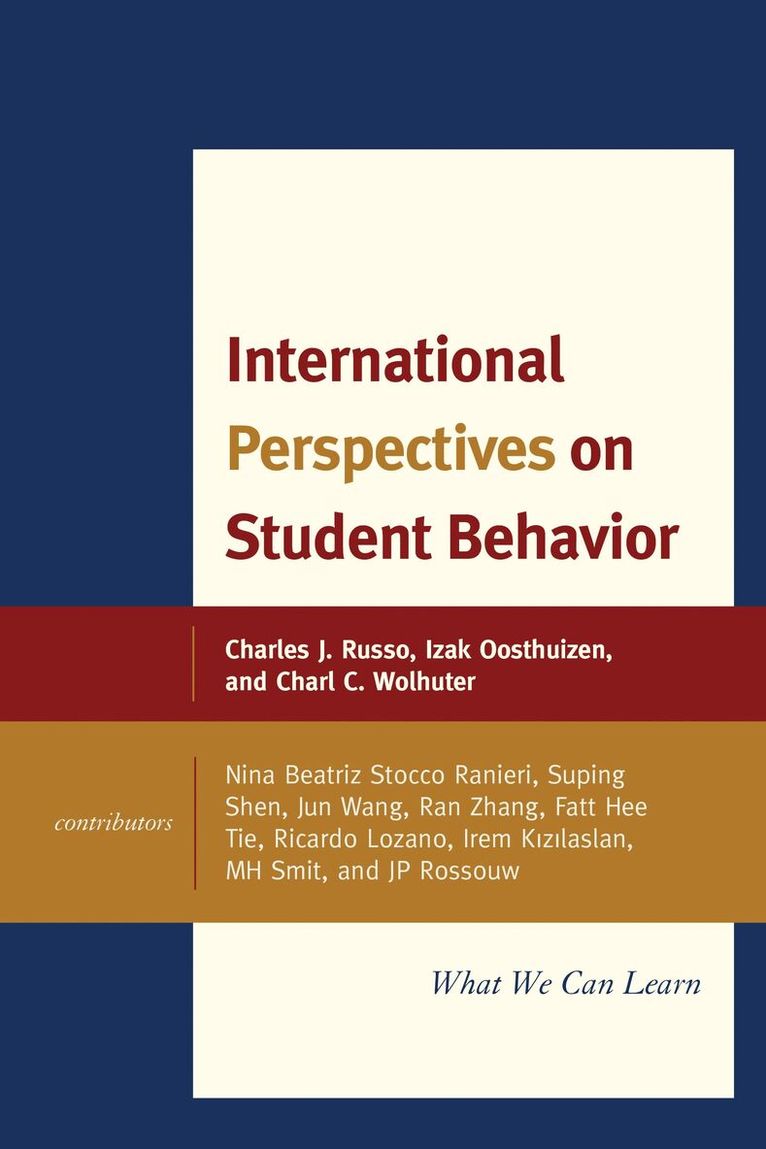
    International Perspectives on Student Behavior

    What We Can Learn, Volume 2

    AvCharles J. Russo,Izak Oosthuizen

    Häftad, Engelska, 2014

    439 kr

    Beställningsvara. Skickas inom 10-15 vardagar. Fri frakt över 249 kr.

    Fler format och utgåvor

    Inbunden

    952 kr

    Beskrivning

    The second volume of companion books on comparative student discipline identifies the best practices in dealing with student misconduct, on six continents, in a legally sound manner. It is essential for educators to examine national as well as international practices addressing student misconduct in schools because learner misbehavior often has a detrimental effect on the quality of teaching and learning in elementary and secondary schools. The countries covered are Brazil, China, Malaysia, Turkey and South Africa.

    Produktinformation

    • Utgivningsdatum:2014-12-23
    • Mått:152 x 223 x 10 mm
    • Vikt:191 g
    • Format:Häftad
    • Språk:Engelska
    • Antal sidor:122
    • Förlag:Bloomsbury Publishing Plc
    • ISBN:9781475814835

    Utforska kategorier

    • Pedagogisk teori och filosofi inom Psykologi och pedagogik
    • Pedagogisk psykologi inom Psykologi och pedagogik
    • Pedagogisk metodik inom Psykologi och pedagogik

    Mer om författaren

    Charles J. Russo, JD, EdD, is the Joseph Panzer Chair in Education in the School of Education and Allied Professions and Adjunct Professor in the School of Law at the University of Dayton, Ohio. The author of more than 900 publications, including fifty-five books, he has spoken and taught extensively on issues in Education Law in the United States and in twenty-six other Nations on all six inhabited continents.Izak Oosthuizen, PhD, served as professor of education law on the Potchefstroom campus of the North West University (NWU). In 2011 he was appointed as a Research Professor in the Faculty of Education at the NWU Mafikeng campus and in 2014 was named an Extraordinary Professor and Research Specialist there.Charl Wolhuter, DEd, is Comparative and International Education Professor at North-West University, Potchefstroom Campus, South Africa.

    Recensioner i media

    Identifying the best practices in school disciplinary matters is key to any learning environment. While student discipline is often challenging for new teachers, more experienced teachers also benefit from inquiry into alternative forms of discipline. This volume examines what approach educators use in ten other countries when addressing student misconduct. In addition to classroom discipline, the volume also analyzes more serious forms of student misconduct, including criminal offenses. New and experienced educators will benefit from exploring these successful strategies used globally in addressing student misconduct.

    Innehållsförteckning

    • PrefaceIntroductionMisconduct Hampers Teaching and LearningConcern for Student SafetyThe Problem of Criminal TendenciesDealing with MisconductDealing with Serious MisconductThe Global JourneyConclusionChapter 1 Bringing Peace to Schools: The Experience of the State of São Paulo, BrazilIntroductionThe Brazilian Educational System from A Constitutional PerspectiveThe Implementation of the Right to Education Under Brazilian Law The Full Protection of Children and Adolescent under the Brazilian ConstitutionThe Child and Adolescent Act and Student MisconductThe State of São Paulo School Protection SystemSchool and Community Mediator-Teachers ConclusionKey PointsChapter 2 Student Discipline in ChinaIntroductionIntroduction to the Legal SystemStudent Misconduct in School and Its FormsMethods of Student DisciplineFormal Methods: Sanctions Rendered by SchoolsInformal Methods: Discipline by Teachers Due ProcessSpecial Considerations in Student DisciplineEducation and Discipline Revocation of SanctionSchool, Family, and CommunityDiscussion and Future DirectionsConclusionKey PointsChapter 3 The Law Regulating Student Discipline in Malaysia IntroductionThe Court Structure in MalaysiaThe State of Student Misconduct in Malaysian SchoolsThe Most Frequent Forms of Student MisconductThe Application of Due Process to Disciplinary MethodsMethods of Dealing with Student DisciplineEnforcement of Corporal PunishmentProcedural Guidelines Concerning Corporal PunishmentSuspensions and ExpulsionsProcedural Requirements Concerning Suspensions and ExpulsionsStudent Dress CodesProcedural Requirements Concerning Student Dress CodesEmerging IssuesConclusionKey PointsChapter 4 Legal Aspects and Practical Application of Disciplinary Actions in theTurkish Public Educational System IntroductionNational Background InformationLocationBrief History of Major EventsPopulationAn Overview of Turkey’s Legal SystemAn Overview of Regulations Regarding EducationRegulations Regarding Discipline in EducationThe State of Student Misconduct in Turkish SchoolsThe Most Frequent Forms of Student MisconductDealing with Misconduct in SchoolsDue Process and DisciplineEmerging issuesConclusionKey PointsChapter 5 Student Discipline from Authoritarian Apartheid to Constitutionalism: South Africa as A Society in Transition.IntroductionLegal Framework of Education in South AfricaThe Bill of Rights and Student DisciplineLimitation of Fundamental Human RightsThe South African Schools Act and Student DisciplineCommon Law Principles and Student DisciplineThe State of Student Misconduct in SchoolsFrequency and Forms of Student Misconduct in South African SchoolsSchool-based ViolenceManifestations of School-based ViolenceFreedom and Security of PersonAssault and Common CrimeViolence by Students Against EducatorsNegative Consequences of School Violence for StudentsProhibition of Corporal Punishment: A Cause of Ill-discipline?Teacher Misconduct: A Factor Influencing Student BehaviorMethods of Dealing with Student MisconductSchool Policy and Regulatory Measures to Improve Safety and DisciplineDealing with Serious Misconduct: Suspension and Expulsion of StudentsUnwillingness of Education Officials to Expel Ill-disciplined StudentsEmerging Issues The Right to Privacy and Student DisciplineFreedom of Expression and Discipline in SchoolsReligious Expression Contravening School Dress CodesFreedom of Expression and Unfair Discrimination Based on CultureFreedom of Expression Does Not Equate to a Right to be Ill-disciplinedDefamation, Cyber Bullying and Freedom of ExpressionConclusionKey PointsChapter 6 Reflections and RecommendationsReflectionsRecommendationsConclusion